About this artwork
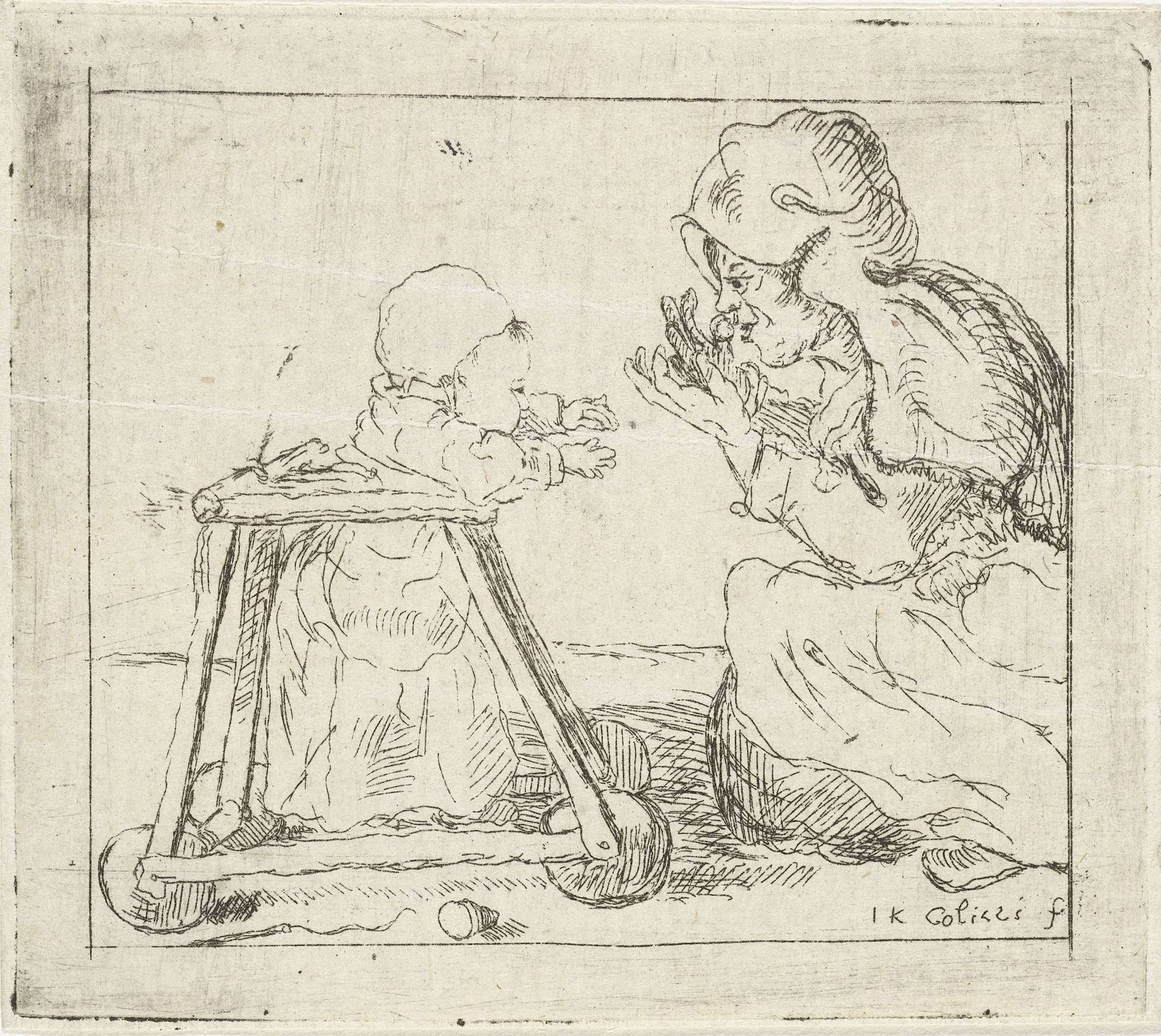
Johan Antoni Kauclitz Colizzi created this delicate etching titled "Vrouw met kind in loopwagen." It depicts a woman interacting with a child in a walker. Notice how the composition is structured around the contrast between the angular, mechanical form of the walker and the soft, organic shapes of the figures. Colizzi uses a network of fine lines to delineate form and texture, creating a sense of depth and animation. The density of the lines varies, suggesting shadow and volume, particularly in the woman's face and clothing. The etching medium lends itself well to the depiction of intricate details. Consider the way the artist captures the texture of the fabric and the subtle expressions on the faces. These elements invite us to consider the relationship between the figures and the broader social context of childcare in the 18th century. Colizzi uses formal elements to engage with broader ideas about family and human development. The artwork doesn't offer a singular meaning, instead, it encourages ongoing dialogue.

Artwork details
- Medium
- drawing, paper, ink
- Dimensions
- height 63 mm, width 72 mm
- Copyright
- Rijks Museum: Open Domain
Tags
Comments
Share your thoughts
About this artwork
Johan Antoni Kauclitz Colizzi created this delicate etching titled "Vrouw met kind in loopwagen." It depicts a woman interacting with a child in a walker. Notice how the composition is structured around the contrast between the angular, mechanical form of the walker and the soft, organic shapes of the figures. Colizzi uses a network of fine lines to delineate form and texture, creating a sense of depth and animation. The density of the lines varies, suggesting shadow and volume, particularly in the woman's face and clothing. The etching medium lends itself well to the depiction of intricate details. Consider the way the artist captures the texture of the fabric and the subtle expressions on the faces. These elements invite us to consider the relationship between the figures and the broader social context of childcare in the 18th century. Colizzi uses formal elements to engage with broader ideas about family and human development. The artwork doesn't offer a singular meaning, instead, it encourages ongoing dialogue.
Comments
Share your thoughts