About this artwork
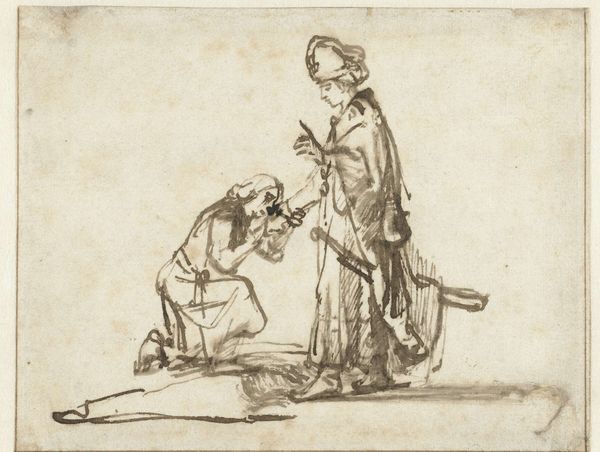
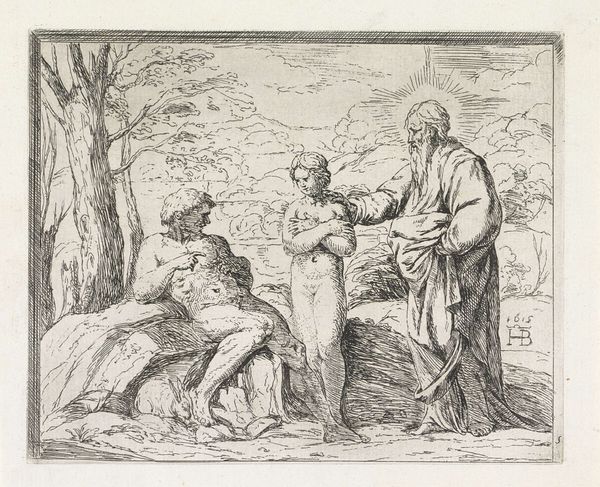
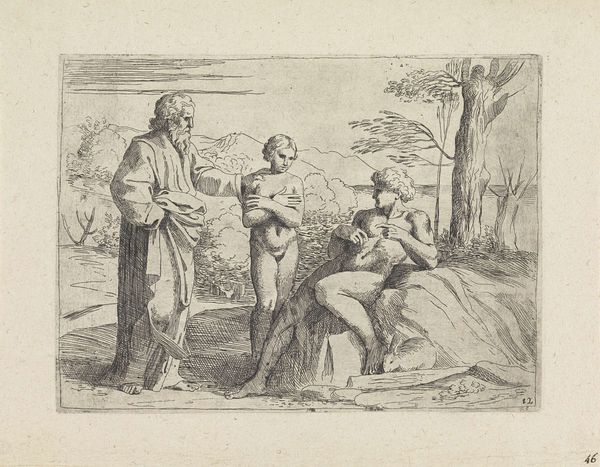
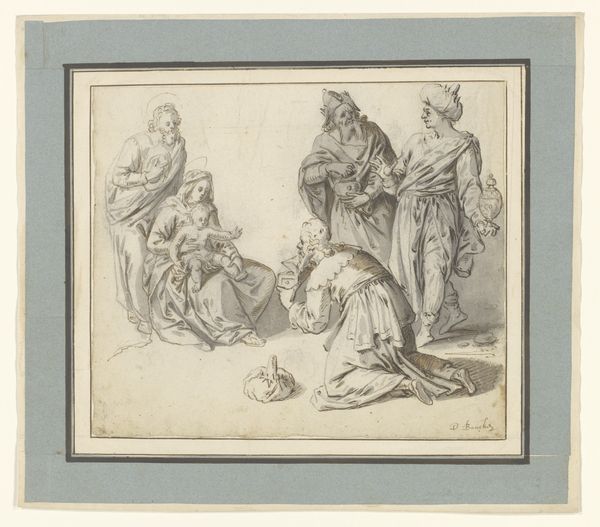
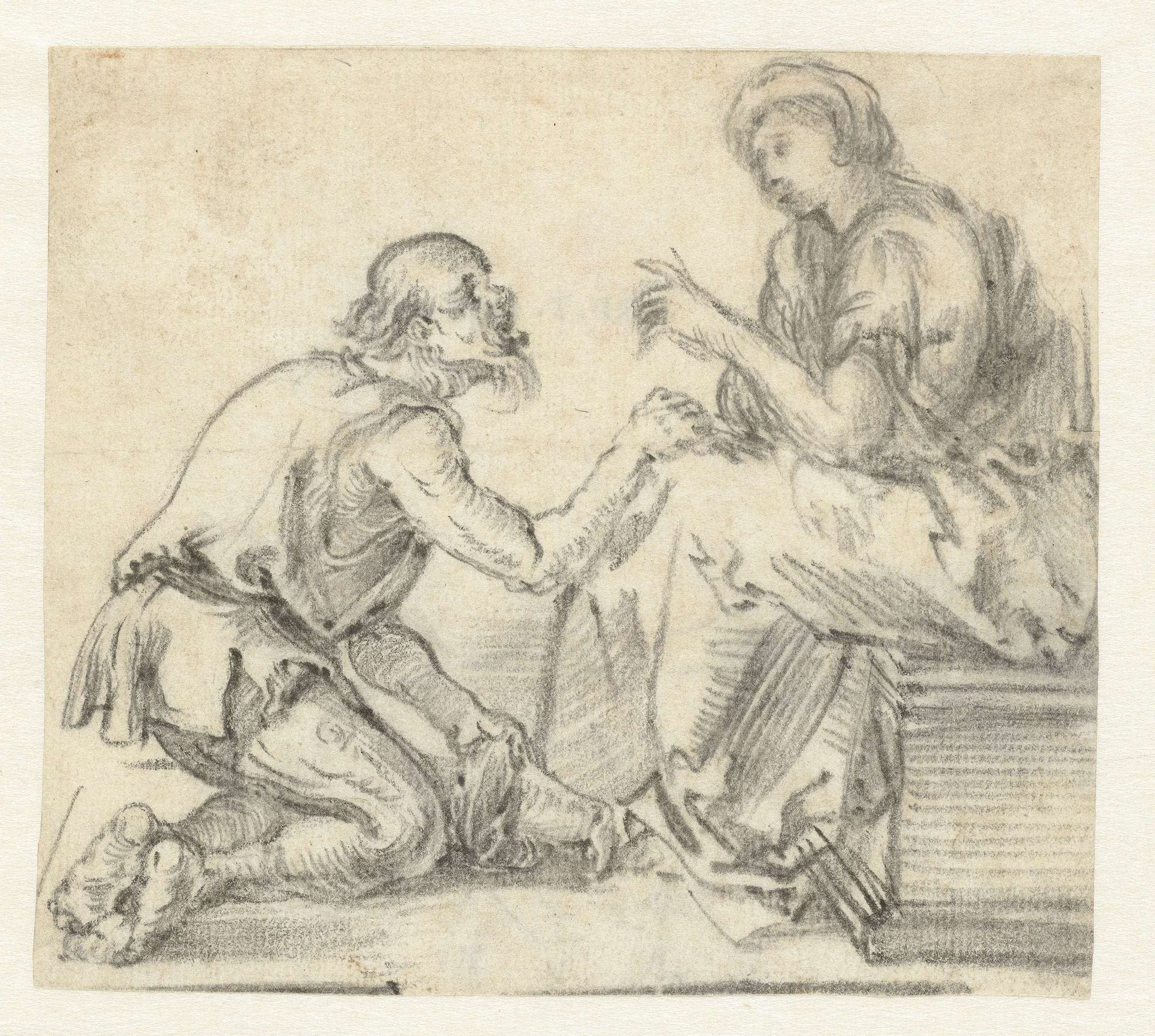
This undated drawing titled, “Beggar kneeling before a seated woman”, was created anonymously. The image presents a stark contrast in social status and gender roles. We see a kneeling, disheveled man, presumably a beggar, reaching towards a seated woman. The woman, who is more composed and elevated, appears to be in a position of power or authority. Without knowing the artist or the period in which the work was made, it's difficult to interpret the specific historical context, but such depictions were often used to explore themes of charity, social inequality, or even religious morality. The relationship between the figures invites questions about societal hierarchies and the roles assigned to different genders and classes. Are we meant to empathize with the beggar, or admire the woman's potential act of kindness? As you consider this piece, reflect on the historical contexts that might have shaped its creation, and the emotional dimensions of power, vulnerability, and social responsibility that it evokes.

Artwork details
- Medium
- drawing, paper, pencil
- Dimensions
- height 114 mm, width 127 mm
- Copyright
- Rijks Museum: Open Domain
Tags
Comments
Share your thoughts
About this artwork
This undated drawing titled, “Beggar kneeling before a seated woman”, was created anonymously. The image presents a stark contrast in social status and gender roles. We see a kneeling, disheveled man, presumably a beggar, reaching towards a seated woman. The woman, who is more composed and elevated, appears to be in a position of power or authority. Without knowing the artist or the period in which the work was made, it's difficult to interpret the specific historical context, but such depictions were often used to explore themes of charity, social inequality, or even religious morality. The relationship between the figures invites questions about societal hierarchies and the roles assigned to different genders and classes. Are we meant to empathize with the beggar, or admire the woman's potential act of kindness? As you consider this piece, reflect on the historical contexts that might have shaped its creation, and the emotional dimensions of power, vulnerability, and social responsibility that it evokes.
Comments
Share your thoughts