About this artwork
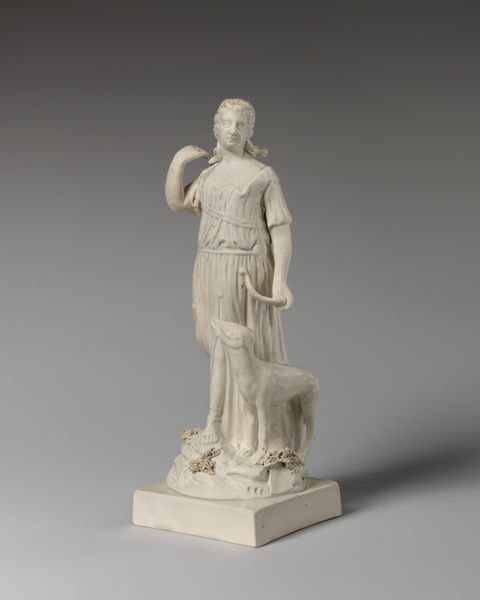
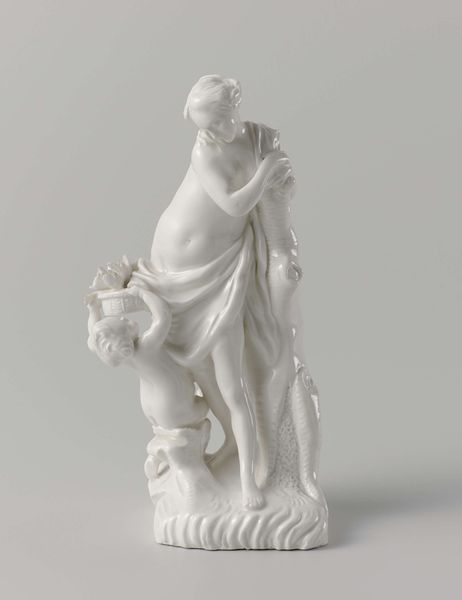
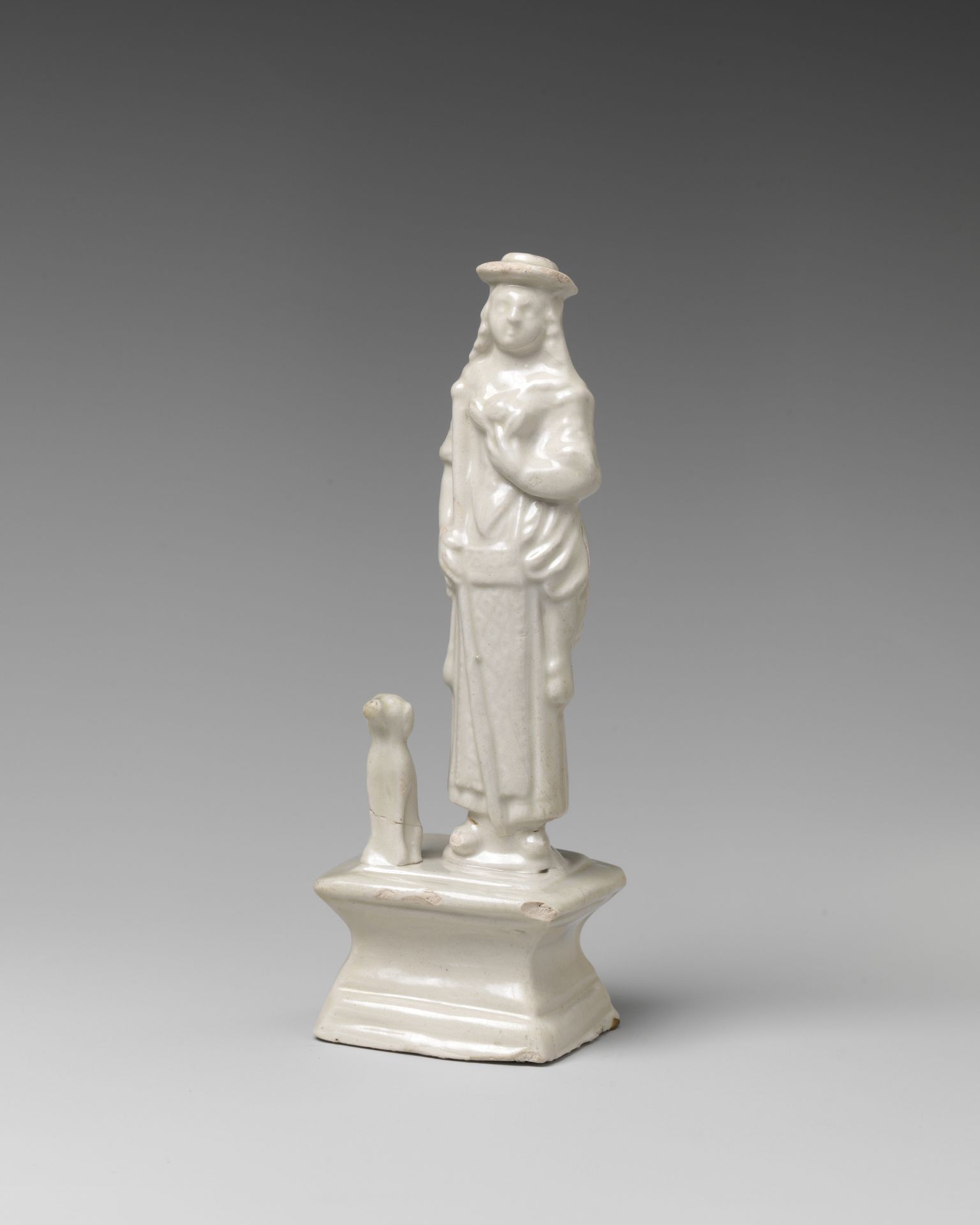
Here is a white salt-glazed stoneware, "Lady," created by Thomas Whieldon Factory in Staffordshire. The figure is rigidly composed, with the lines of the dress falling into vertical columns. The dog is also composed of columnar lines, and the two figures are connected by being placed on a square plinth. Consider the tension between surface and volume. The figure is a static, self-contained unit, despite the texture of the dress and the slightly asymmetrical placement of the hat. The piece employs the concept of structuralism, where underlying structures and patterns create meaning. The lady and dog represent societal roles, with the lady as the static, idealized figure and the dog as her loyal companion. The figure subverts traditional artistic values by simplifying into geometric shapes and resisting emotional expressiveness. The neutral color and unadorned surface emphasize the forms. This contrasts with the extravagance of the period, creating a work that challenges norms and invites ongoing interpretation.
Lady
1740 - 1750

Thomas Whieldon factory, Stoke-on-Trent, Fenton Vivian, Staffordshire
@thomaswhieldonfactorystokeontrentfentonvivianstaffordshire
The Metropolitan Museum of Art
Metropolitan Museum of Art, New York, NYArtwork details
- Medium
- ceramic, sculpture
- Dimensions
- Height: 6 in. (15.2 cm)
- Location
- Metropolitan Museum of Art, New York, NY
- Copyright
- Public Domain
Tags
portrait
ceramic
figuration
sculpture
decorative-art
rococo
Comments
Be the first to share your thoughts about this work.
About this artwork
Here is a white salt-glazed stoneware, "Lady," created by Thomas Whieldon Factory in Staffordshire. The figure is rigidly composed, with the lines of the dress falling into vertical columns. The dog is also composed of columnar lines, and the two figures are connected by being placed on a square plinth. Consider the tension between surface and volume. The figure is a static, self-contained unit, despite the texture of the dress and the slightly asymmetrical placement of the hat. The piece employs the concept of structuralism, where underlying structures and patterns create meaning. The lady and dog represent societal roles, with the lady as the static, idealized figure and the dog as her loyal companion. The figure subverts traditional artistic values by simplifying into geometric shapes and resisting emotional expressiveness. The neutral color and unadorned surface emphasize the forms. This contrasts with the extravagance of the period, creating a work that challenges norms and invites ongoing interpretation.
Comments
Be the first to share your thoughts about this work.