19th-20th century
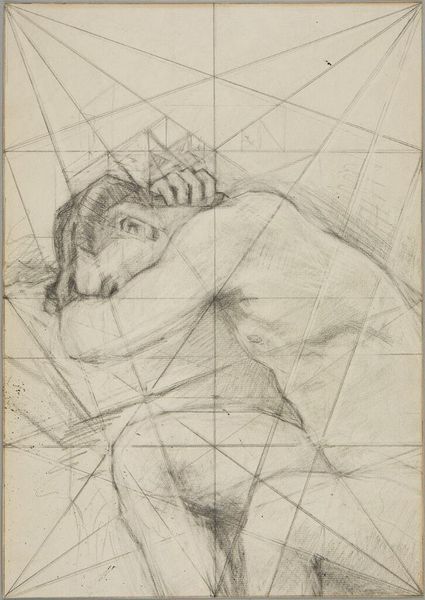
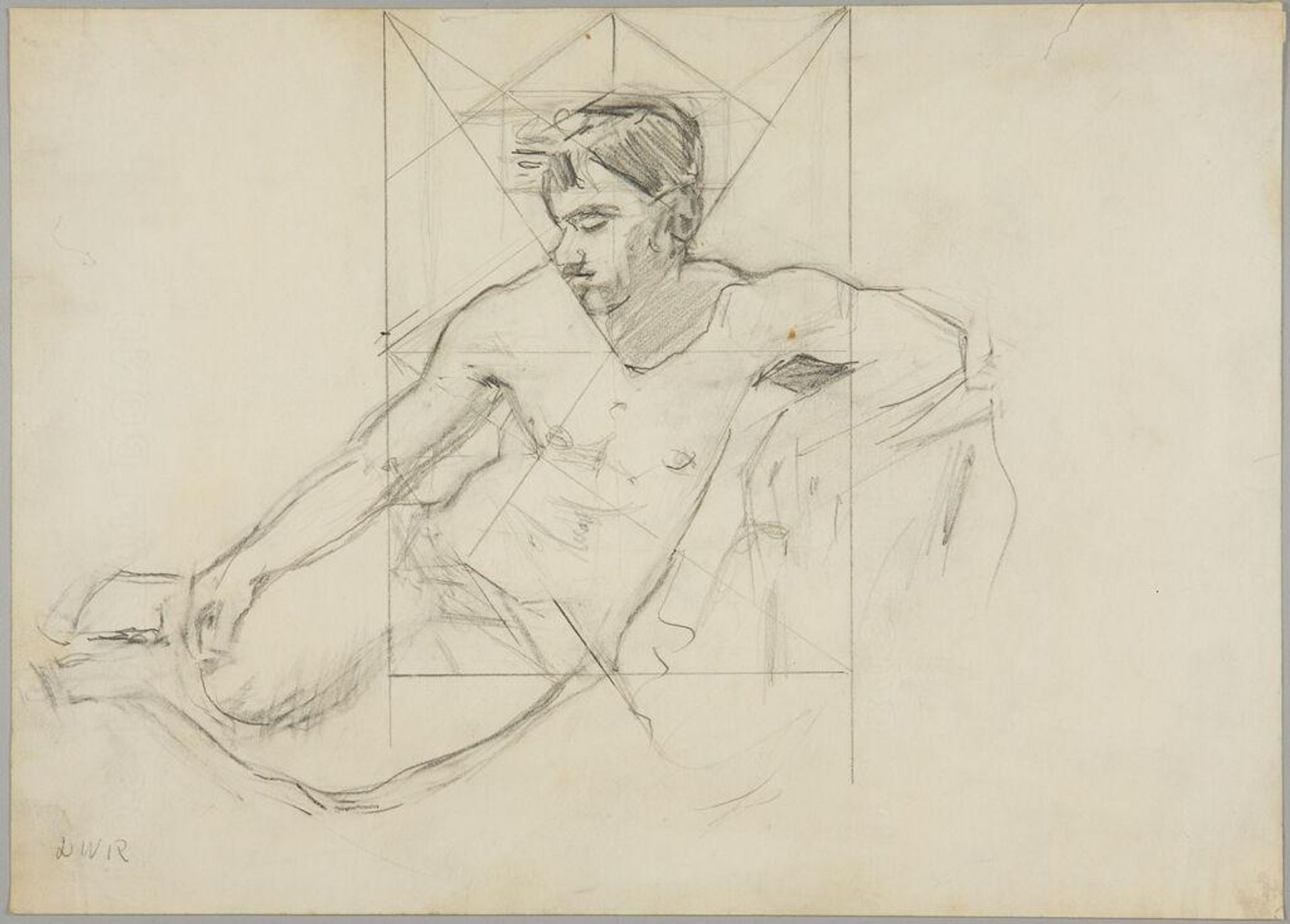
Reclining Male Nude

Listen to curator's interpretation
Curatorial notes
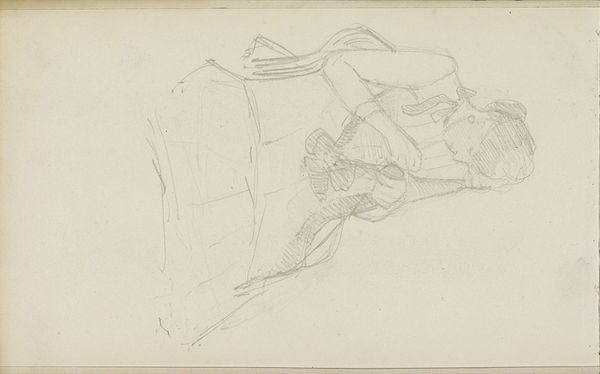
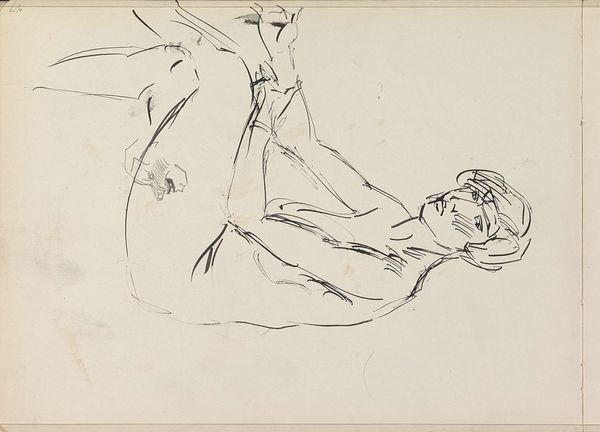
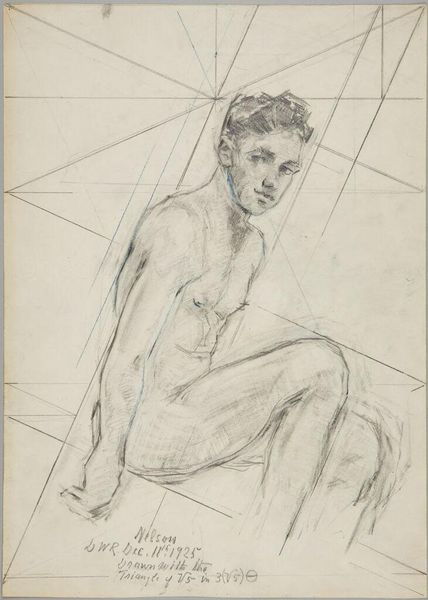
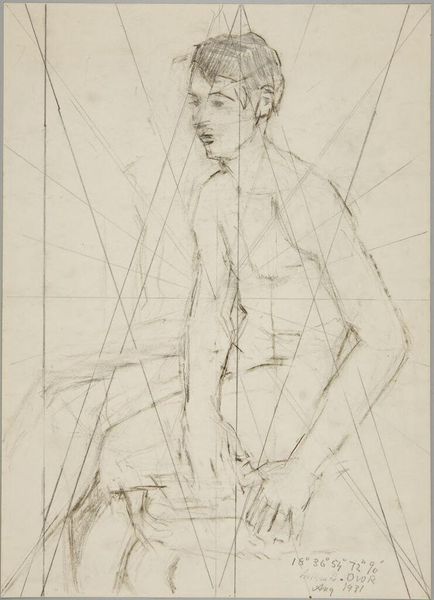
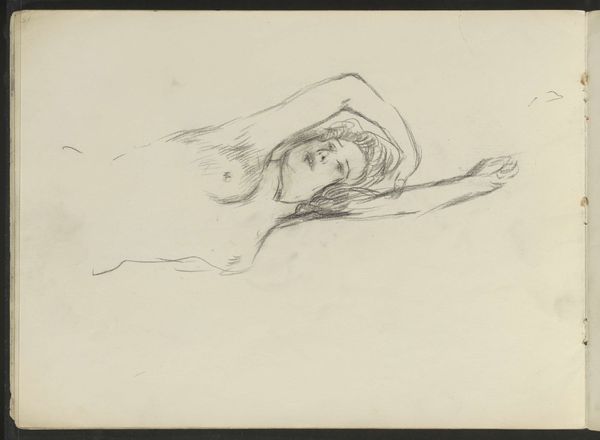
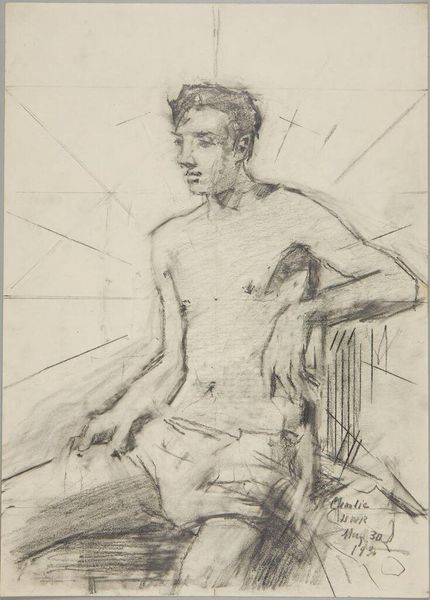
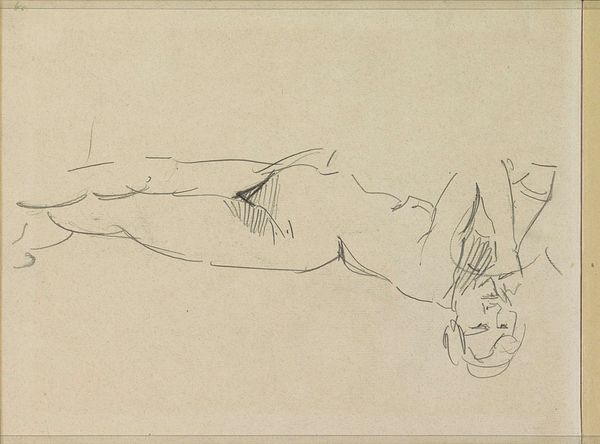
Curator: Here we have Denman Waldo Ross's "Reclining Male Nude," a pencil drawing currently residing in the Harvard Art Museums. Editor: There's something immediately vulnerable about it; a sense of classical form softened by the sketchiness of the medium. Curator: Notice the geometric scaffolding underneath the figure? It evokes the Renaissance pursuit of ideal proportions and the enduring cultural fascination with the male nude as a symbol of beauty and strength. Editor: But also control, right? A legacy of artistic tradition that often objectifies and imposes standards. The male nude has historically been a site of power dynamics. Curator: Indeed. It carries layers of meaning—from the heroic to the homoerotic, depending on the viewer's lens. Ross seems to be engaging with this complexity. Editor: The relaxed pose challenges the traditional stoicism often associated with such depictions. Curator: It's a study that invites us to consider both the history of the male nude in art and the subtle ways artists can challenge and reshape those visual tropes. Editor: I find myself thinking about the many bodies absent from classical art. Curator: It's important to reflect on art's past representations while also examining how we can foster inclusivity and broaden our perspectives.