About this artwork
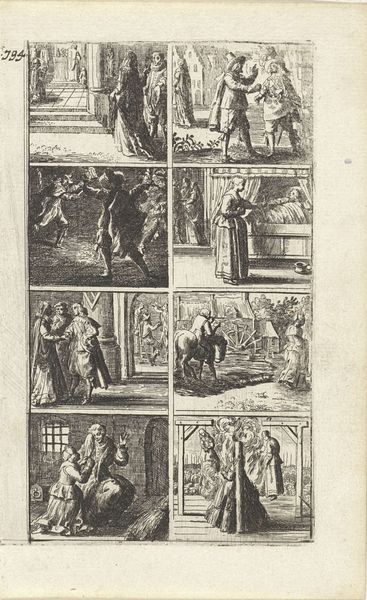
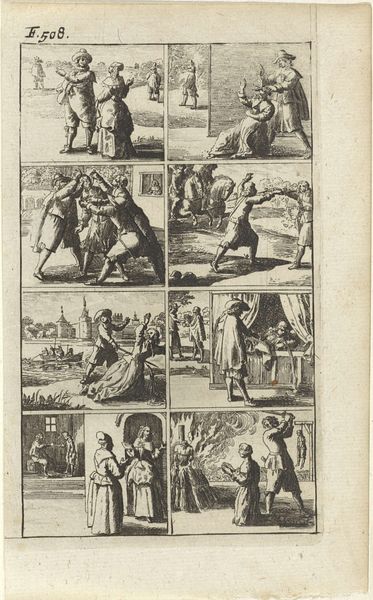
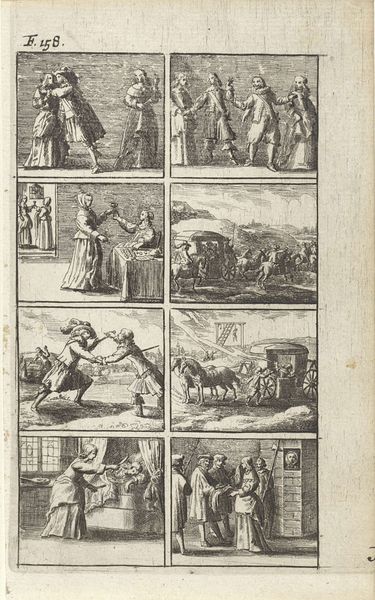
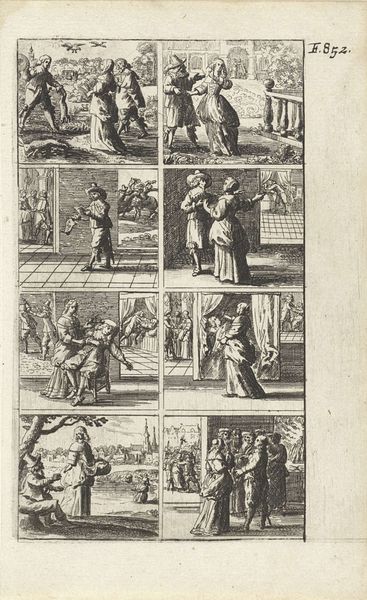
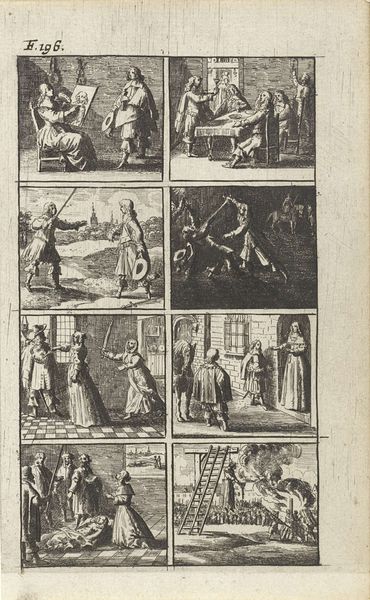
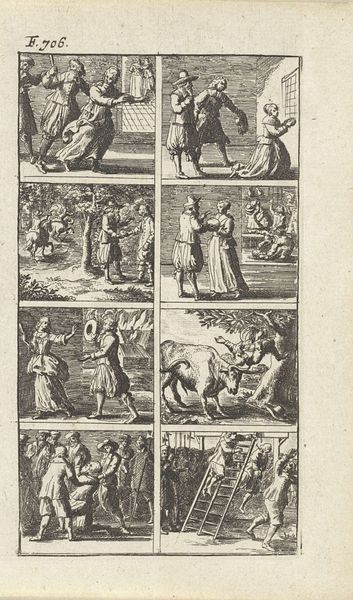
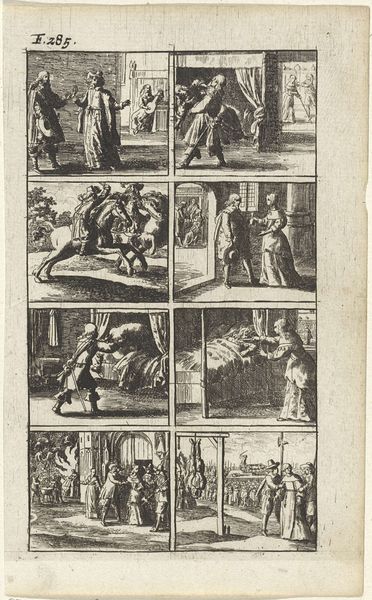
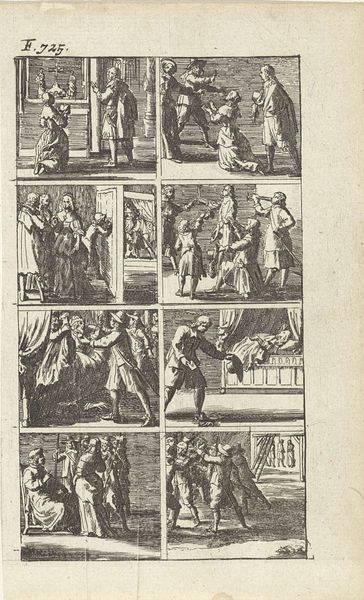
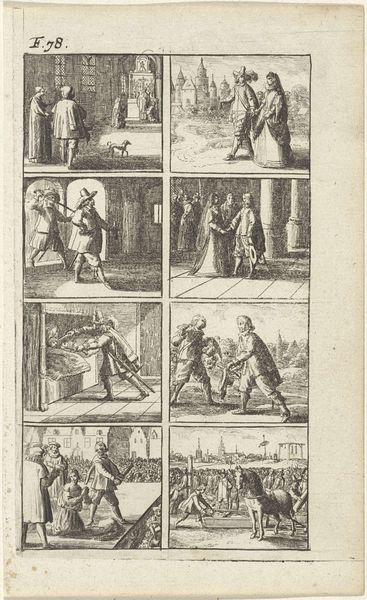
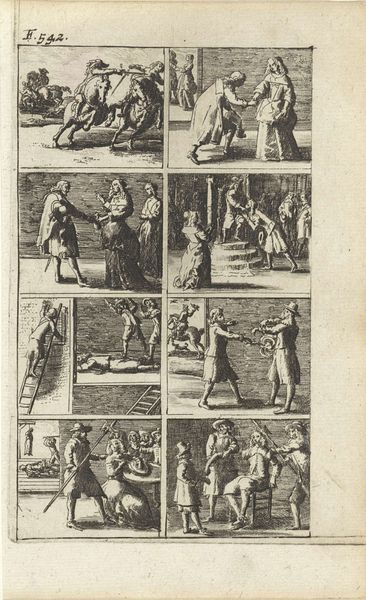
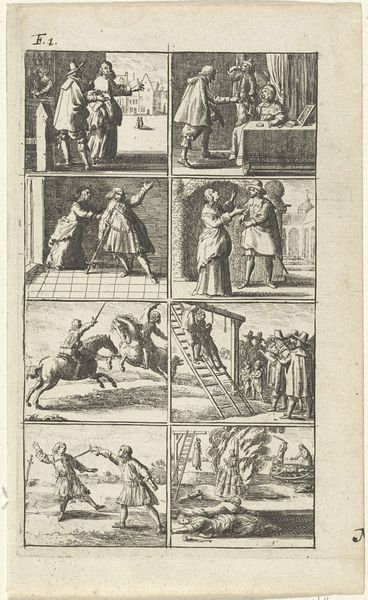
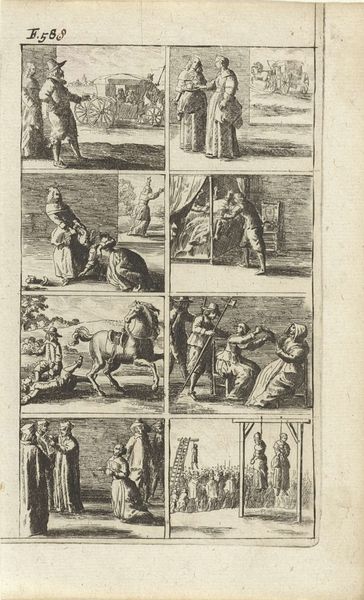
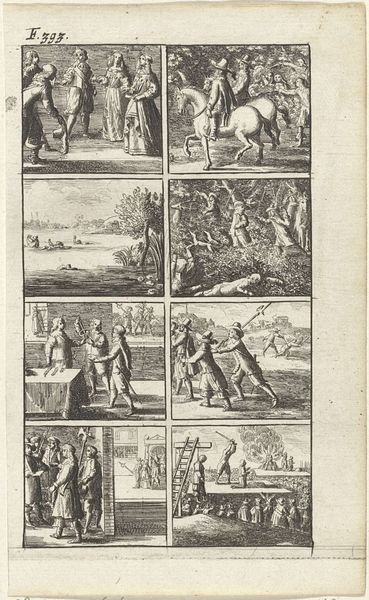
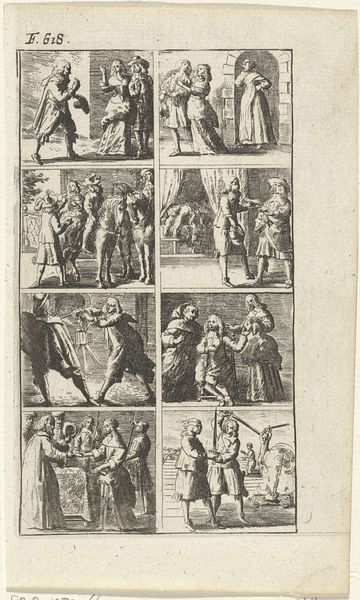
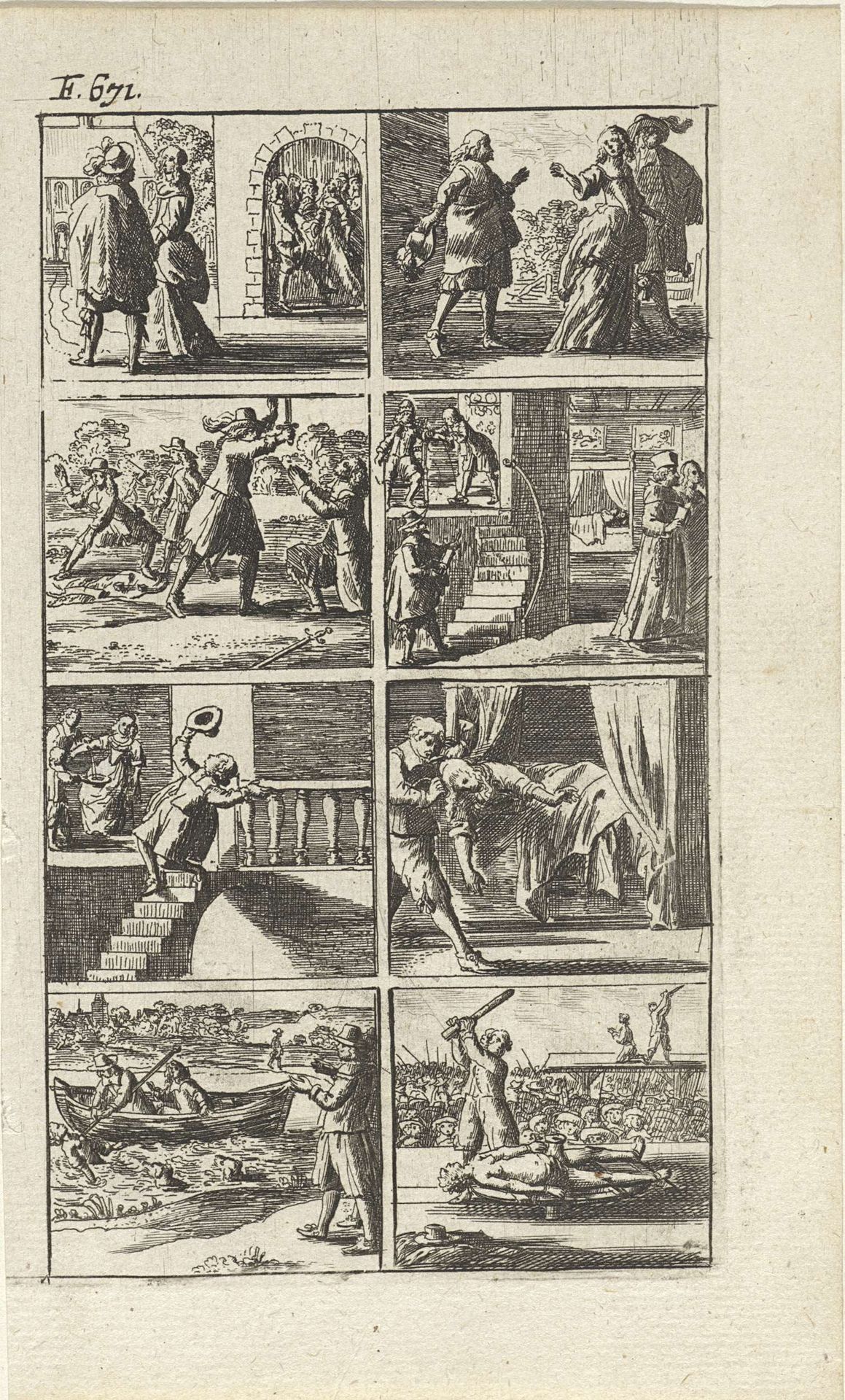
Abraham Dircksz. Santvoort created this print, "Story with representations of murder and capital punishment," sometime in the mid-17th century. It's made with etching. The composition consists of nine distinct scenes arranged in a grid, each depicting various acts of violence and execution. The artist uses stark contrasts of light and shadow to create a dramatic effect, accentuating the brutality of the depicted events. The linear quality of the etching emphasizes the sharp, decisive actions within each panel. Santvoort's choice to present these scenes in a sequential manner, akin to a storyboard, invites us to reflect on the nature of justice, morality, and spectacle in his time. It challenges our understanding of social order and raises questions about the boundaries of human behavior. Ultimately, the print functions as a powerful commentary on the darker aspects of society. The etched lines and stark imagery serve not just as an aesthetic choice but as a vehicle for conveying complex philosophical and cultural ideas.
Verhaal met voorstellingen van moord en doodstraf (F. 671.) 1667

Abraham Dircksz. Santvoort
1634 - 1669Location
RijksmuseumArtwork details
- Medium
- print, intaglio, engraving
- Dimensions
- height 155 mm, width 94 mm
- Location
- Rijksmuseum
- Copyright
- Rijks Museum: Open Domain
Tags
narrative-art
baroque
intaglio
figuration
line
genre-painting
history-painting
engraving
Comments
No comments
About this artwork
Abraham Dircksz. Santvoort created this print, "Story with representations of murder and capital punishment," sometime in the mid-17th century. It's made with etching. The composition consists of nine distinct scenes arranged in a grid, each depicting various acts of violence and execution. The artist uses stark contrasts of light and shadow to create a dramatic effect, accentuating the brutality of the depicted events. The linear quality of the etching emphasizes the sharp, decisive actions within each panel. Santvoort's choice to present these scenes in a sequential manner, akin to a storyboard, invites us to reflect on the nature of justice, morality, and spectacle in his time. It challenges our understanding of social order and raises questions about the boundaries of human behavior. Ultimately, the print functions as a powerful commentary on the darker aspects of society. The etched lines and stark imagery serve not just as an aesthetic choice but as a vehicle for conveying complex philosophical and cultural ideas.
Comments
No comments