About this artwork
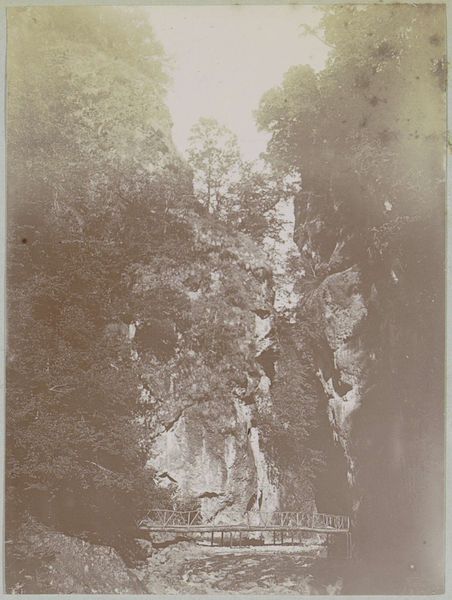
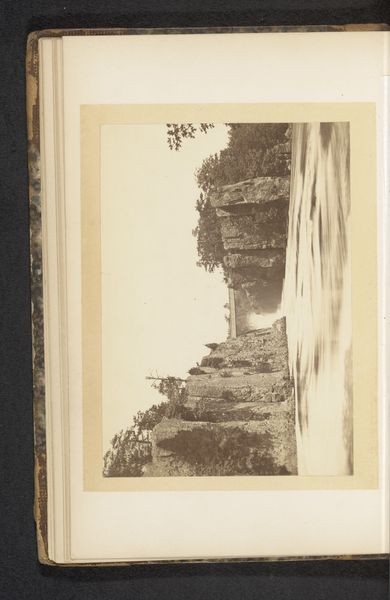
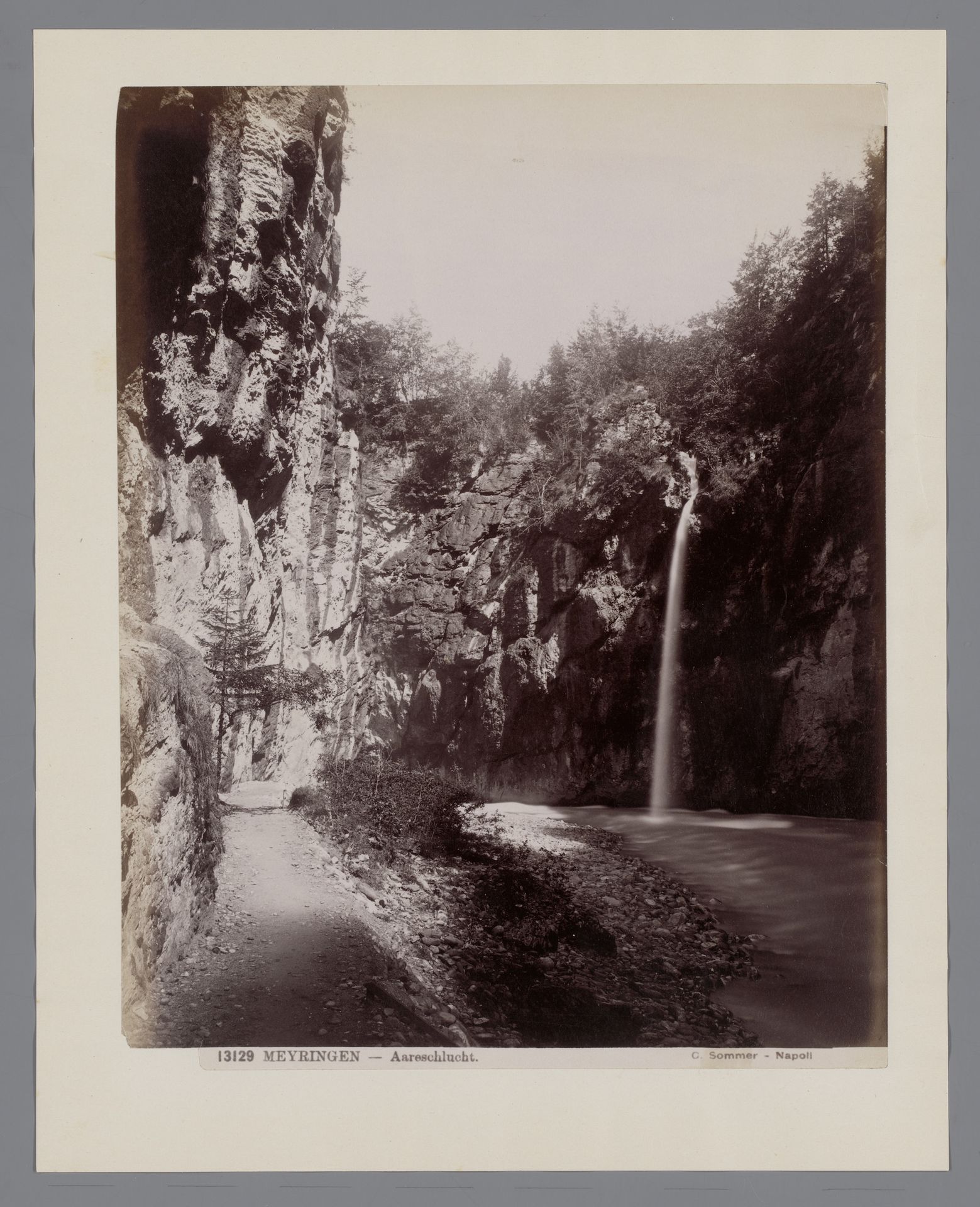
This photograph of the Aareschlucht gorge near Meiringen in Switzerland was taken by Giorgio Sommer sometime between 1834 and 1914. Sommer was a German photographer who spent most of his career in Italy, catering to the burgeoning tourist industry. This image captures a moment of sublime encounter with nature, one carefully mediated for consumption. During the 19th century, sites like the Aareschlucht became increasingly accessible, transforming untouched landscapes into tourist destinations. Sommer's photograph provided an accessible, commodified experience of nature's grandeur, conveniently framed and ready for the taking. Consider the emotional impact of this photograph on its viewers then, and now. Does it evoke a sense of awe, curiosity, or perhaps a critical awareness of the changing relationship between humanity and the natural world?
Gezicht op de Aareschlucht nabij Meiringen, Zwitserland 1857 - 1914

Giorgio Sommer
1834 - 1914Location
RijksmuseumArtwork details
- Dimensions
- height 296 mm, width 236 mm
- Location
- Rijksmuseum
- Copyright
- Rijks Museum: Open Domain
Tags
muted colour palette
sculpture
waterfall
white palette
unrealistic statue
carved into stone
framed image
muted colour
remaining negative space
watercolor
statue
Comments
No comments
About this artwork
This photograph of the Aareschlucht gorge near Meiringen in Switzerland was taken by Giorgio Sommer sometime between 1834 and 1914. Sommer was a German photographer who spent most of his career in Italy, catering to the burgeoning tourist industry. This image captures a moment of sublime encounter with nature, one carefully mediated for consumption. During the 19th century, sites like the Aareschlucht became increasingly accessible, transforming untouched landscapes into tourist destinations. Sommer's photograph provided an accessible, commodified experience of nature's grandeur, conveniently framed and ready for the taking. Consider the emotional impact of this photograph on its viewers then, and now. Does it evoke a sense of awe, curiosity, or perhaps a critical awareness of the changing relationship between humanity and the natural world?
Comments
No comments