About this artwork
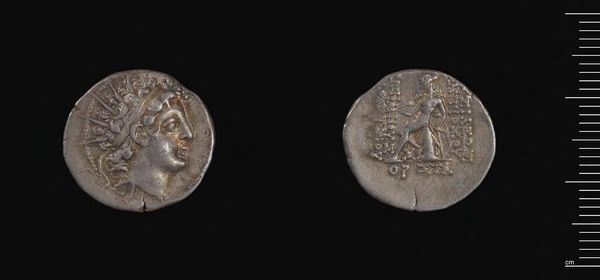
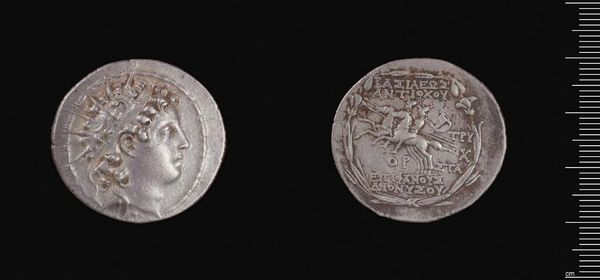
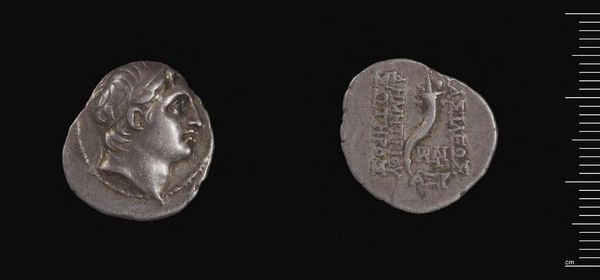
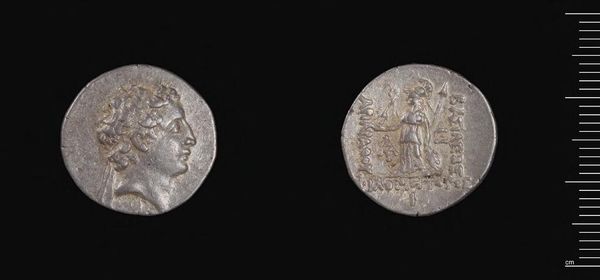
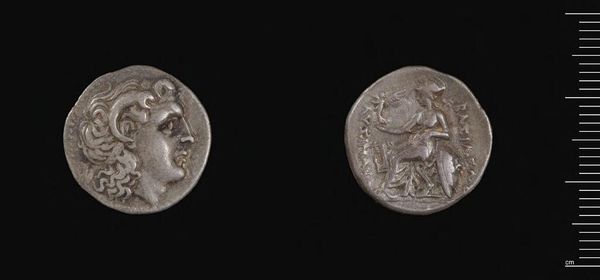
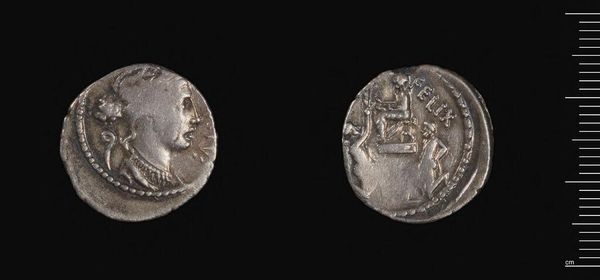
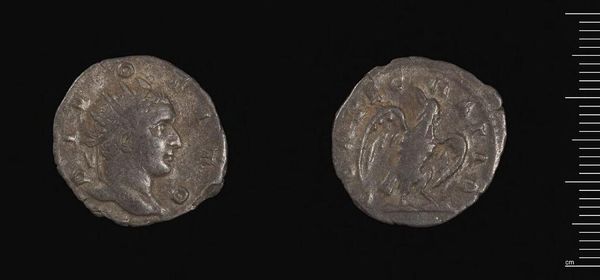
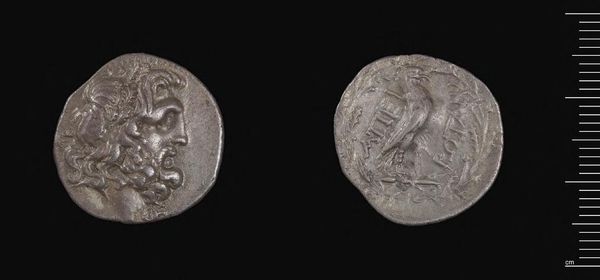
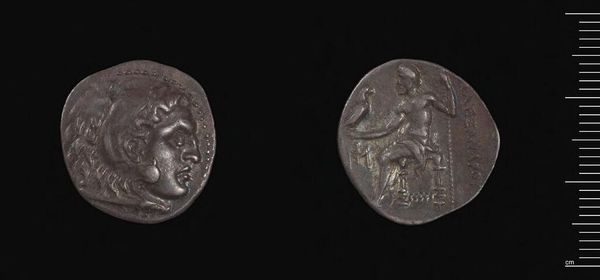
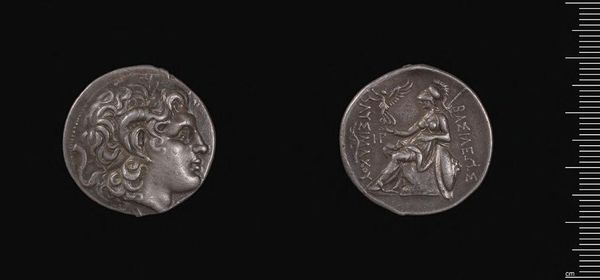
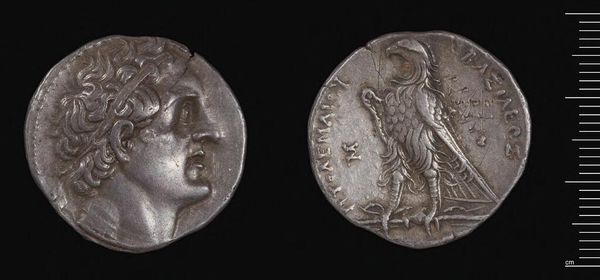
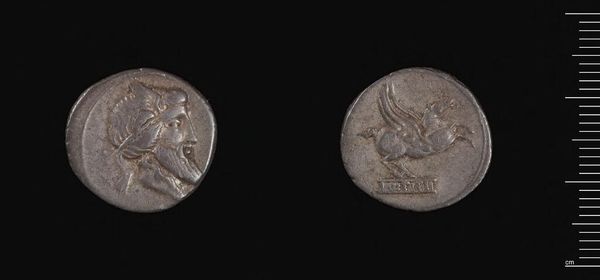
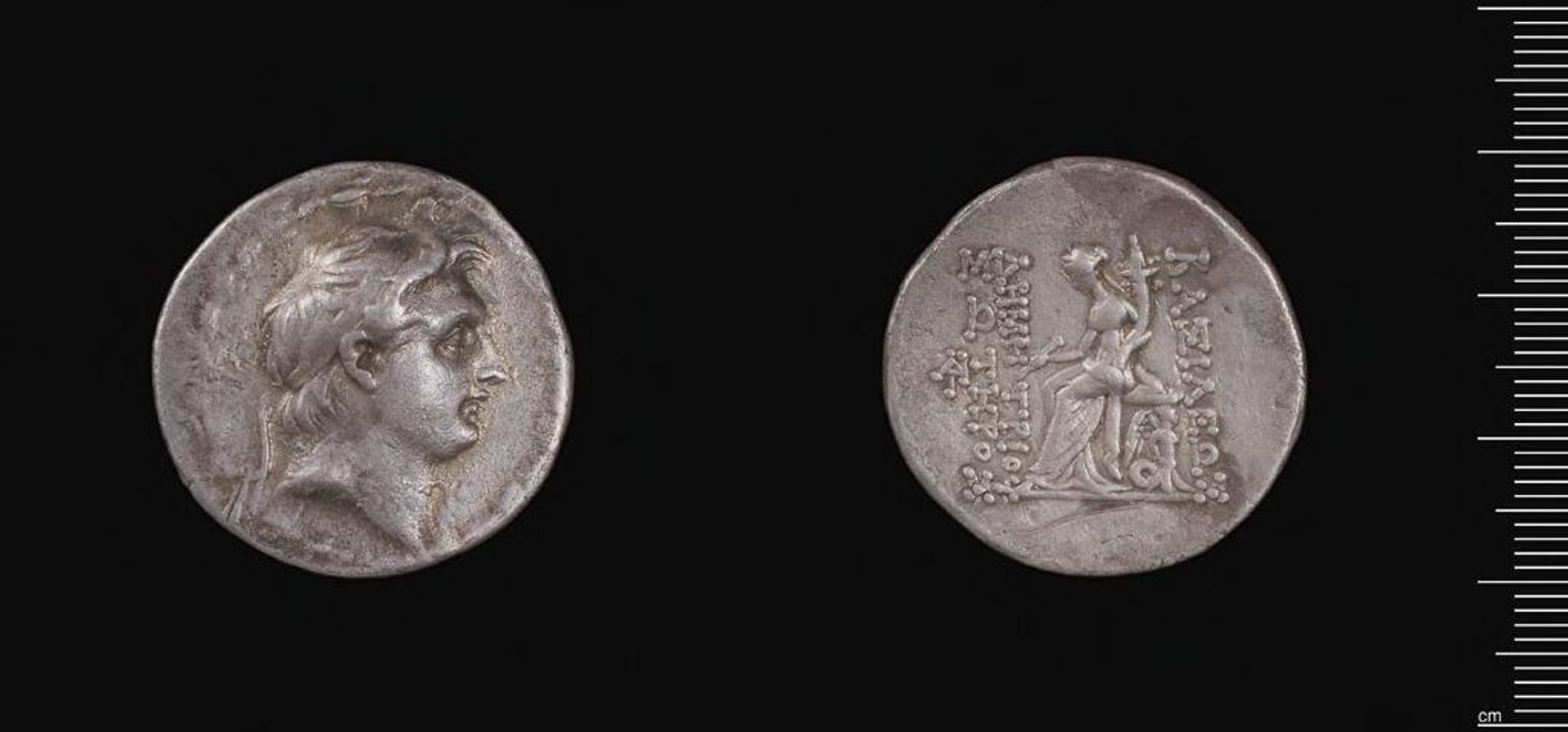
Curator: This silver Tetradrachm, attributed to Demetrios I of Syria, presents a fascinating study in numismatic art. The rendering of the human face in profile offers a surprisingly intimate glimpse into the style of the period. Editor: It's quite striking, really. There's a somber, almost melancholic mood conveyed despite the scale. The texture and tone create an aged effect that adds to its character. Curator: The weight of 16.24 grams is significant, a testament to its value as currency and a symbol of power. The composition strikes me; observe the figure seated on what appears to be a throne on the reverse. Editor: The political implications of the imagery would've been significant. Coins were a primary means of disseminating a ruler's image and projecting authority, weren't they? It's interesting how this one embodies the aspirations of an empire. Curator: Precisely. The semiotic reading of this object suggests far more than simple monetary exchange; it is a narrative inscribed in metal. Editor: Understanding art through its historical function is incredibly valuable. It provides insight into the cultural values and ideologies of the time. Thank you for sharing.
Tetradrachm of Demetrios I
c. 162

Artwork details
- Dimensions
- 16.24 g
- Location
- Harvard Art Museums
- Copyright
- CC0 1.0
Comments
Share your thoughts
About this artwork
Curator: This silver Tetradrachm, attributed to Demetrios I of Syria, presents a fascinating study in numismatic art. The rendering of the human face in profile offers a surprisingly intimate glimpse into the style of the period. Editor: It's quite striking, really. There's a somber, almost melancholic mood conveyed despite the scale. The texture and tone create an aged effect that adds to its character. Curator: The weight of 16.24 grams is significant, a testament to its value as currency and a symbol of power. The composition strikes me; observe the figure seated on what appears to be a throne on the reverse. Editor: The political implications of the imagery would've been significant. Coins were a primary means of disseminating a ruler's image and projecting authority, weren't they? It's interesting how this one embodies the aspirations of an empire. Curator: Precisely. The semiotic reading of this object suggests far more than simple monetary exchange; it is a narrative inscribed in metal. Editor: Understanding art through its historical function is incredibly valuable. It provides insight into the cultural values and ideologies of the time. Thank you for sharing.
Comments
Share your thoughts