About this artwork
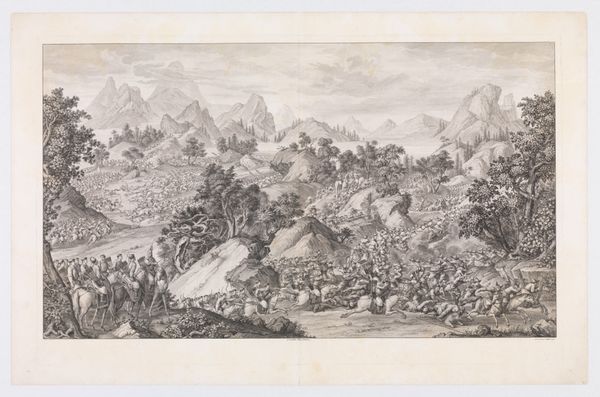
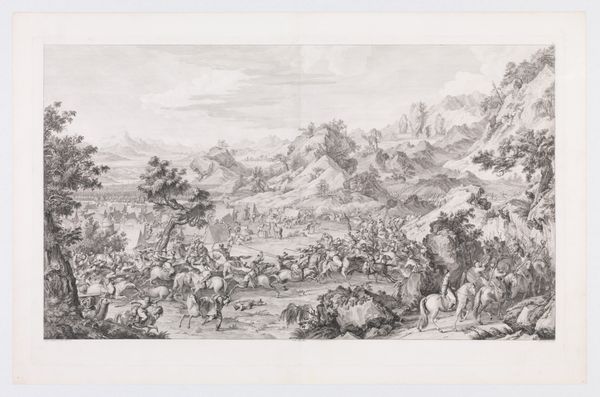
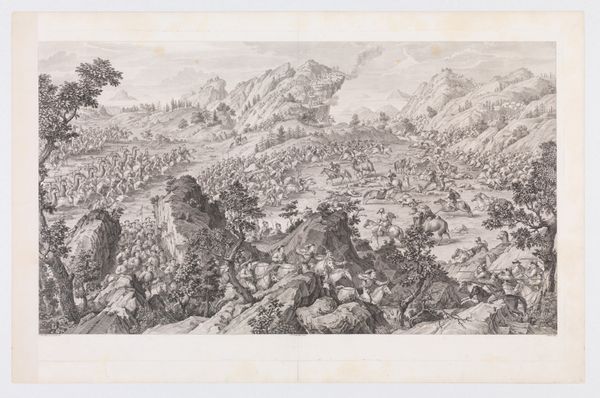
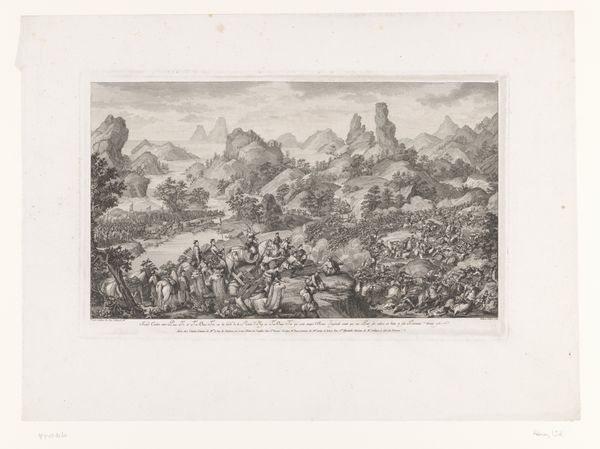
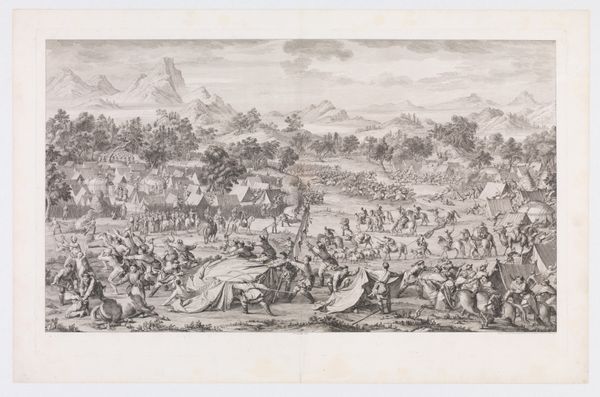
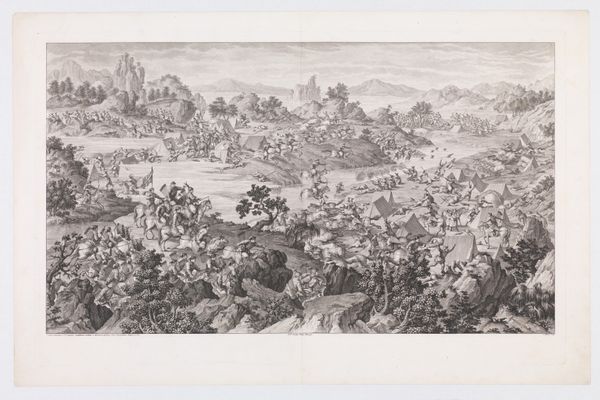
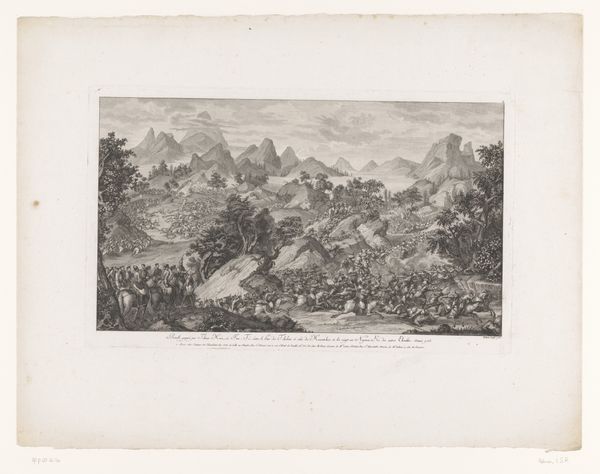
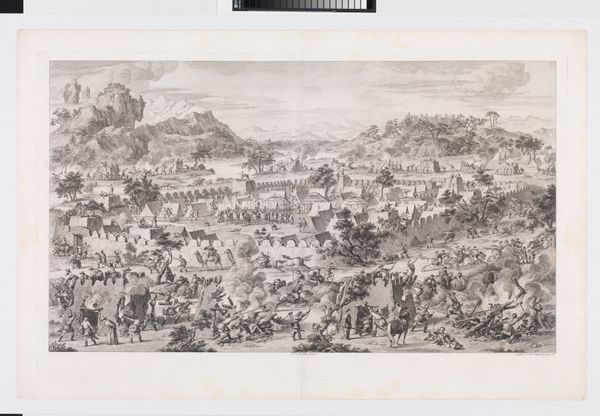
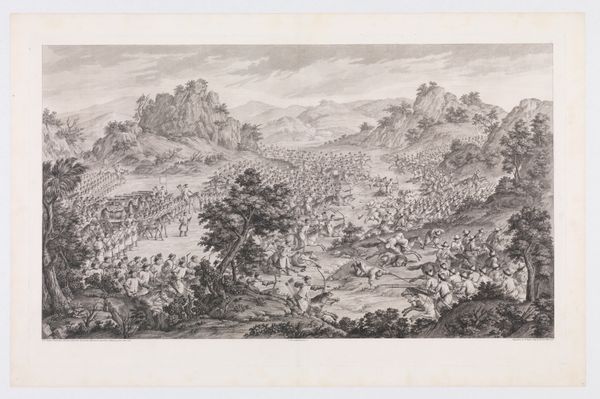
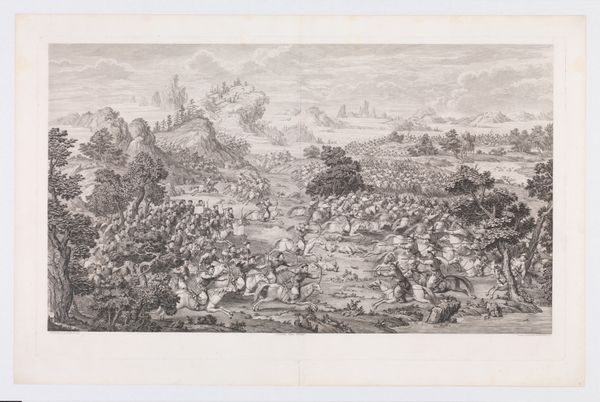
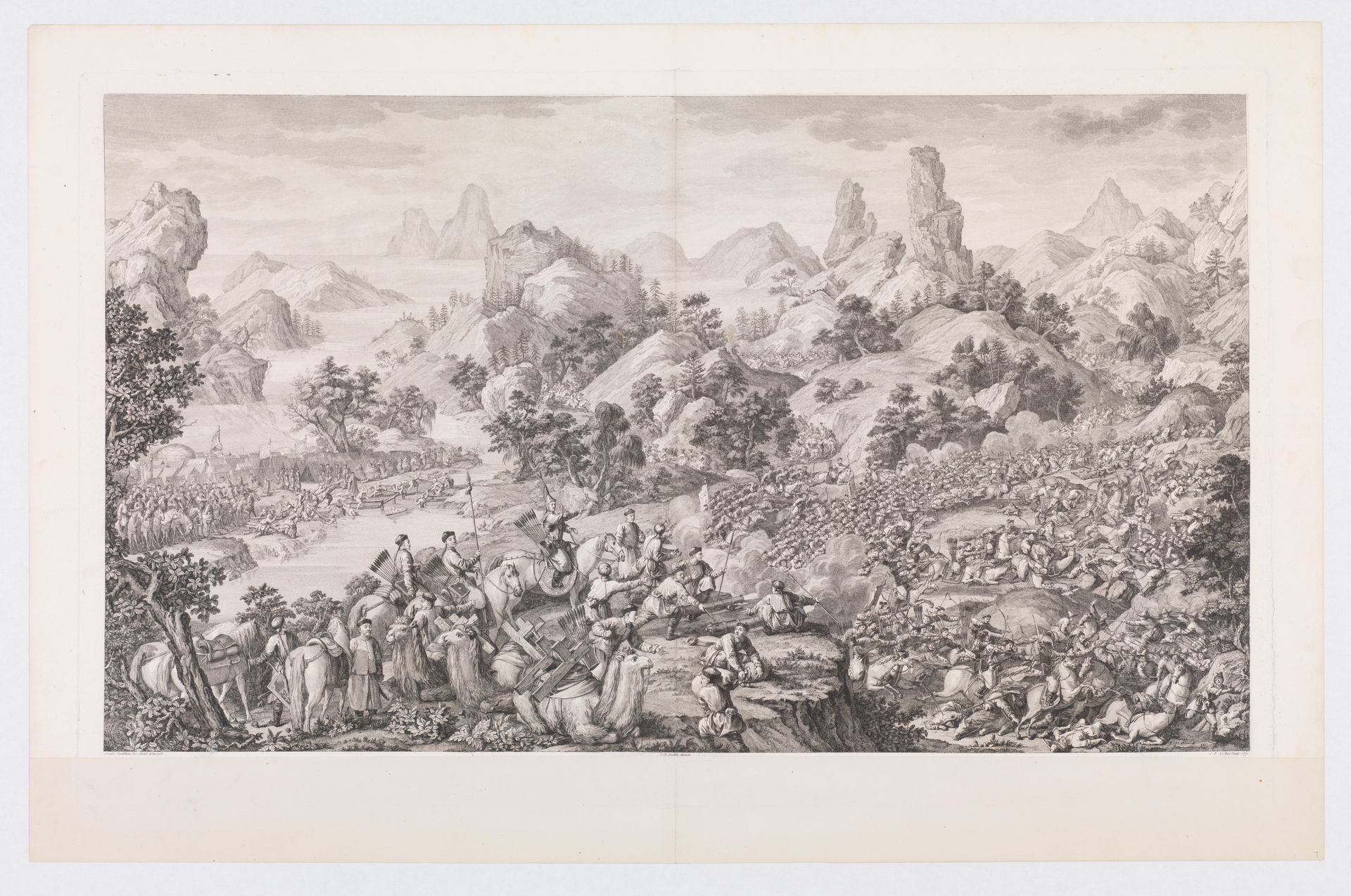
Jacques Philippe Le Bas created this print, "The Lifting of the Siege of the Black River Camp," and it is a fascinating example of how images served state interests. Made in France, it depicts a scene from the Qianlong Emperor's military campaigns in the mid-18th century, specifically in what is now Vietnam. As a European artist, Le Bas never witnessed the event. Instead, he based his work on descriptions and sketches provided by Jesuit missionaries who served as court artists for the Emperor. The print, therefore, isn't just a historical record, but a carefully constructed piece of propaganda. It celebrates the military achievements of the Qianlong Emperor and reinforces his image as a powerful and benevolent ruler. The composition, with its emphasis on order and control, reflects the hierarchical structures of the Qing dynasty. Understanding the social and institutional context of this print requires delving into the complex relationship between the Qing court, Jesuit missionaries, and European artistic traditions. By researching these elements, we can better understand how art was used to shape perceptions of power and legitimacy in 18th-century China.
The Lifting of the Siege of the Black River Camp
1771

Jacques Philippe Le Bas
1707 - 1783
The Metropolitan Museum of Art
Metropolitan Museum of Art, New York, NYArtwork details
- Dimensions
- Sheet: 25 13/16 × 39 11/16 in. (65.5 × 100.8 cm) Plate: 22 5/8 × 36 11/16 in. (57.5 × 93.2 cm)
- Location
- Metropolitan Museum of Art, New York, NY
- Copyright
- Public Domain
Comments
Be the first to share your thoughts about this work.
About this artwork
Jacques Philippe Le Bas created this print, "The Lifting of the Siege of the Black River Camp," and it is a fascinating example of how images served state interests. Made in France, it depicts a scene from the Qianlong Emperor's military campaigns in the mid-18th century, specifically in what is now Vietnam. As a European artist, Le Bas never witnessed the event. Instead, he based his work on descriptions and sketches provided by Jesuit missionaries who served as court artists for the Emperor. The print, therefore, isn't just a historical record, but a carefully constructed piece of propaganda. It celebrates the military achievements of the Qianlong Emperor and reinforces his image as a powerful and benevolent ruler. The composition, with its emphasis on order and control, reflects the hierarchical structures of the Qing dynasty. Understanding the social and institutional context of this print requires delving into the complex relationship between the Qing court, Jesuit missionaries, and European artistic traditions. By researching these elements, we can better understand how art was used to shape perceptions of power and legitimacy in 18th-century China.
Comments
Be the first to share your thoughts about this work.