About this artwork
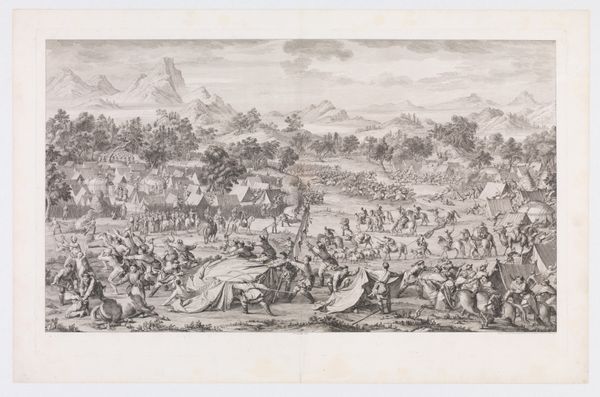
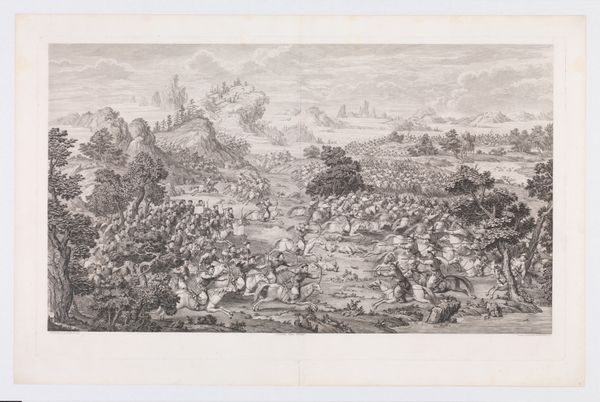
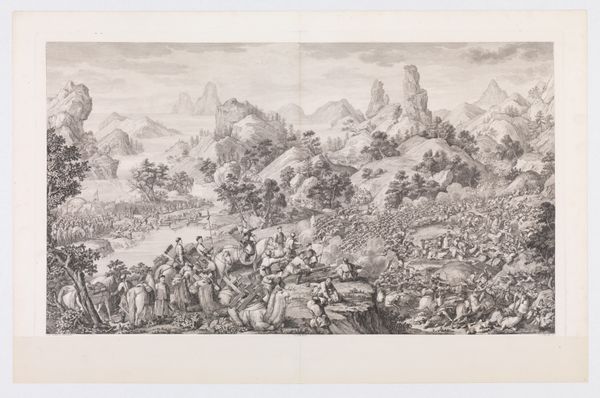
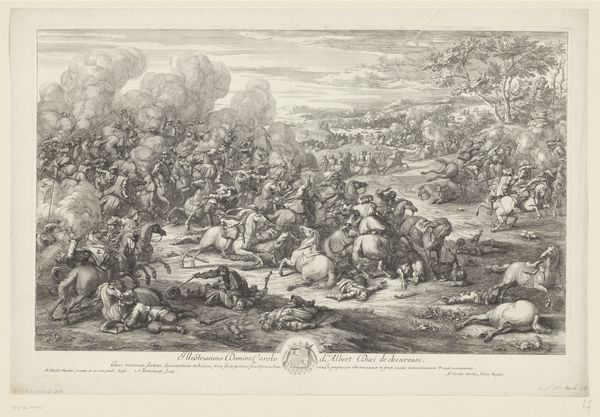
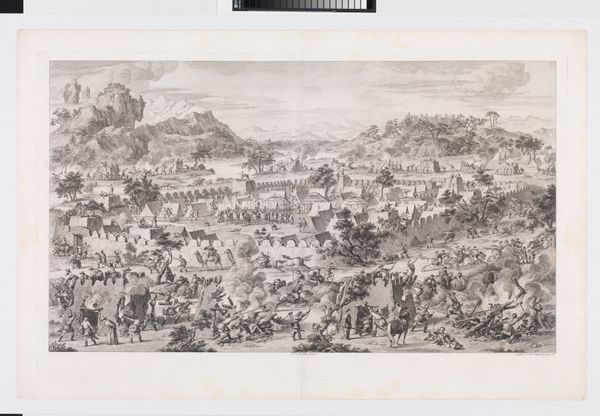
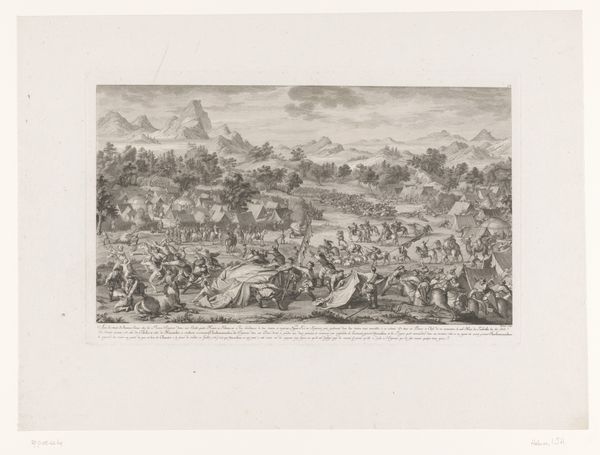
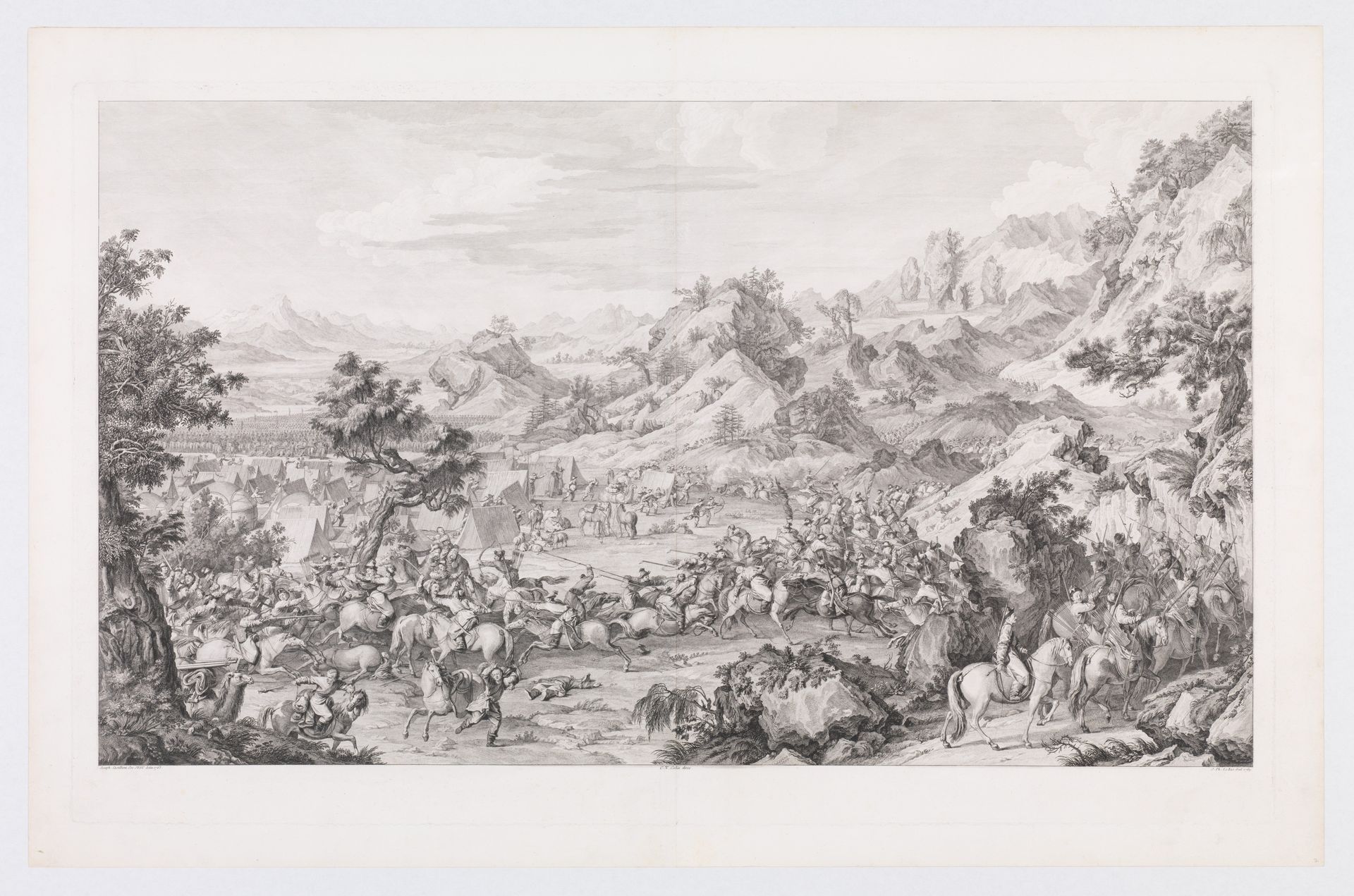
This engraving by Jacques Philippe Le Bas depicts the storming of a camp at Mount Gadan. The clash of armies, the rearing horses, and the fallen bodies are visual testaments to a chaotic moment, yet they also echo a timeless theme: conflict. Look at the motif of the charging horse. Throughout history, from the friezes of ancient Greece to Renaissance paintings, the horse has symbolized power, virility, and the unbridled force of nature. In this scene, the horses not only convey physical power, but also psychological intensity—the raw energy of battle, and the emotional turmoil of war. The act of storming, too, is a recurring symbol. Recall the battles depicted in ancient Roman reliefs, or even scenes of the Apocalypse in medieval art. The imagery of attack and defense touches on a primal human experience, resonating deeply within our collective memory. Notice how the gestures and expressions of the figures—fear, aggression, desperation—mirror those found in classical depictions of battle. These visual echoes suggest that certain core human emotions and experiences are continually reenacted across different eras, demonstrating the cyclical nature of history and the enduring power of visual symbols to convey complex narratives.
Storming the Camp at Mount Gadan
1769

Jacques Philippe Le Bas
1707 - 1783
The Metropolitan Museum of Art
Metropolitan Museum of Art, New York, NYArtwork details
- Dimensions
- Sheet: 25 13/16 × 39 5/8 in. (65.5 × 100.6 cm) Plate: 22 11/16 x 36 13/16 in. (57.6 x 93.5 cm)
- Location
- Metropolitan Museum of Art, New York, NY
- Copyright
- Public Domain
Comments
Share your thoughts
About this artwork
This engraving by Jacques Philippe Le Bas depicts the storming of a camp at Mount Gadan. The clash of armies, the rearing horses, and the fallen bodies are visual testaments to a chaotic moment, yet they also echo a timeless theme: conflict. Look at the motif of the charging horse. Throughout history, from the friezes of ancient Greece to Renaissance paintings, the horse has symbolized power, virility, and the unbridled force of nature. In this scene, the horses not only convey physical power, but also psychological intensity—the raw energy of battle, and the emotional turmoil of war. The act of storming, too, is a recurring symbol. Recall the battles depicted in ancient Roman reliefs, or even scenes of the Apocalypse in medieval art. The imagery of attack and defense touches on a primal human experience, resonating deeply within our collective memory. Notice how the gestures and expressions of the figures—fear, aggression, desperation—mirror those found in classical depictions of battle. These visual echoes suggest that certain core human emotions and experiences are continually reenacted across different eras, demonstrating the cyclical nature of history and the enduring power of visual symbols to convey complex narratives.
Comments
Share your thoughts