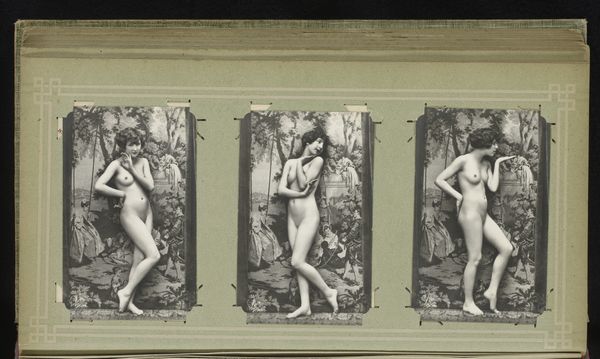
![[Two Standing Female Nudes] by Félix-Jacques-Antoine Moulin](/_next/image?url=https%3A%2F%2Fd2w8kbdekdi1gv.cloudfront.net%2FeyJidWNrZXQiOiAiYXJ0ZXJhLWltYWdlcy1idWNrZXQiLCAia2V5IjogImFydHdvcmtzL2Y0OTZlODc5LTg2MDgtNGRmMi04NTgzLTEwNjlkMjA2YWEyNC9mNDk2ZTg3OS04NjA4LTRkZjItODU4My0xMDY5ZDIwNmFhMjRfZnVsbC5qcGciLCAiZWRpdHMiOiB7InJlc2l6ZSI6IHsid2lkdGgiOiAxOTIwLCAiaGVpZ2h0IjogMTkyMCwgImZpdCI6ICJpbnNpZGUifX19&w=3840&q=75)


daguerreotype, photography
#
portrait
#
daguerreotype
#
photography
#
female-nude
#
nude
#
erotic-art
Dimensions: visible: 14.5 x 11.1 cm (5 11/16 x 4 3/8 in.)
Copyright: Public Domain
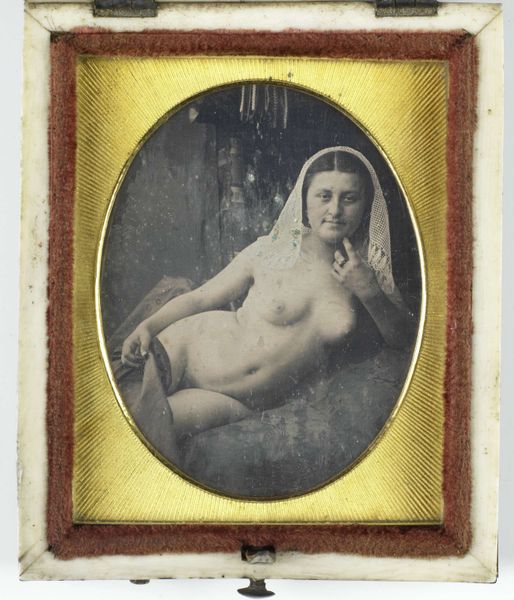
This photograph, *Two Standing Female Nudes*, was made by Félix-Jacques-Antoine Moulin, most likely in the 1850s. It’s a collodion positive, or ambrotype – a process that involves coating a glass plate with light-sensitive chemicals, exposing it in a camera, and then developing it to create a unique, direct positive image. The collodion process was revolutionary because it allowed for shorter exposure times and sharper images compared to earlier photographic methods. But it was also labor intensive. It required skill and precision in coating, sensitizing, exposing, and developing the plates, all while the chemicals were still wet. Moulin used photography as a means to document and explore the human form. It's important to recognize the social context of this image. Nude photography was gaining popularity as a form of artistic expression, but it also raised questions about morality, voyeurism, and the commodification of the human body in an increasingly industrialized world. By considering the materials, the making process, and the cultural context, we gain a deeper understanding of the complex relationship between art, technology, and society in the 19th century.
Comments
No comments
Be the first to comment and join the conversation on the ultimate creative platform.
 Collect
 React
React Comment
More like this