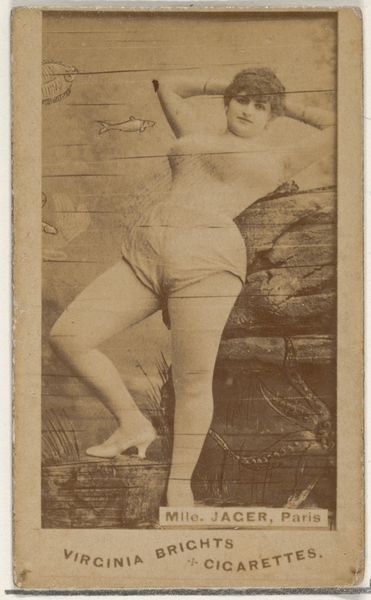
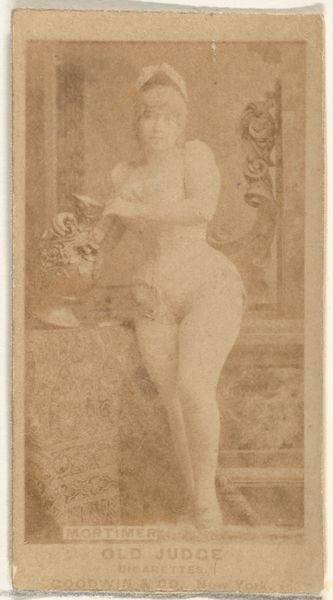
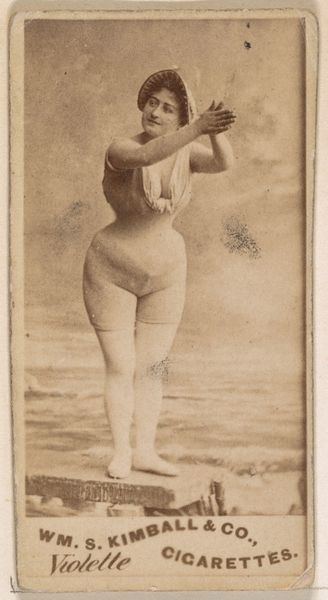
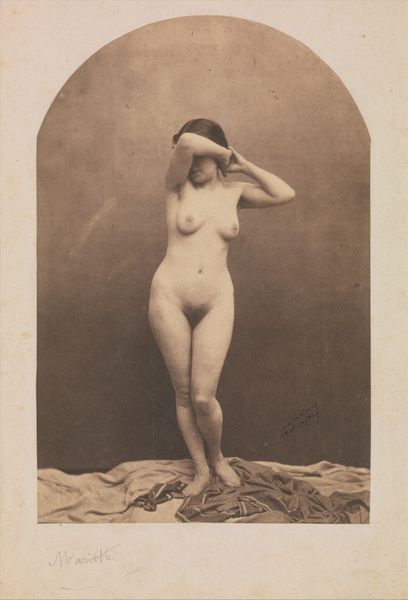
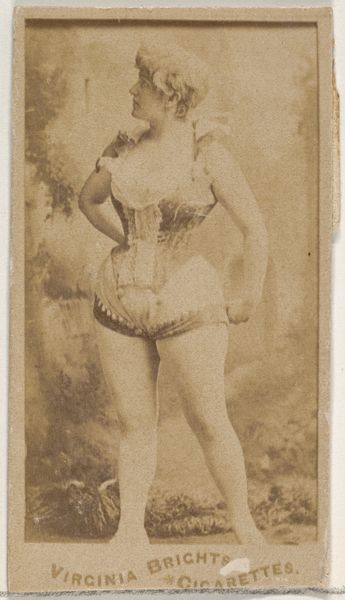
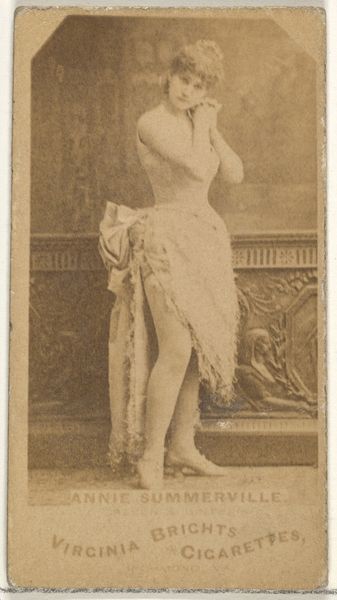
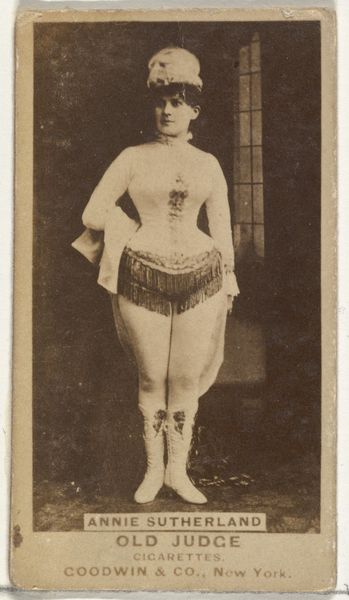
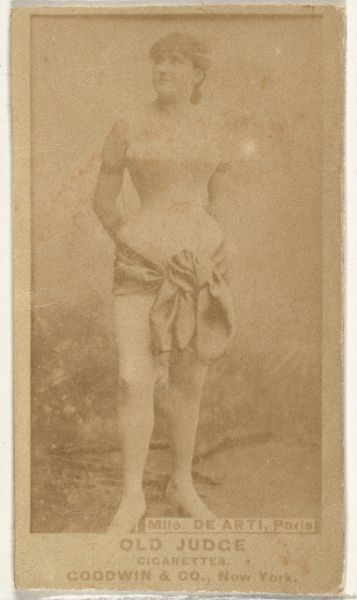
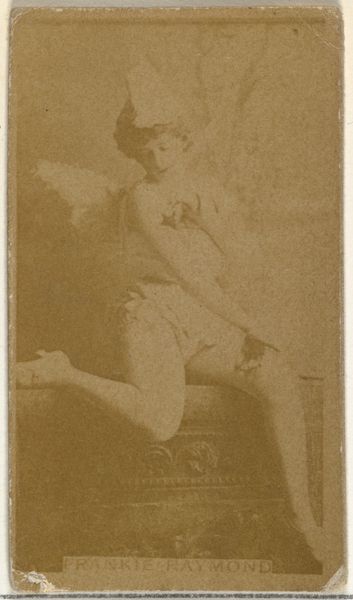
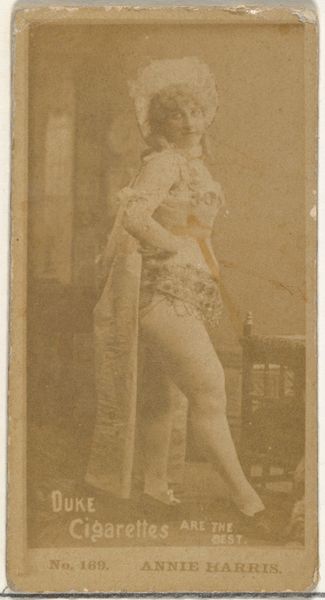
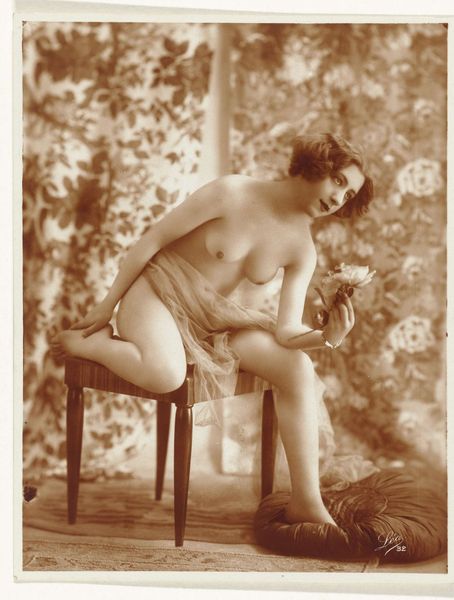
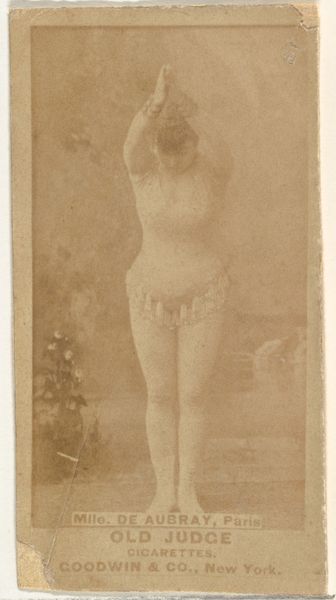
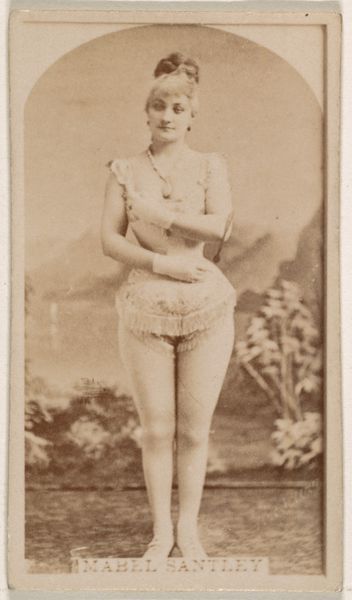
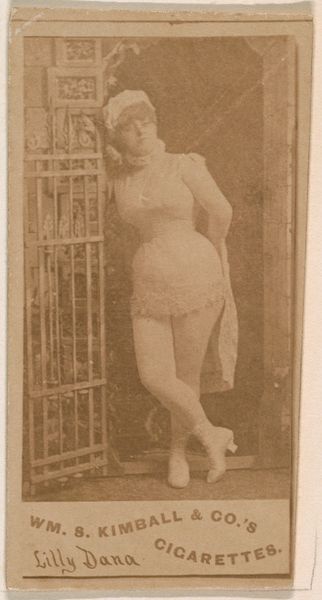
Portret van een vrouw in kanten onderbroek, mogelijk actrice Gina Manès 1870 - 1910
0:00
0:00

photography
#
portrait
#
photography
#
coloured pencil
#
genre-painting
#
nude
#
erotic-art
Dimensions: height 162 mm, width 112 mm, depth 8 mm
Copyright: Rijks Museum: Open Domain
Editor: This is a photograph titled "Portret van een vrouw in kanten onderbroek, mogelijk actrice Gina Manès," which roughly translates to "Portrait of a woman in lace underwear, possibly actress Gina Manès." It was created by André Leconte sometime between 1870 and 1910. I’m immediately struck by how the cheap, perhaps mass-produced, lace underwear contrasts with the formal setting – a balcony with a draped curtain. What are your thoughts on the message this piece seems to be sending? Curator: It’s tempting to consider the image as a straightforward portrait. But I find myself far more interested in the context of its making and consumption. Photography at this time was becoming increasingly accessible, opening avenues for new forms of representation, particularly around gender and class. Notice the imperfections and visible repairs of the frame itself. Do you think this tells us something about how and by whom it may have been used? Editor: That's a really interesting way to look at it! I hadn't considered the frame as part of the artwork’s message. So, are you saying that the way the photo was made available and preserved reflects broader societal changes? Curator: Precisely. We see a collision of desires – a desire for perhaps high art imitation expressed with new accessible materials that point toward the world of advertising or commercial photography. The very accessibility challenges traditional artistic hierarchies. Who was this photograph for, and what purpose did it serve in its time? Editor: So, instead of focusing on the subject, Gina Manès, or the artistic merit of the image itself, we can see it as a window into the social and economic conditions that made its creation and circulation possible? Curator: Exactly. By understanding the means of production, circulation, and material components of this image, we unlock insights into how it functioned within a complex web of social desires, anxieties, and emerging industries. The tension is where things get really interesting. Editor: I see! Focusing on the materials and processes involved definitely shifts the focus away from simply appreciating aesthetics. It gives the photograph a voice, speaking about its cultural surroundings and raising questions about the interplay of art, craft, and commerce. Thanks for this great insight! Curator: My pleasure. Thinking about the materials changes everything!
Comments
No comments
Be the first to comment and join the conversation on the ultimate creative platform.
 Collect
 React
React Comment
More like this