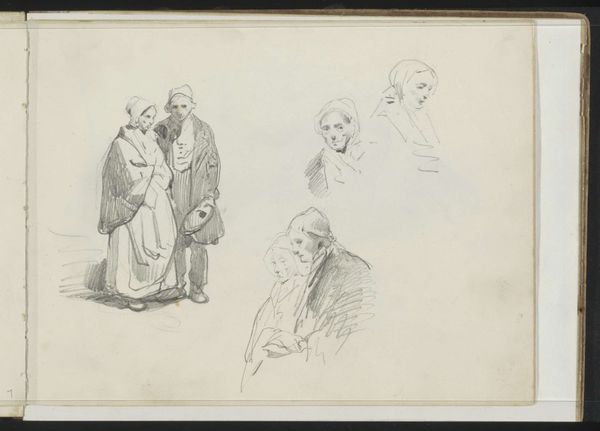
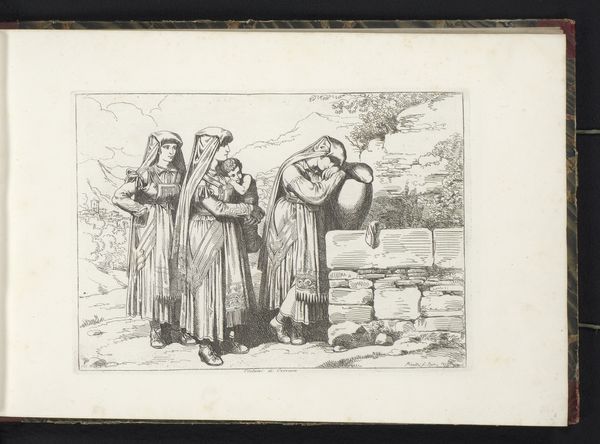
drawing, pencil
portrait
drawing
light pencil work
quirky sketch
sketch book
incomplete sketchy
figuration
personal sketchbook
sketchwork
pen-ink sketch
pencil
sketchbook drawing
storyboard and sketchbook work
academic-art
sketchbook art
realism
Copyright: Rijks Museum: Open Domain
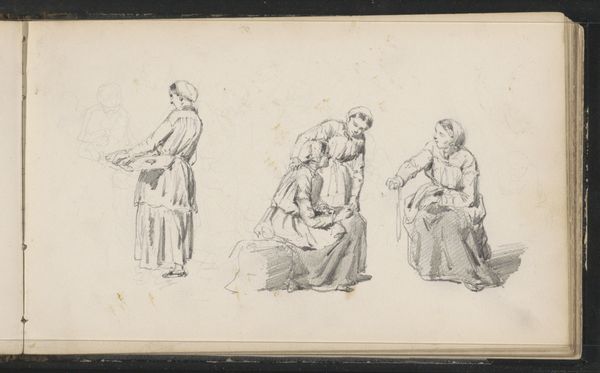
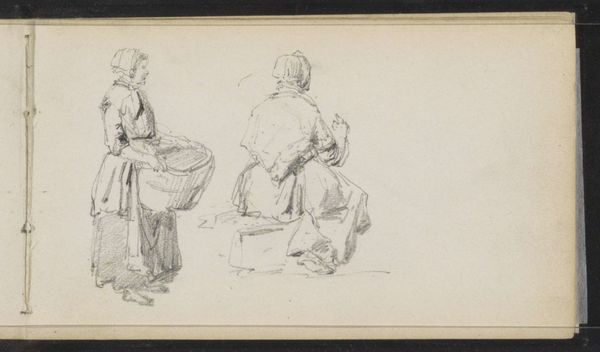
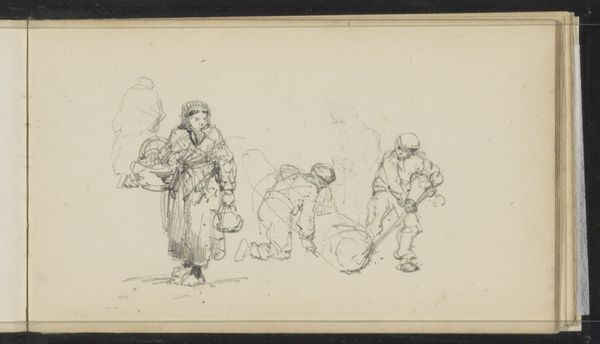
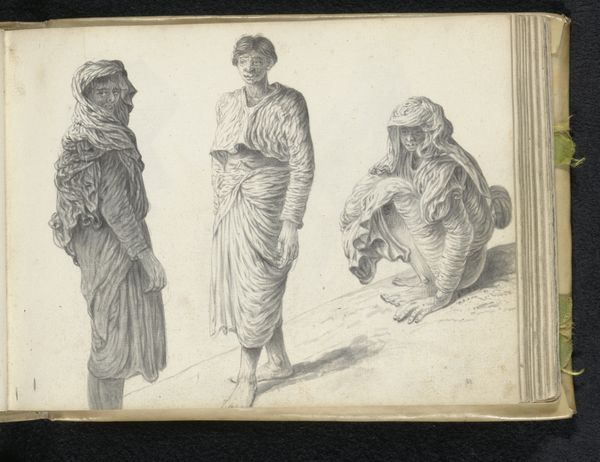
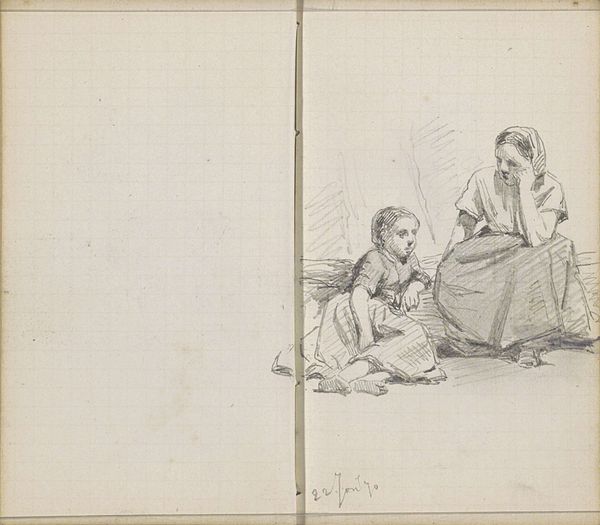
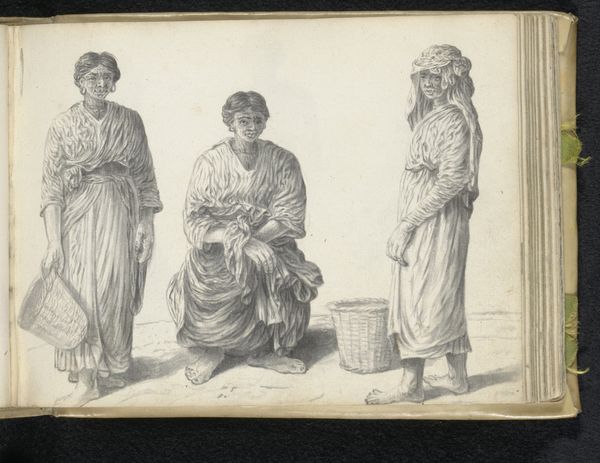
Curator: Hello. Editor: We're looking at Cornelis Springer's "Figuurstudies," from around 1860 to 1866, a pencil drawing currently held at the Rijksmuseum. There's a captivating immediacy to it, almost like a snapshot from everyday life. What strikes me is the artist's skillful rendering of light and shadow with just pencil. What do you see in this piece? Curator: Initially, one is struck by the work’s exploration of form through a controlled manipulation of line. Consider the varying pressure applied to the pencil; observe how Springer articulates volume and texture with such efficiency. The economy of line, especially, suggests a deep understanding of structure. Editor: I do see that, the varied line weights create depth! But beyond the lines themselves, do you find any inherent meaning within the composition, any relationship between the figures, or a symbolic intent perhaps? Curator: While narrative interpretation remains tempting, from a Formalist point of view, we focus primarily on the elements present, and the pictorial space. The placement of the figures relative to one another generates a compositional rhythm; this, together with variations of light on forms, establishes a dynamic relationship within the drawing, but nothing beyond. Any external symbolic imposition remains extrinsic. Editor: So, you see the relationships more as a formal arrangement than anything hinting at, say, social commentary? Curator: Precisely. Meaning originates from the artist's arrangement and utilization of fundamental visual components within the work, more so than through symbolic or societal attributions. Editor: I guess I hadn't thought about approaching art in such a purely visual manner. It's insightful to consider how much can be conveyed through the pure forms, light and shadows themselves. Curator: Indeed. It allows us to appreciate the artist's technical virtuosity, and engage with the artwork’s intrinsic essence.
Comments
No comments
Be the first to comment and join the conversation on the ultimate creative platform.
 React
React Comment