About this artwork
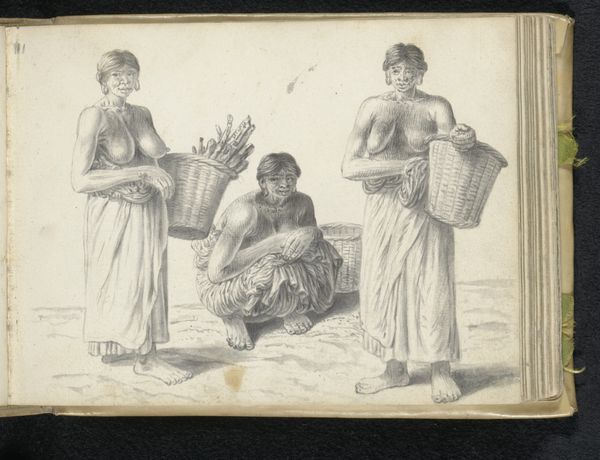
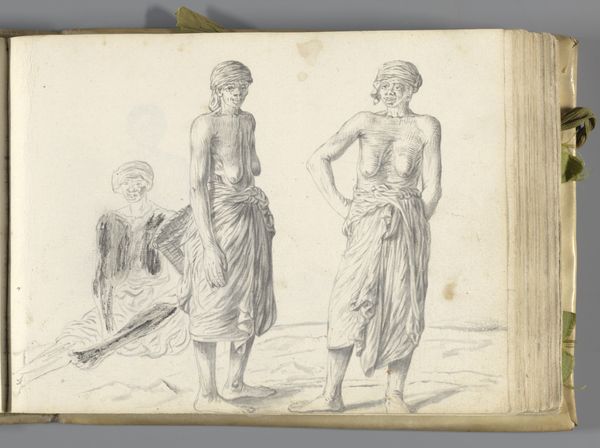
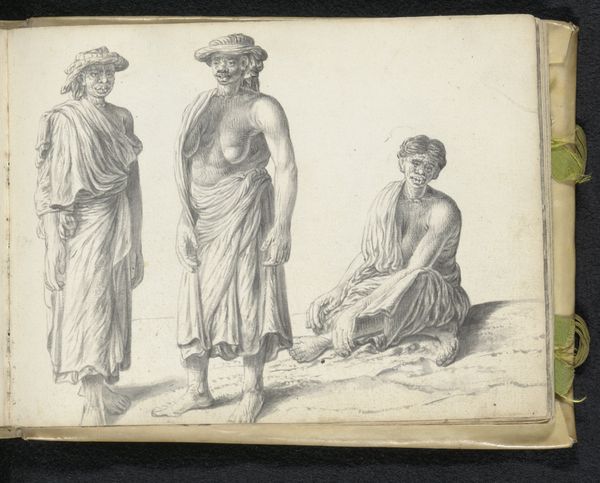
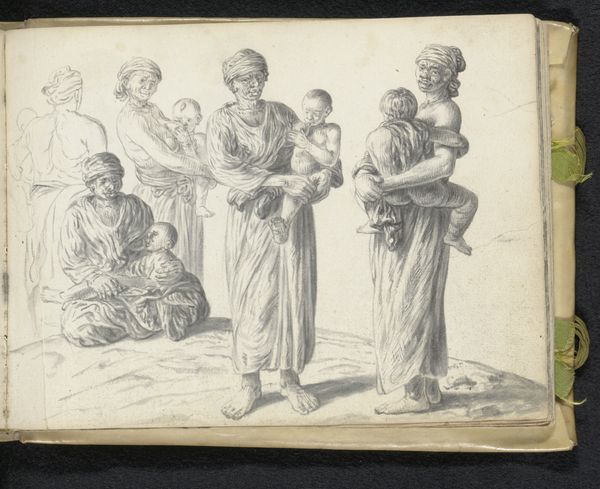
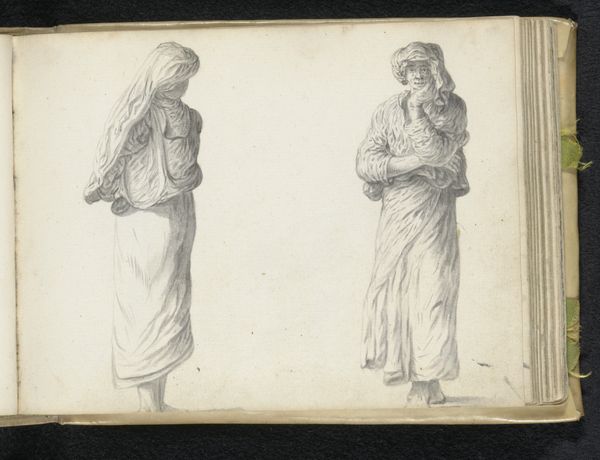
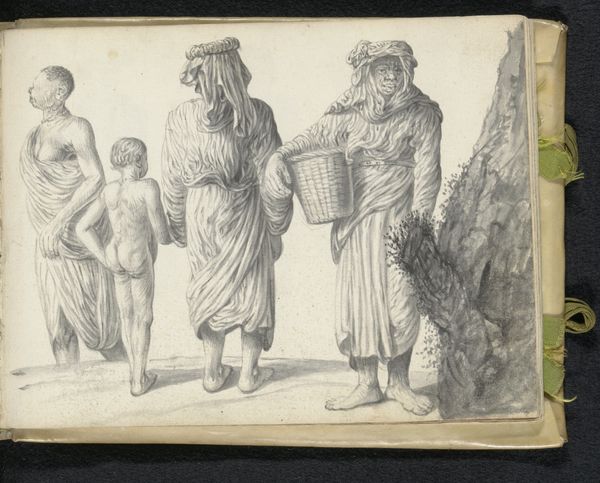
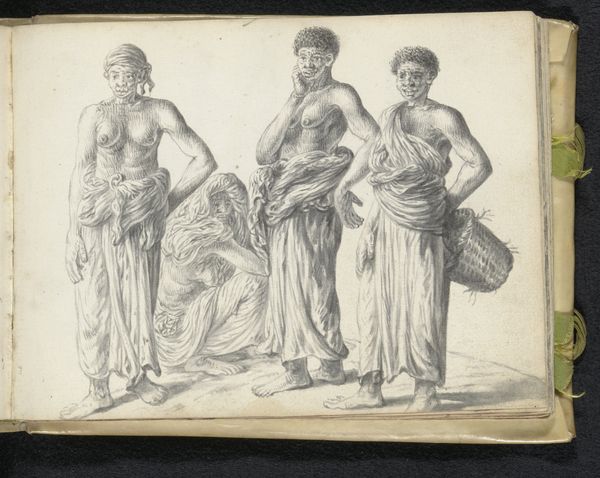
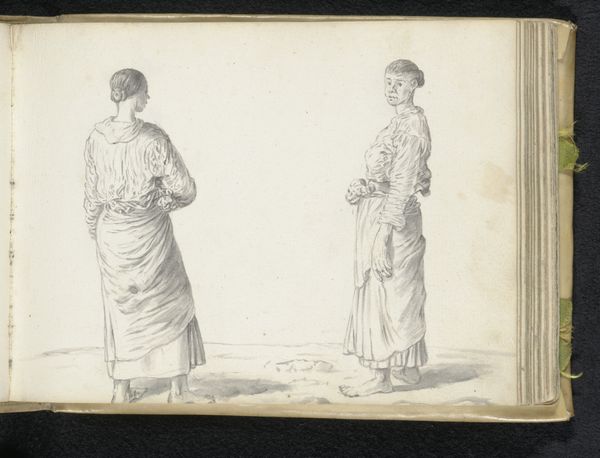
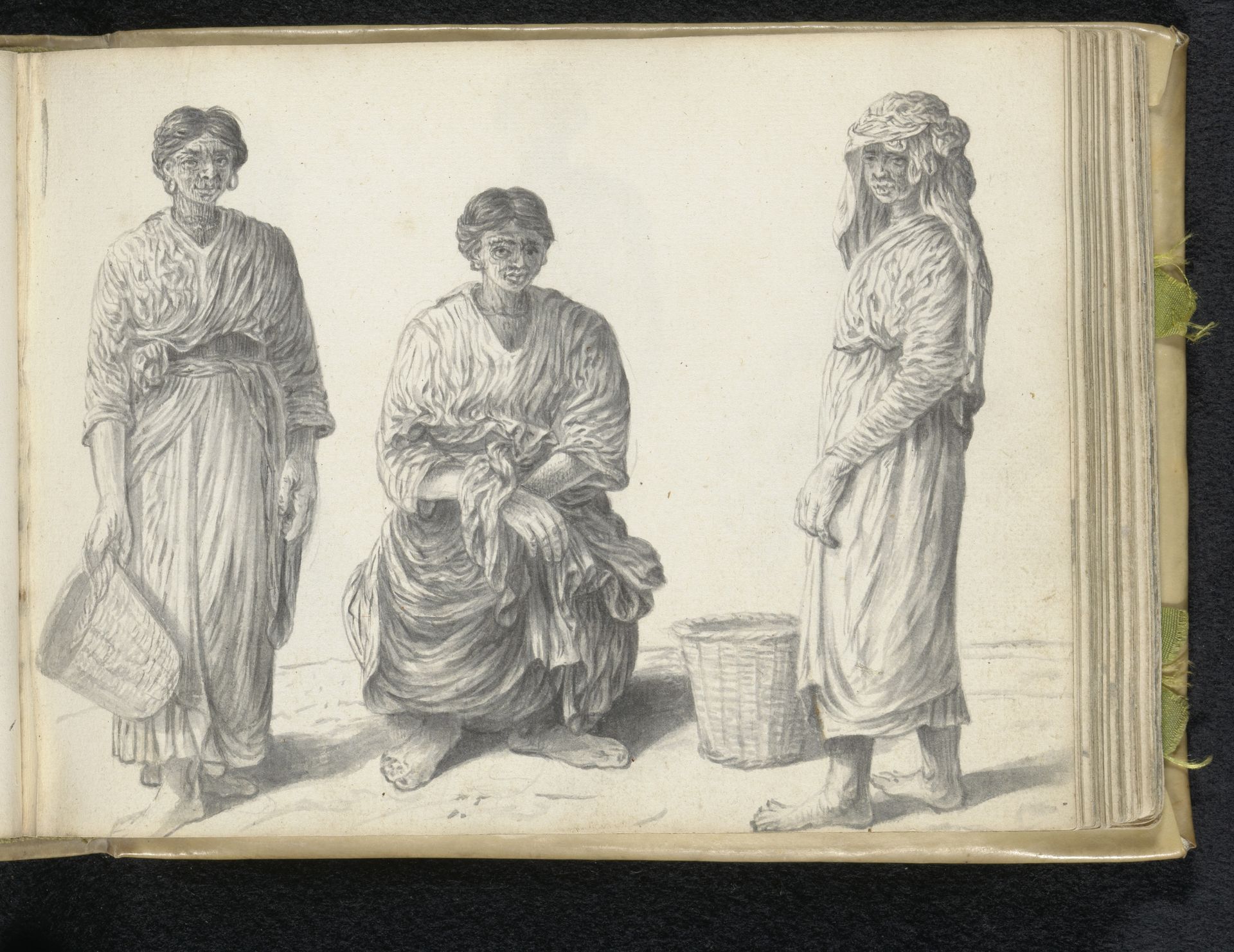
Esaias Boursse created this drawing titled "Three Sinhalese Women" sometime in the 17th century, using graphite. Boursse was employed by the Dutch East India Company, a powerful entity whose trade routes were built on the exploitation and colonization of various countries, including Ceylon, now Sri Lanka. The artist's depiction of these women in a seemingly objective manner belies the historical and social context of the time. As a European man, Boursse was undoubtedly influenced by prevailing colonial attitudes towards non-European people. The image invites us to consider how the identities and histories of these women are mediated through the lens of a colonizer. What does it mean for a foreign artist to capture their likenesses, and for what purpose? The drawing does not maintain traditional representations of Sinhalese women of the time. Rather, it offers a glimpse into the lives of individuals caught within larger power structures, highlighting themes of cultural exchange, representation, and the gaze. This work is a stark reminder of the human cost of colonial expansion.

Artwork details
- Medium
- drawing, paper, pencil
- Dimensions
- height 148 mm, width 196 mm
- Copyright
- Rijks Museum: Open Domain
Tags
portrait
drawing
paper
pencil
genre-painting
realism
Comments
No comments
About this artwork
Esaias Boursse created this drawing titled "Three Sinhalese Women" sometime in the 17th century, using graphite. Boursse was employed by the Dutch East India Company, a powerful entity whose trade routes were built on the exploitation and colonization of various countries, including Ceylon, now Sri Lanka. The artist's depiction of these women in a seemingly objective manner belies the historical and social context of the time. As a European man, Boursse was undoubtedly influenced by prevailing colonial attitudes towards non-European people. The image invites us to consider how the identities and histories of these women are mediated through the lens of a colonizer. What does it mean for a foreign artist to capture their likenesses, and for what purpose? The drawing does not maintain traditional representations of Sinhalese women of the time. Rather, it offers a glimpse into the lives of individuals caught within larger power structures, highlighting themes of cultural exchange, representation, and the gaze. This work is a stark reminder of the human cost of colonial expansion.
Comments
No comments