before 1879
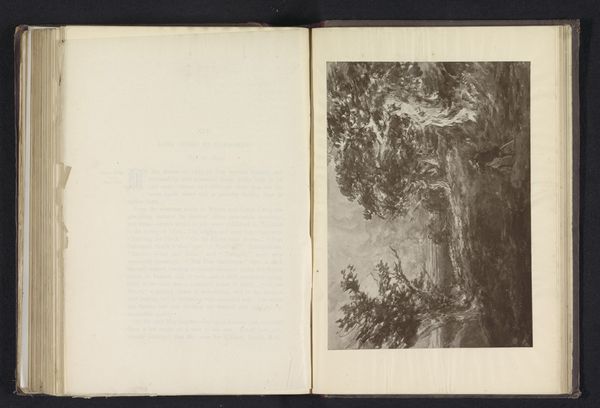
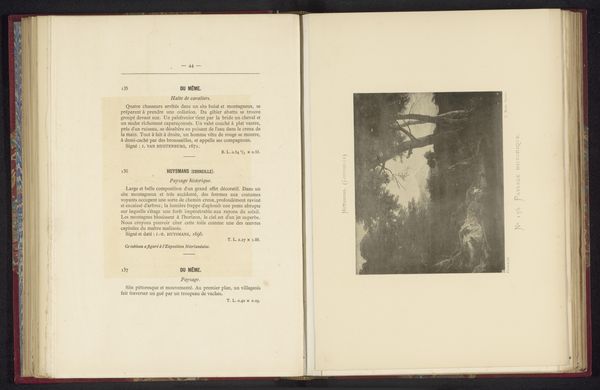
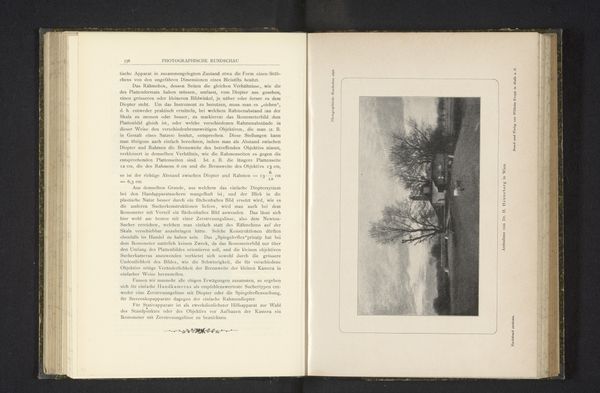
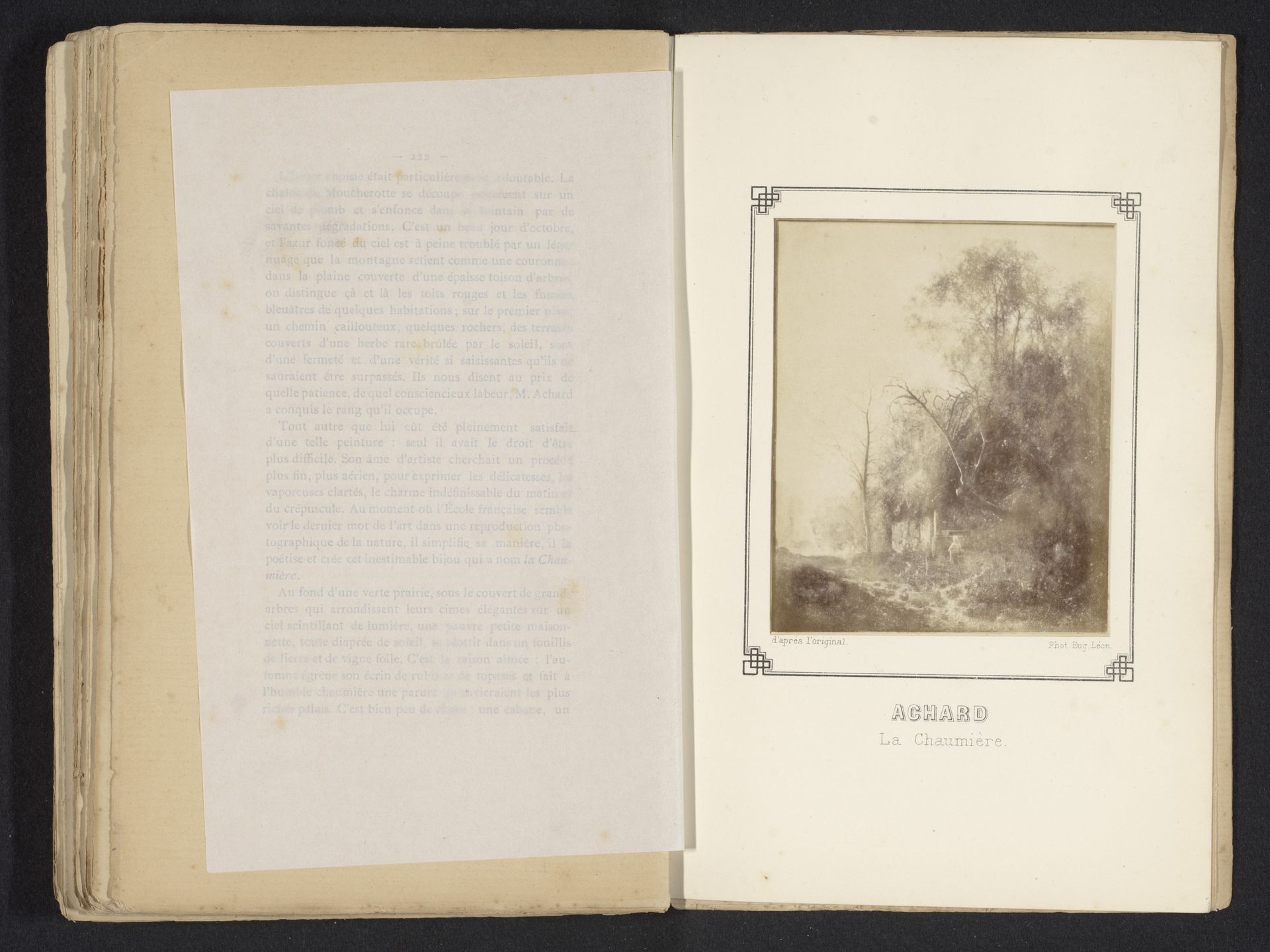
Fotoreproductie van een schilderij van een landschap met een dode boom

Listen to curator's interpretation
Curatorial notes
Curator: The mood is overwhelmingly melancholic, a study in greys, fading light. There is such starkness with the single, fallen tree contrasted against the ethereal haze in the distance. Editor: Precisely, and here before us is an albumen print titled, "Fotoreproductie van een schilderij van een landschap met een dode boom," or "Photoreproduction of a painting of a landscape with a dead tree." It’s a reproduction, by E. Léon, of a painting, before 1879. Considering its historical context and photographic technique, its meaning opens up in many interesting directions. Curator: It is intriguing, and the use of the dead tree, what do you make of its symbolic representation in this Romantic-era landscape? The photograph seems almost to insist on it as the centerpiece. Editor: It’s quite a powerful image! Dead trees often signify mortality or loss, a confrontation with our temporal existence. The surrounding hazy background is interesting because in a landscape context it could signal transition and change – reflecting a deeper societal awareness perhaps? These photosensitive prints involve labor and the circulation of an image. I mean, this could have been consumed quite readily! Curator: Ah, there is such tension here in those choices, with the decaying, crooked branch of the single tree which directs the viewer’s gaze through the woodland – it's all meticulously laid out in order to evoke emotion! Editor: We must also consider how easily disseminated such photographs are and that would directly impact popular art and wider landscape aesthetics. It forces a confrontation with changing consumption habits in that era and how artwork moved away from just the elite circles. Curator: And yet, as a single image, removed from its context of production, we come face-to-face with archetypes, emotions that connect with viewers. I think viewers can immediately see the somber tones within their collective memory. Editor: In short, this object gives us some great visual cues of societal change through Romanticist ideas. Thanks for sharing, a good piece indeed.