About this artwork
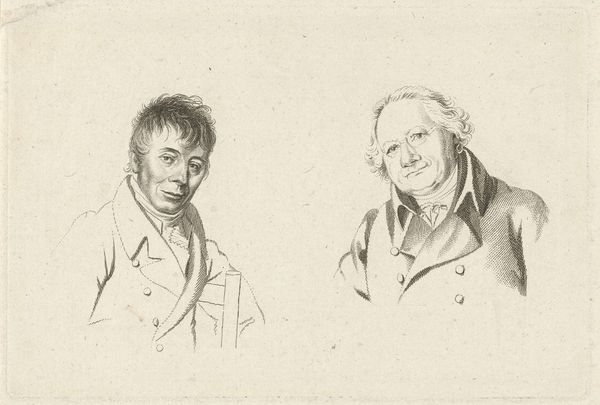
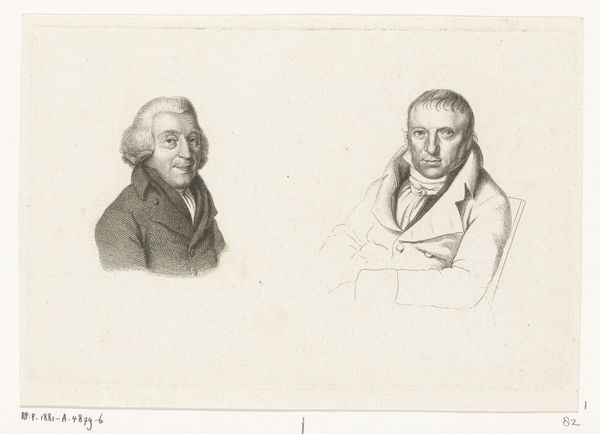
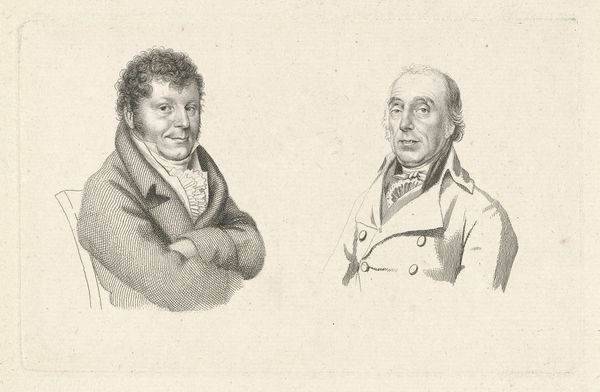
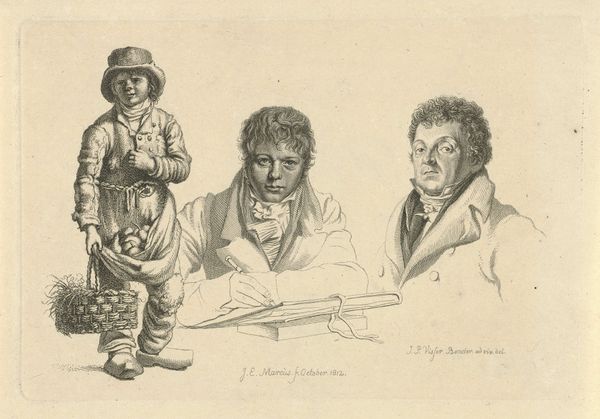
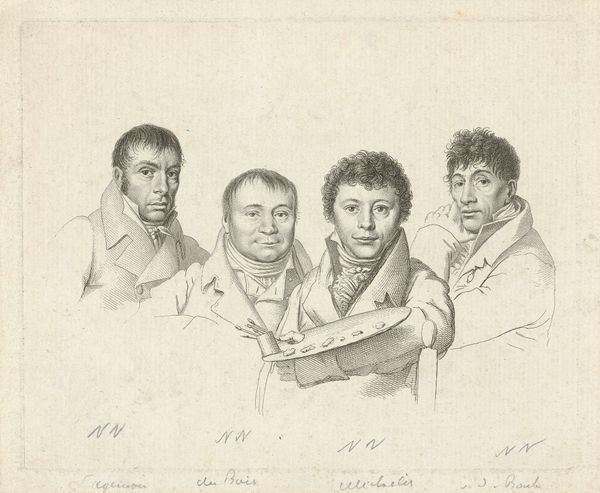
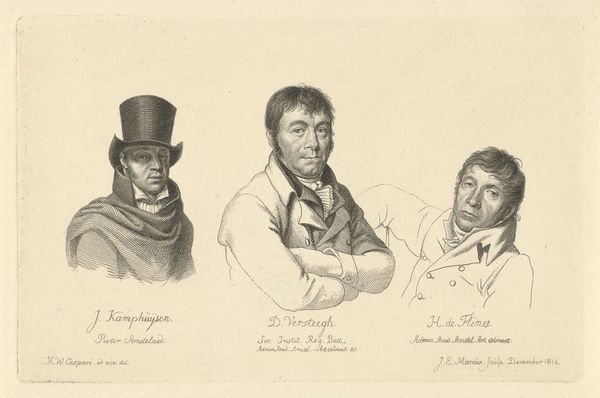
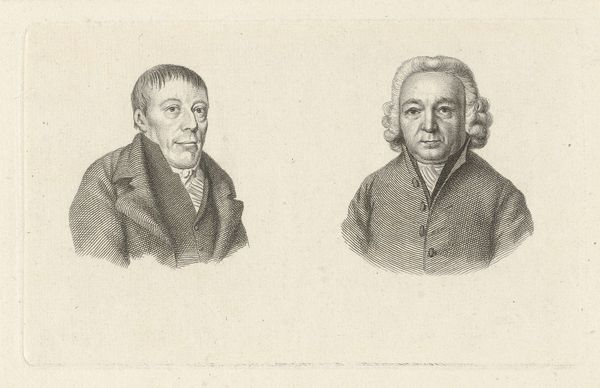
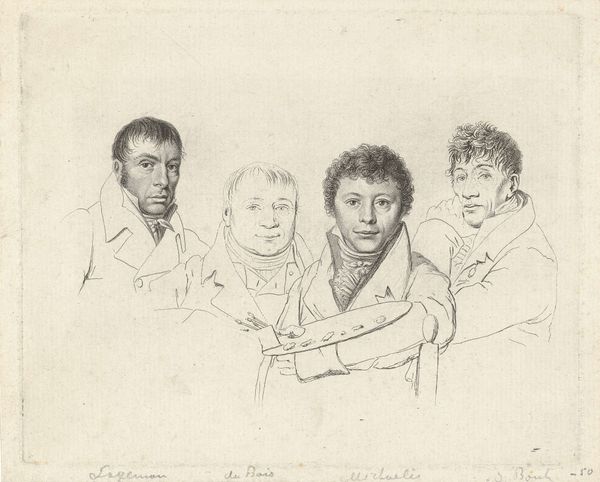
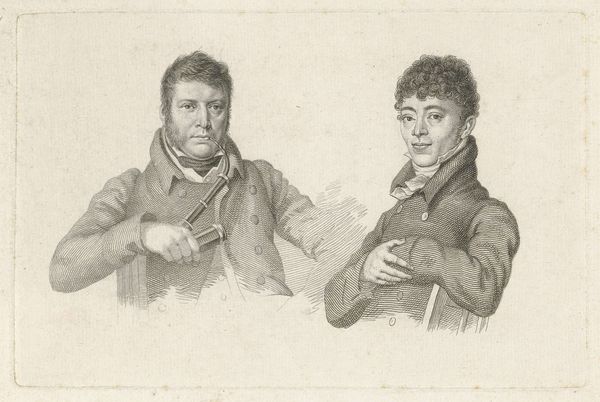
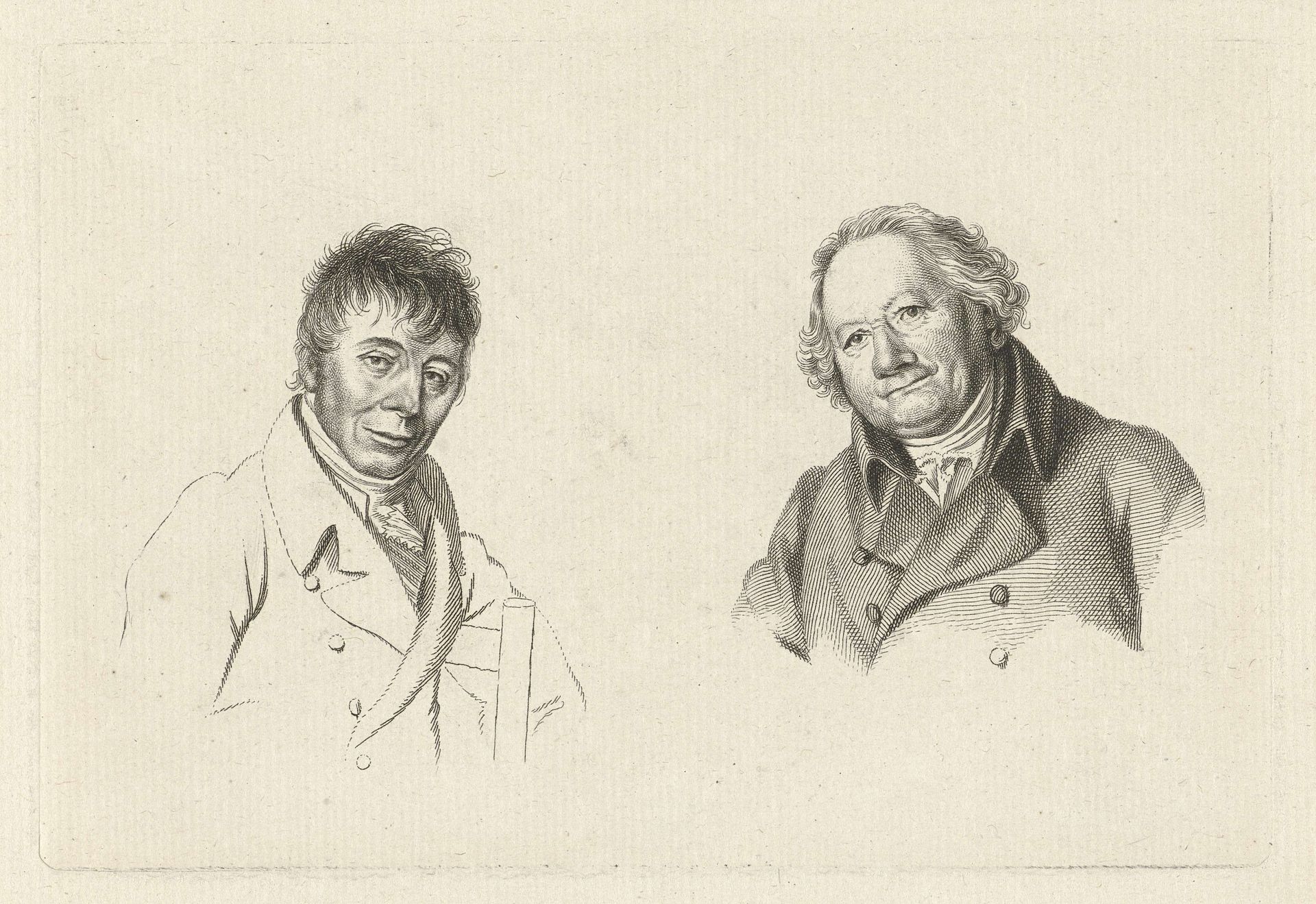
This double portrait by Jacob Ernst Marcus, made in the early 19th century, captures Daniël Dupré and Christiaan Welmeer through the meticulous technique of etching. The incised lines, achieved through acid biting into a metal plate, demonstrate the labor-intensive methods of printmaking. Look at the way the density of lines creates shading and volume, a testament to Marcus's skill and the precision demanded by the etching process. The choice of printmaking, rather than painting, is interesting. Prints allowed for the wider distribution of images, catering to an expanding middle class eager to consume and display art. Etchings like this one reveal the democratization of portraiture during this period. The production process, involving specialized tools, materials, and expertise, raises questions about the value assigned to artistic labor. By considering the processes and material involved, we recognize the skill and cultural context embedded in this seemingly simple double portrait, and challenge conventional distinctions between art and craft.
Portretten van Daniël Dupré en Christiaan Welmeer
1813

Jacob Ernst Marcus
1774 - 1826Location
RijksmuseumArtwork details
- Medium
- drawing, pencil
- Dimensions
- height 124 mm, width 186 mm
- Location
- Rijksmuseum
- Copyright
- Rijks Museum: Open Domain
Tags
Comments
Share your thoughts
About this artwork
This double portrait by Jacob Ernst Marcus, made in the early 19th century, captures Daniël Dupré and Christiaan Welmeer through the meticulous technique of etching. The incised lines, achieved through acid biting into a metal plate, demonstrate the labor-intensive methods of printmaking. Look at the way the density of lines creates shading and volume, a testament to Marcus's skill and the precision demanded by the etching process. The choice of printmaking, rather than painting, is interesting. Prints allowed for the wider distribution of images, catering to an expanding middle class eager to consume and display art. Etchings like this one reveal the democratization of portraiture during this period. The production process, involving specialized tools, materials, and expertise, raises questions about the value assigned to artistic labor. By considering the processes and material involved, we recognize the skill and cultural context embedded in this seemingly simple double portrait, and challenge conventional distinctions between art and craft.
Comments
Share your thoughts