About this artwork
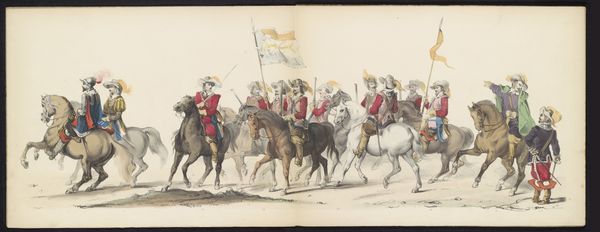
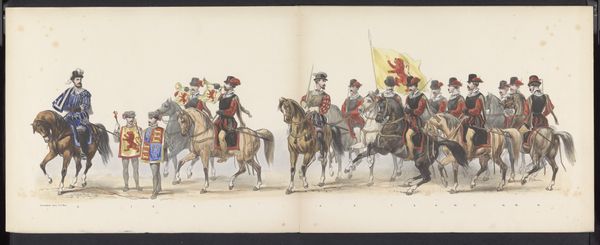
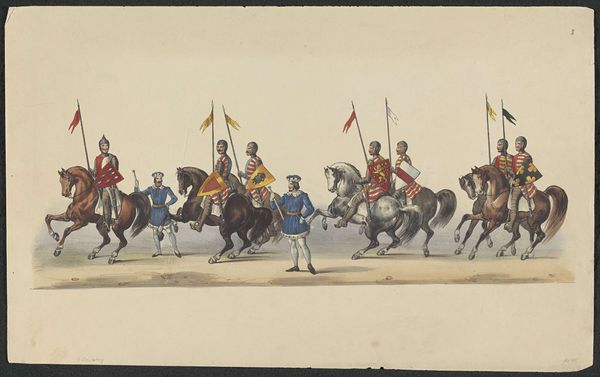
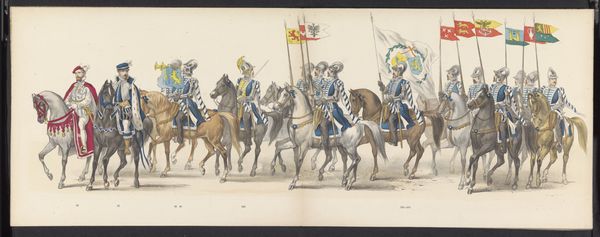
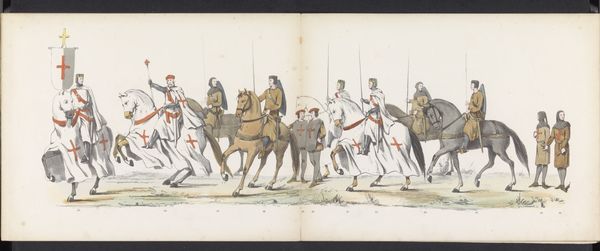
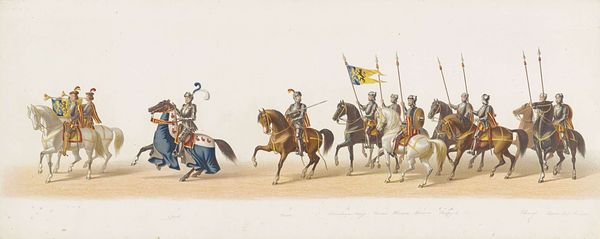
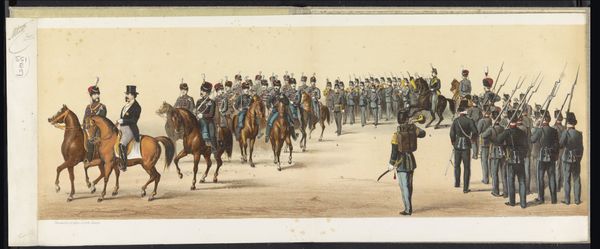
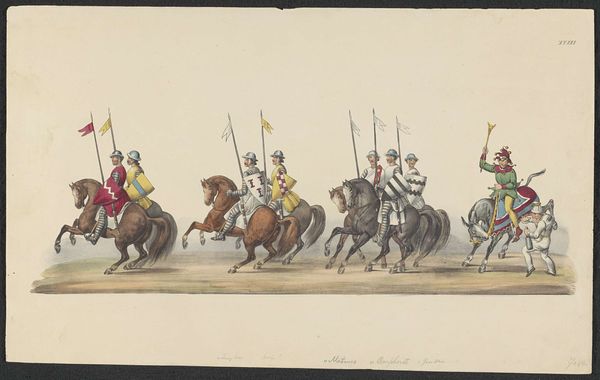
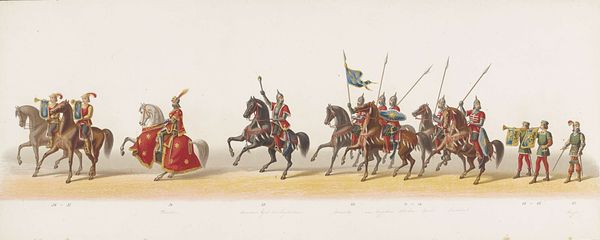
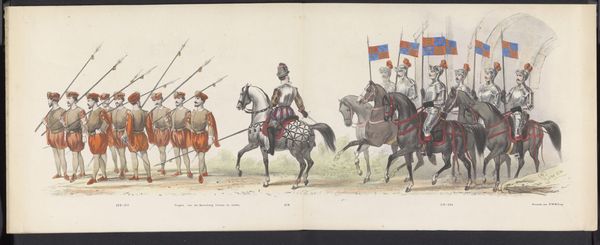
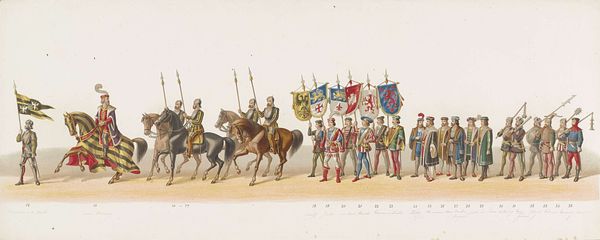
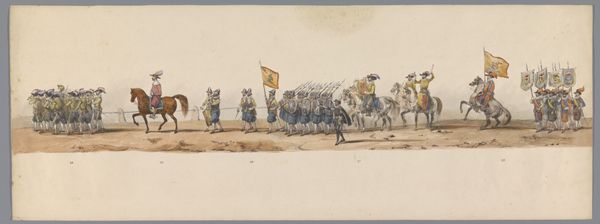
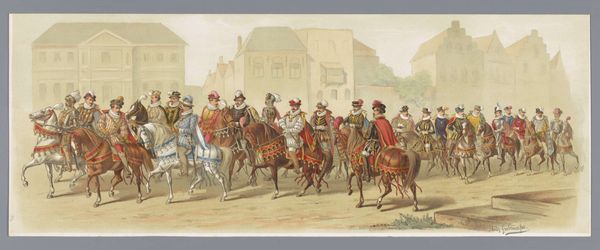
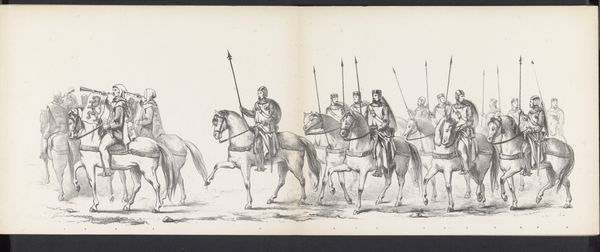
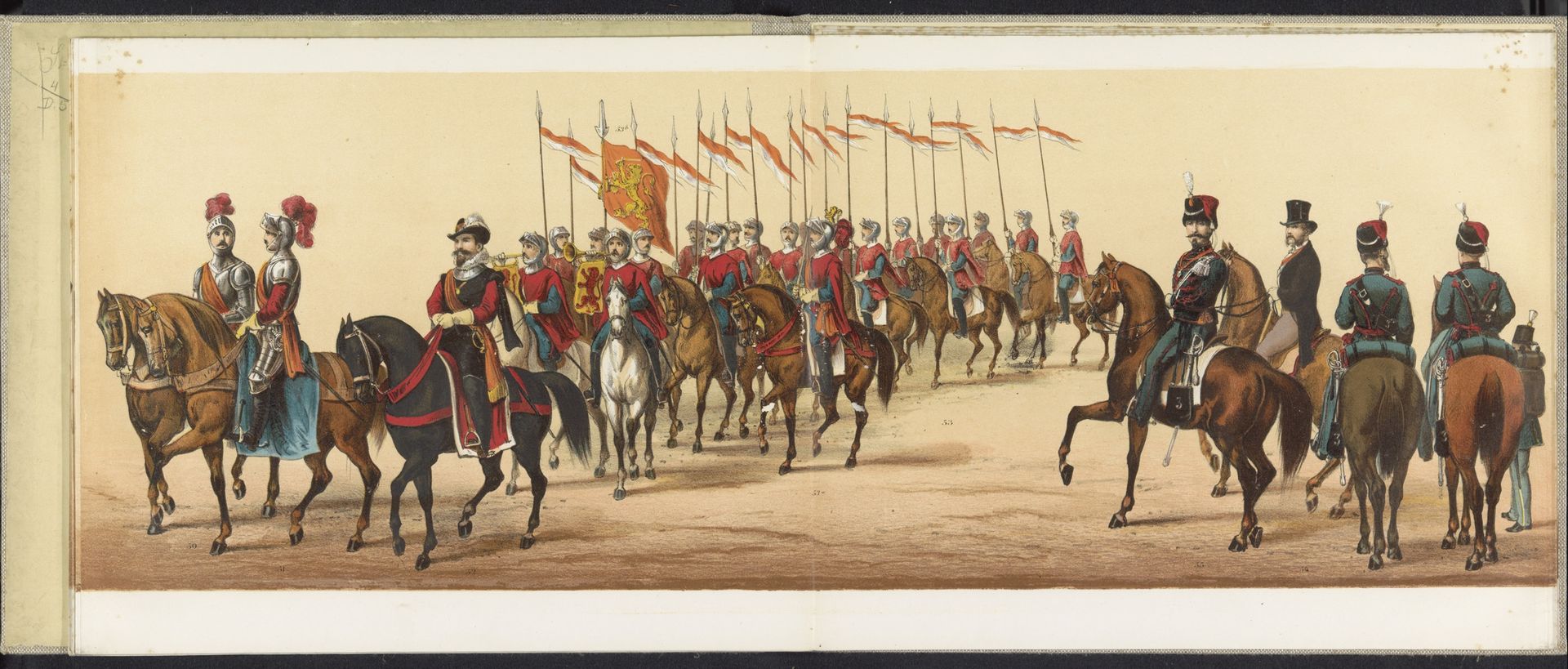
Curator: This is “Optocht te Haarlem, 1872 (plaat 7)” by Emrik & Binger, created in 1872, using colored pencil, watercolor and print media. What's your initial impression? Editor: My eye is immediately drawn to the linear procession of figures. There’s something quite stoic and orderly about it, yet the muted colors create a surprisingly gentle atmosphere. Curator: It speaks to the 19th-century fascination with representing collective identity and power. The piece acts almost like propaganda by reinforcing social hierarchies and militaristic power through ordered parades. It normalizes such displays of control by embedding them within community festivities, blurring the line between spectacle and authority. Editor: The flags, definitely a focal point. They function as both national symbols and religious signifiers, perhaps? Are we looking at the visual construction of nationhood? Curator: Precisely. These representations don’t exist in a vacuum. When considering a historical artwork, we must look at the structures of oppression inherent in these representations and acknowledge whose stories get centered and at whose expense. It calls into question how cultural memory is constructed. Editor: I am intrigued by the individual elements and symbols – uniforms, horses, flags and lances. I read a clear martial, aristocratic intent. I believe those are powerful symbols related to societal identity, power and allegiance, intended to project pride and maybe invincibility? Curator: And it's fascinating to dissect how these very same symbols continue to morph and function within contemporary displays of power and identity, sometimes in resistance, other times in insidious mimicry. We cannot divorce such visual traditions from our current cultural and political landscape. Editor: Understanding how such imagery influences our subconscious perceptions is extremely valuable in creating informed discussions. I believe art can function as a language transcending generations, communicating core belief systems and ideals. Curator: Absolutely. The artwork serves as an anchor in time. By critically examining these symbols we gain a deeper understanding of the historical, socio-political contexts. Editor: Yes. Looking at this artwork, I better appreciate visual symbols and recognize their continuing effect on cultural identity. Thank you.

Artwork details
- Medium
- coloured-pencil, print, watercolor
- Dimensions
- height 280 mm, width 670 mm
- Copyright
- Rijks Museum: Open Domain
Tags
coloured-pencil
landscape
watercolor
coloured pencil
watercolour illustration
genre-painting
history-painting
academic-art
watercolor
realism
Comments
No comments
About this artwork
Curator: This is “Optocht te Haarlem, 1872 (plaat 7)” by Emrik & Binger, created in 1872, using colored pencil, watercolor and print media. What's your initial impression? Editor: My eye is immediately drawn to the linear procession of figures. There’s something quite stoic and orderly about it, yet the muted colors create a surprisingly gentle atmosphere. Curator: It speaks to the 19th-century fascination with representing collective identity and power. The piece acts almost like propaganda by reinforcing social hierarchies and militaristic power through ordered parades. It normalizes such displays of control by embedding them within community festivities, blurring the line between spectacle and authority. Editor: The flags, definitely a focal point. They function as both national symbols and religious signifiers, perhaps? Are we looking at the visual construction of nationhood? Curator: Precisely. These representations don’t exist in a vacuum. When considering a historical artwork, we must look at the structures of oppression inherent in these representations and acknowledge whose stories get centered and at whose expense. It calls into question how cultural memory is constructed. Editor: I am intrigued by the individual elements and symbols – uniforms, horses, flags and lances. I read a clear martial, aristocratic intent. I believe those are powerful symbols related to societal identity, power and allegiance, intended to project pride and maybe invincibility? Curator: And it's fascinating to dissect how these very same symbols continue to morph and function within contemporary displays of power and identity, sometimes in resistance, other times in insidious mimicry. We cannot divorce such visual traditions from our current cultural and political landscape. Editor: Understanding how such imagery influences our subconscious perceptions is extremely valuable in creating informed discussions. I believe art can function as a language transcending generations, communicating core belief systems and ideals. Curator: Absolutely. The artwork serves as an anchor in time. By critically examining these symbols we gain a deeper understanding of the historical, socio-political contexts. Editor: Yes. Looking at this artwork, I better appreciate visual symbols and recognize their continuing effect on cultural identity. Thank you.
Comments
No comments