17th-18th century
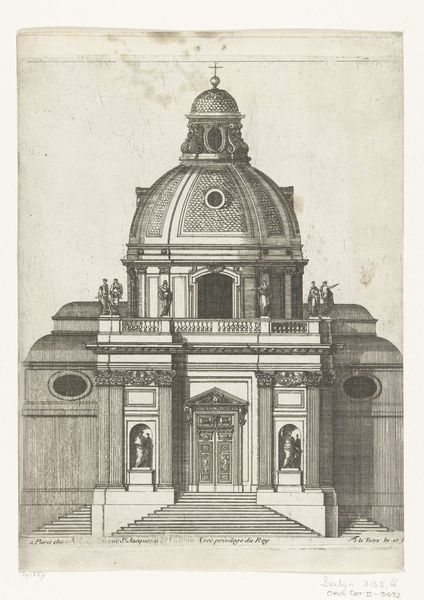
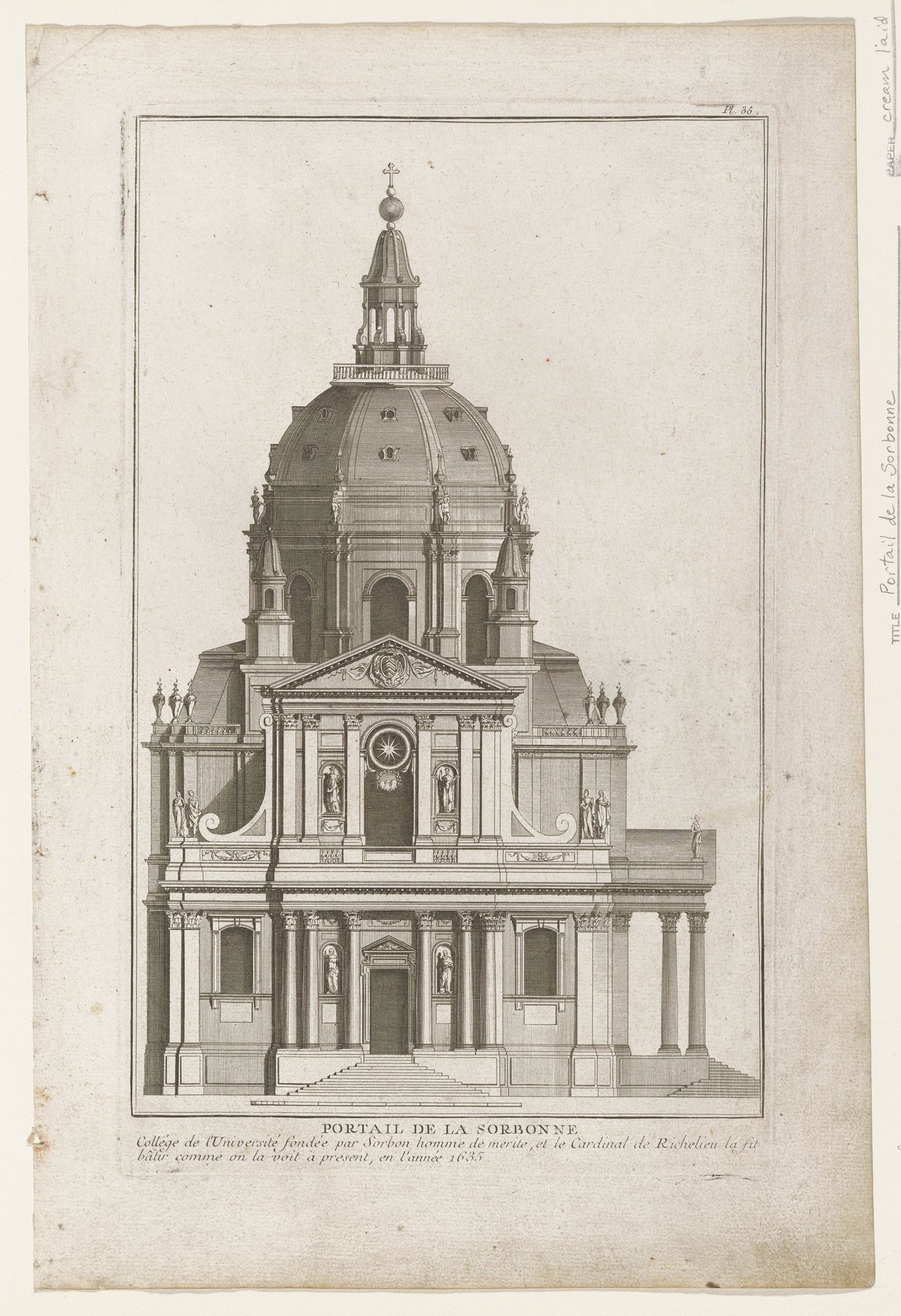
Portail de la Sorbonne


Listen to curator's interpretation
Curatorial notes
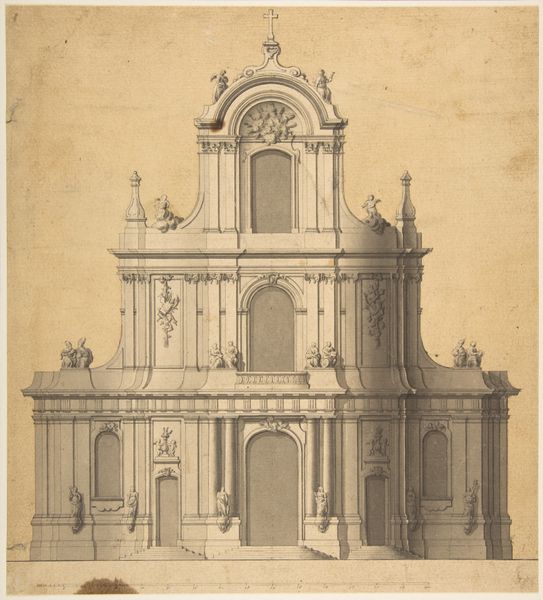
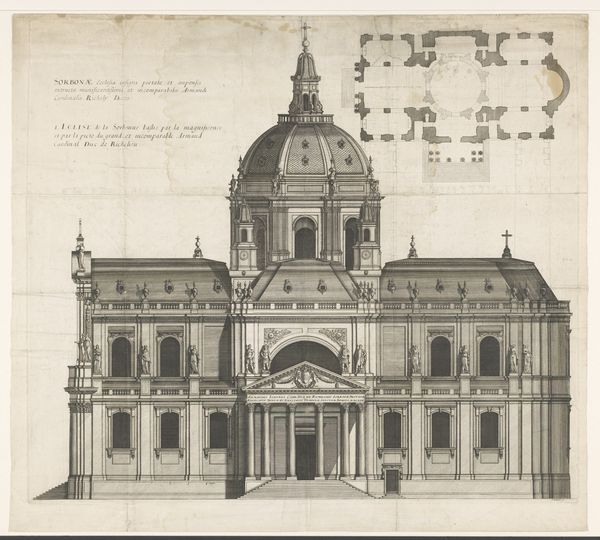
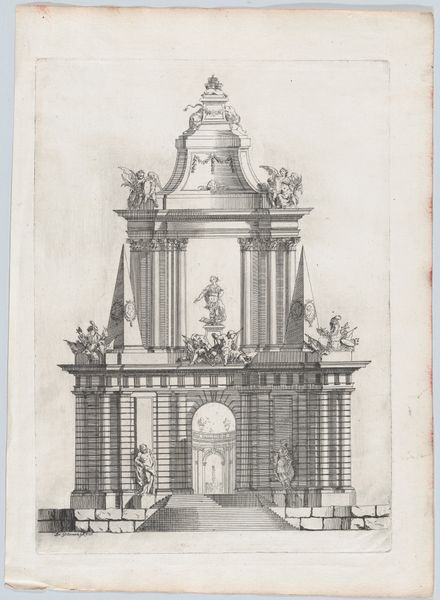
Curator: Welcome. Here we have “Portail de la Sorbonne,” an engraving likely created sometime in the 17th or 18th century. It resides here at the Minneapolis Institute of Art. Editor: Well, that’s impressive! At first glance, its complex layering and stark lines certainly project a somber monumentality, a definite gravitas. Curator: Yes, notice how the engraver utilized a precise technique, producing clean, uniform lines across the print. The controlled texture indicates rigorous academic training. Editor: The precision suggests it was meant to be instructional as much as beautiful, serving perhaps as a record or a template. I wonder about the access to such grand architectural knowledge and how it trickled down to society via prints. What sort of workshops produced these engravings? Curator: Excellent questions. The print medium allowed for relatively easy distribution, serving the academic and perhaps even political purposes. Prints could disseminate architectural ideas far beyond Paris, enabling a broader public to engage with designs for structures like this. The engraver probably toiled under close supervision within an established workshop structure. Editor: Looking at the architectural rendering itself, I am interested in its symmetry. This work presents such a harmonious balance of masses; it’s a near-perfect classical elevation. Curator: Note, though, the print deviates in ways from classical purity—it also embodies many characteristics of Baroque grandeur. The Sorbonne became a focal point for the exercise of political and religious power. Editor: A fascinating blend. One really sees in it how formalism and contextual understanding are essential for true art appreciation. Curator: Indeed. Looking at “Portail de la Sorbonne” from both perspectives really enhances one's grasp of this intricate period piece.