About this artwork
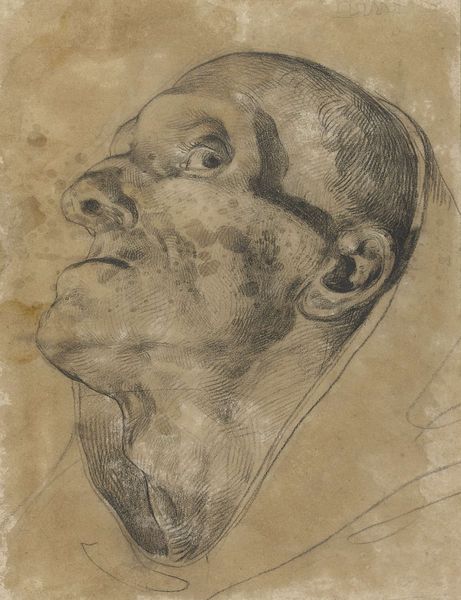
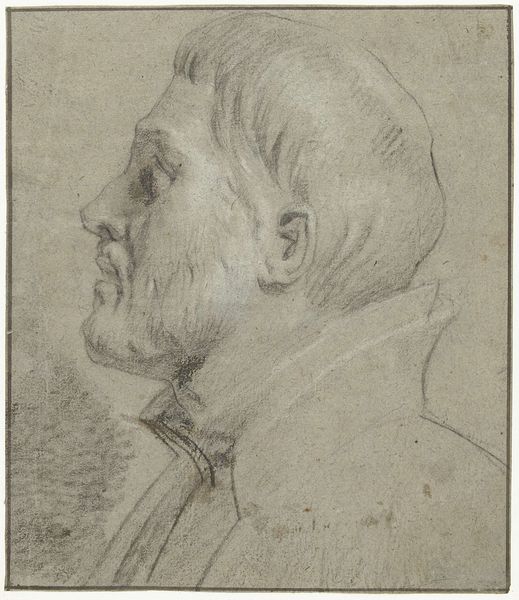
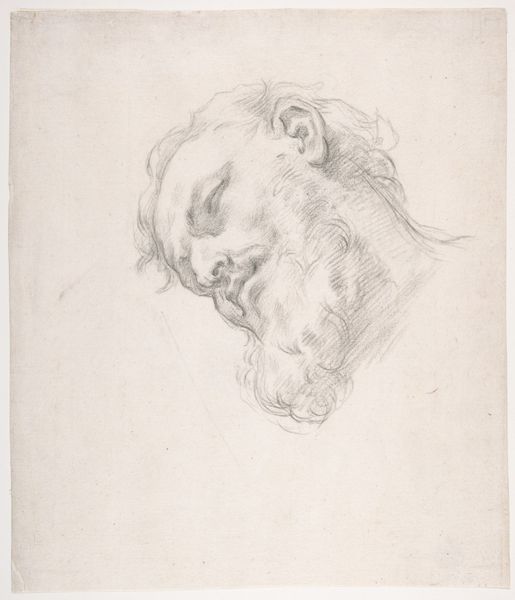
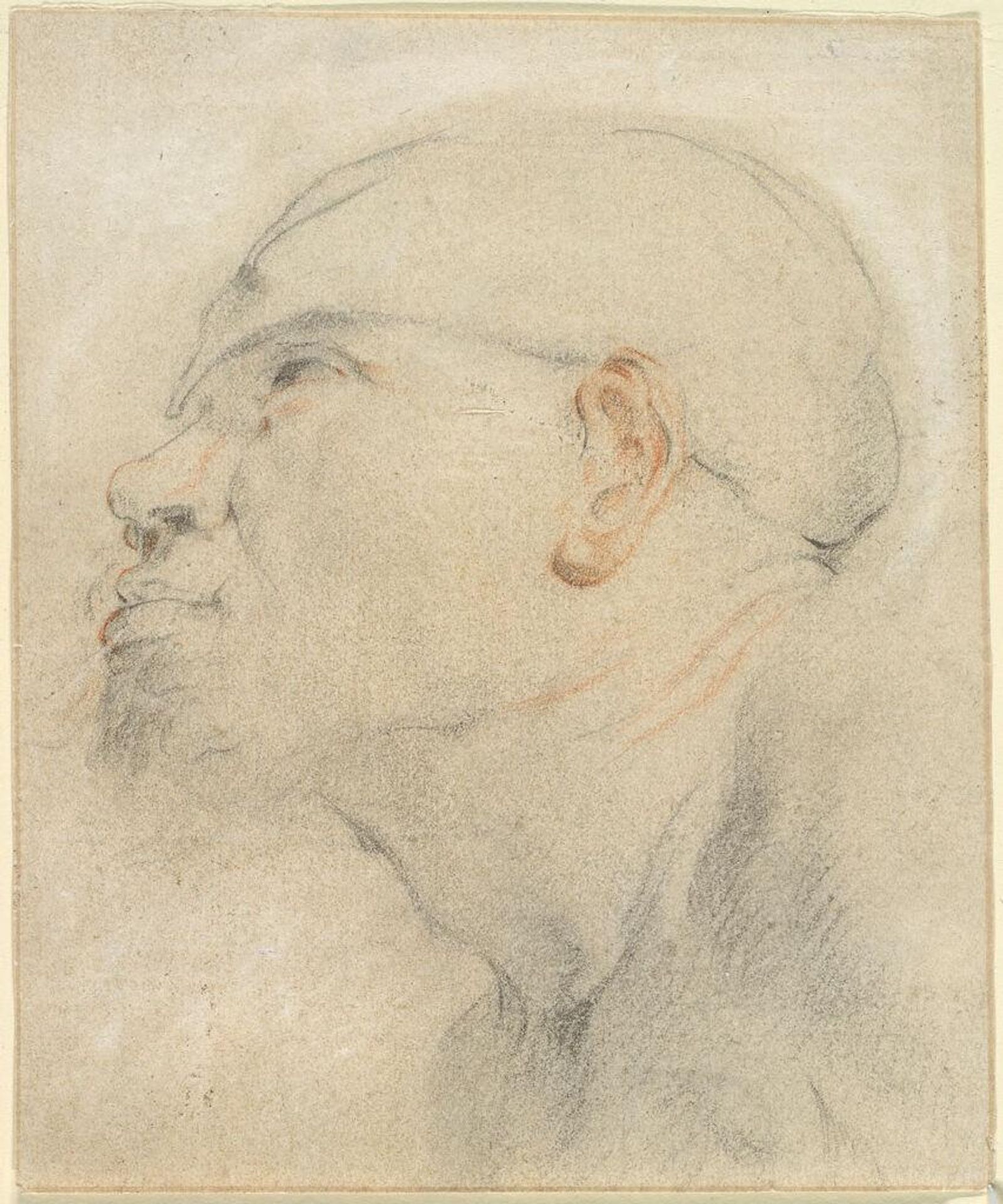
Curator: This drawing, "Head of a Beggar," presents us with an anonymous figure rendered in delicate strokes. I see vulnerability in the upward gaze. Editor: Yes, and the image itself echoes a timeless archetype of suffering. The beggar, a recurring figure throughout art history, embodies hardship and societal neglect. Curator: Exactly. Think about the social and political context that frames this image. Who are the dispossessed? How do systems of power render individuals invisible? Editor: Visually, the cap on the figure's head feels significant. It’s a signifier of a particular class, instantly coding him as an outcast. It also directs our eyes upwards, perhaps signifying hope. Curator: The unknown artist provides a glimpse into a marginalized existence, prompting us to consider our own roles in structures of inequality. The gaze is both hopeful and accusatory. Editor: Looking at the verso, the "Half-length Study of a Nude Man," I see a contrasting image of strength. A duality of human experience, perhaps? Curator: Perhaps. This artwork offers us a space to contemplate the complexities of human dignity and challenge our own preconceptions about those on the margins. Editor: Absolutely. And it’s a powerful reminder that visual symbols have the potential to reflect and challenge cultural narratives that stretch across centuries.
Head of a Beggar; verso: Half-length Study of a Nude Man
c. 17th century


Artwork details
- Dimensions
- 14.8 x 12.2 cm (5 13/16 x 4 13/16 in.)
- Location
- Harvard Art Museums
- Copyright
- CC0 1.0
Comments
Share your thoughts
About this artwork
Curator: This drawing, "Head of a Beggar," presents us with an anonymous figure rendered in delicate strokes. I see vulnerability in the upward gaze. Editor: Yes, and the image itself echoes a timeless archetype of suffering. The beggar, a recurring figure throughout art history, embodies hardship and societal neglect. Curator: Exactly. Think about the social and political context that frames this image. Who are the dispossessed? How do systems of power render individuals invisible? Editor: Visually, the cap on the figure's head feels significant. It’s a signifier of a particular class, instantly coding him as an outcast. It also directs our eyes upwards, perhaps signifying hope. Curator: The unknown artist provides a glimpse into a marginalized existence, prompting us to consider our own roles in structures of inequality. The gaze is both hopeful and accusatory. Editor: Looking at the verso, the "Half-length Study of a Nude Man," I see a contrasting image of strength. A duality of human experience, perhaps? Curator: Perhaps. This artwork offers us a space to contemplate the complexities of human dignity and challenge our own preconceptions about those on the margins. Editor: Absolutely. And it’s a powerful reminder that visual symbols have the potential to reflect and challenge cultural narratives that stretch across centuries.
Comments
Share your thoughts