About this artwork
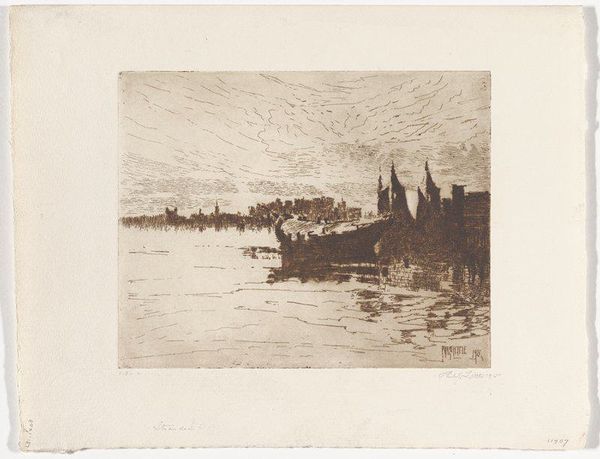
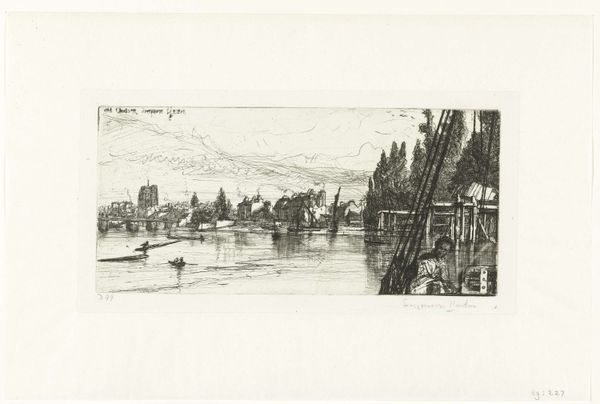
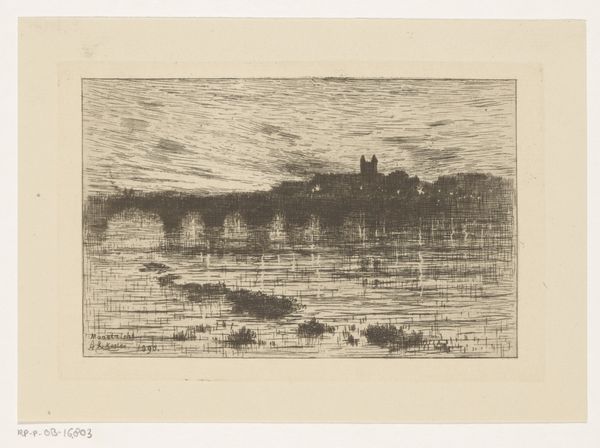
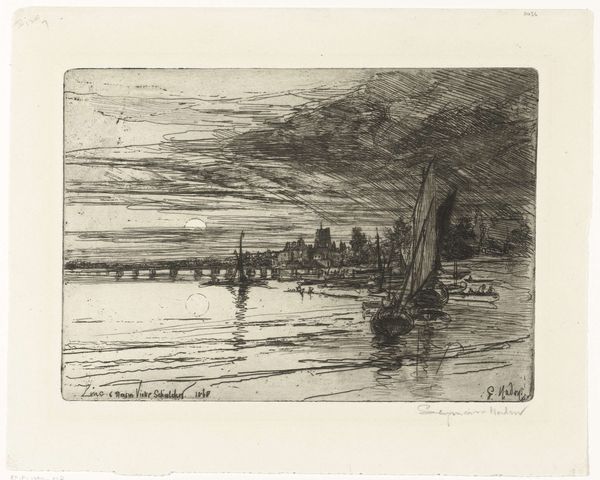
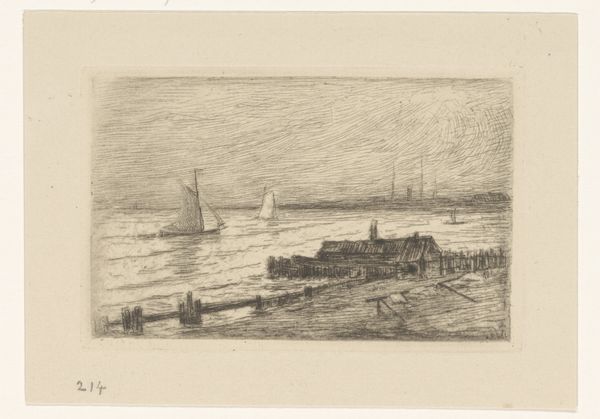
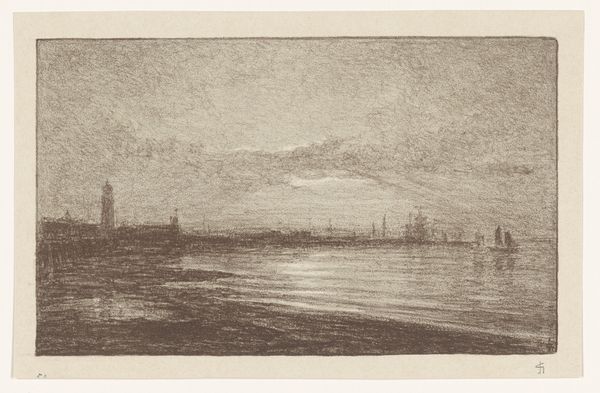
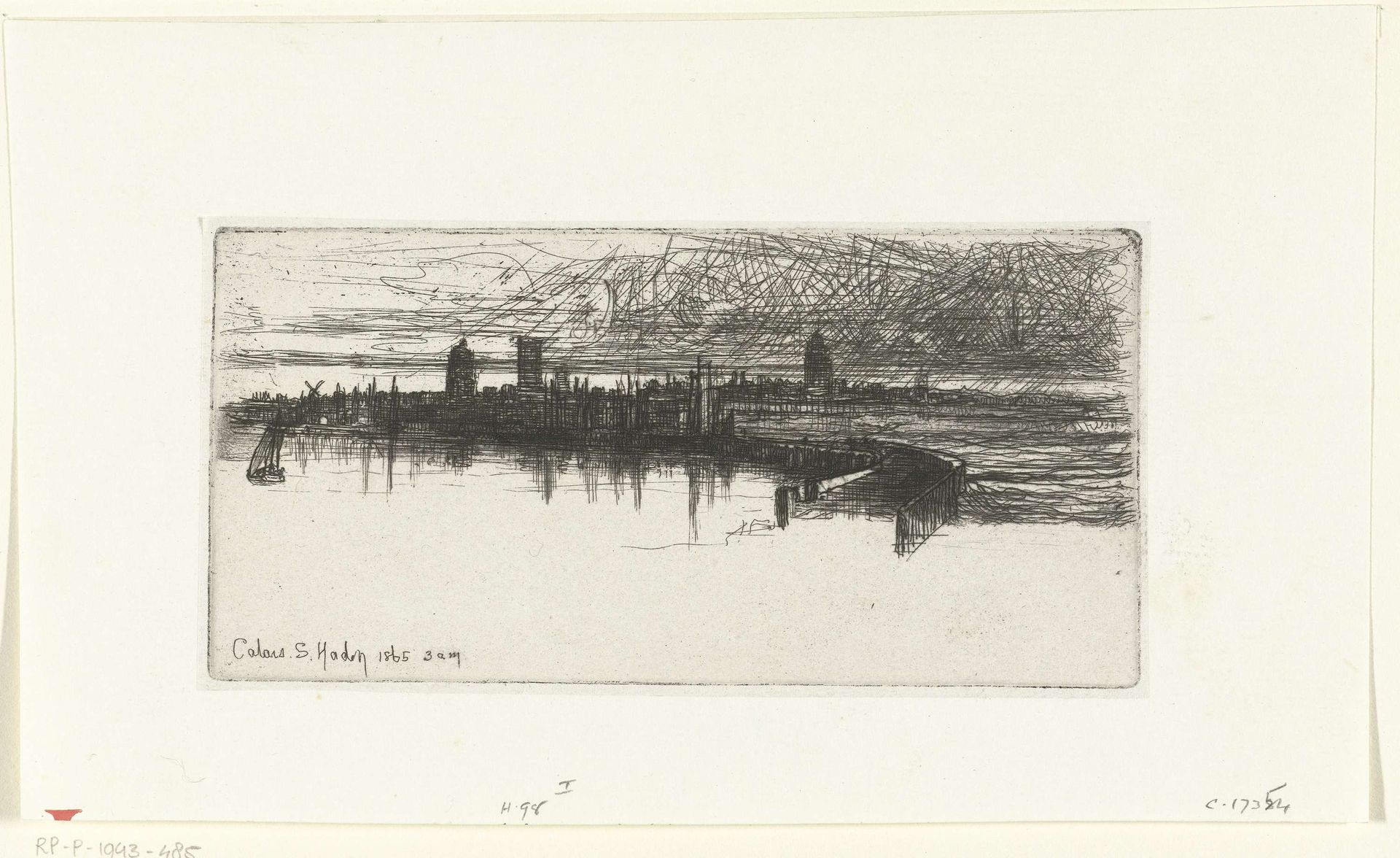
Sir Francis Seymour Haden etched this view of Calais using drypoint. Observe how the intricate web of fine lines captures the subtle reflections on the water and the brooding sky. The composition is divided into three horizontal bands: the sky, the city, and the water, each rendered with distinct textures that invite interpretation through semiotic analysis. The sky, filled with dense, chaotic lines, contrasts sharply with the smoother, more reflective water. This contrast destabilizes a straightforward reading of the scene. Haden's emphasis on line and texture challenges traditional landscape conventions, reducing forms to their essential structures. The absence of color further directs attention to the materiality of the etching, emphasizing the physical process of its creation. This approach aligns with poststructuralist thought, suggesting that meaning is not fixed but emerges from the interplay of these visual elements, inviting viewers to actively participate in constructing their own understanding of the artwork.

Artwork details
- Medium
- print, etching
- Dimensions
- height 78 mm, width 157 mm
- Location
- Rijksmuseum
- Copyright
- Rijks Museum: Open Domain
Tags
Comments
Share your thoughts
About this artwork
Sir Francis Seymour Haden etched this view of Calais using drypoint. Observe how the intricate web of fine lines captures the subtle reflections on the water and the brooding sky. The composition is divided into three horizontal bands: the sky, the city, and the water, each rendered with distinct textures that invite interpretation through semiotic analysis. The sky, filled with dense, chaotic lines, contrasts sharply with the smoother, more reflective water. This contrast destabilizes a straightforward reading of the scene. Haden's emphasis on line and texture challenges traditional landscape conventions, reducing forms to their essential structures. The absence of color further directs attention to the materiality of the etching, emphasizing the physical process of its creation. This approach aligns with poststructuralist thought, suggesting that meaning is not fixed but emerges from the interplay of these visual elements, inviting viewers to actively participate in constructing their own understanding of the artwork.
Comments
Share your thoughts