after 1695
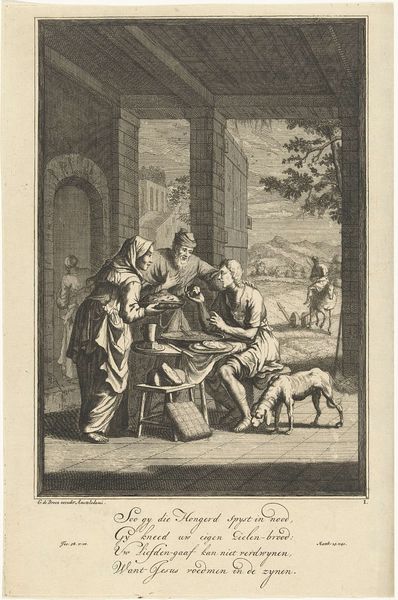
De dorstigen laven

Listen to curator's interpretation
Curatorial notes
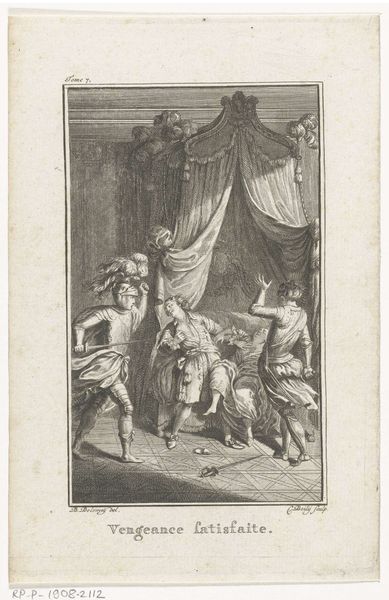
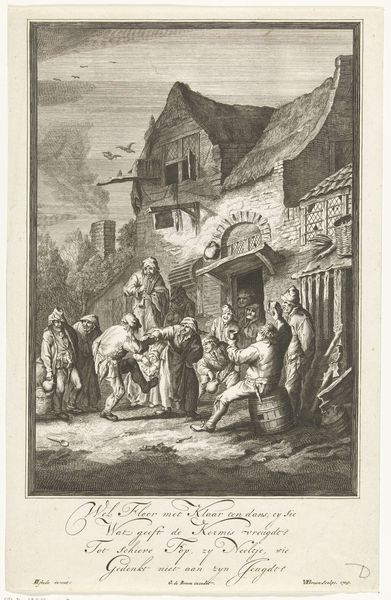
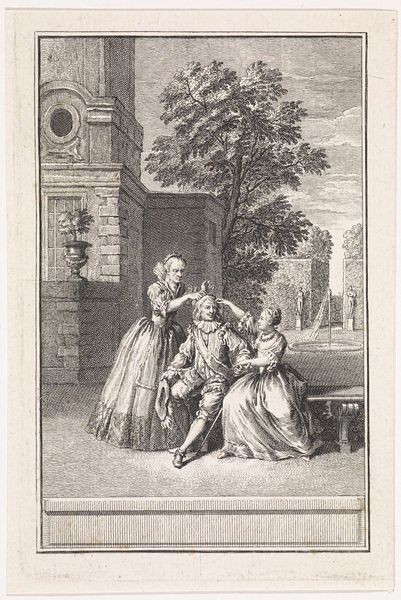
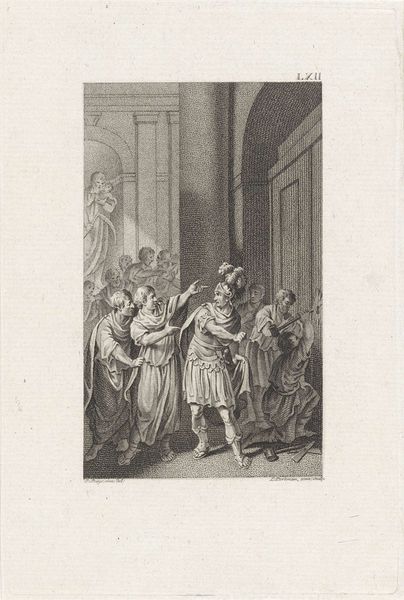
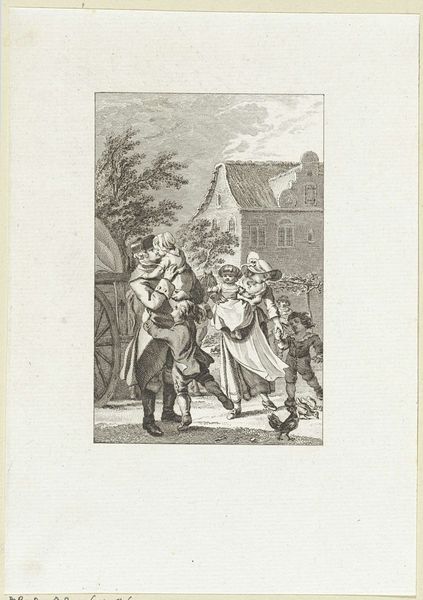
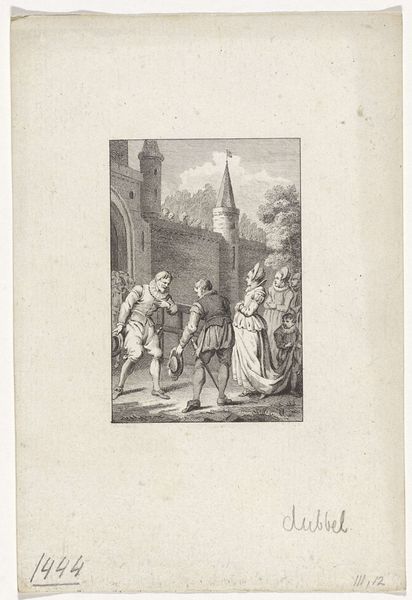
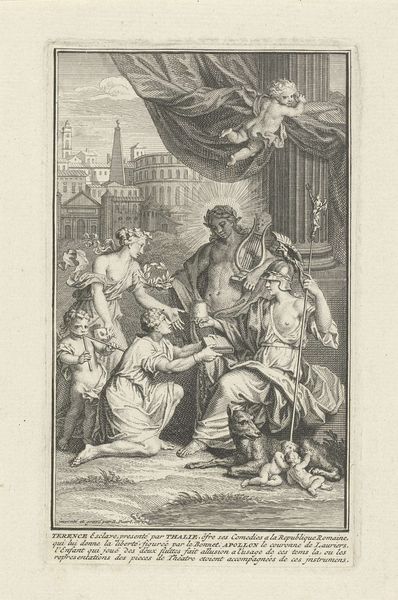
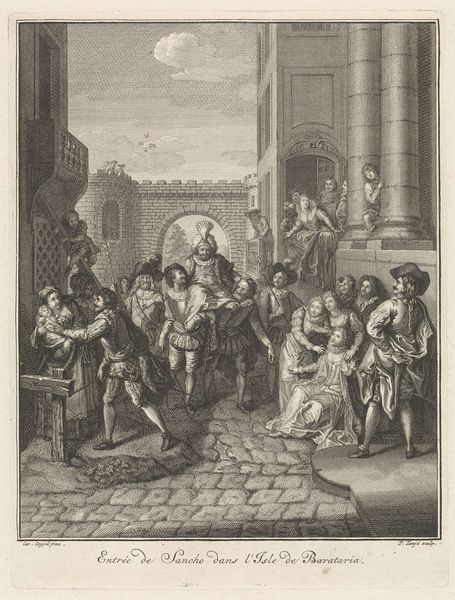
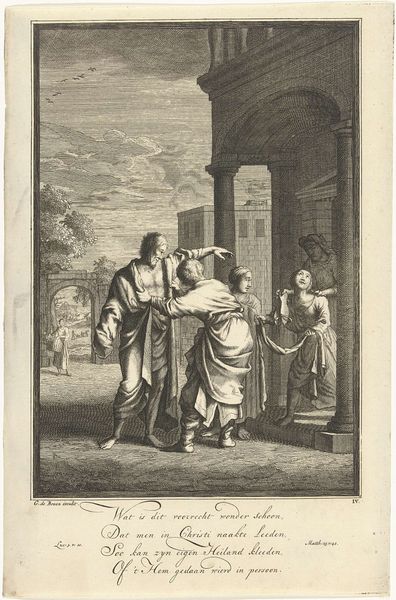
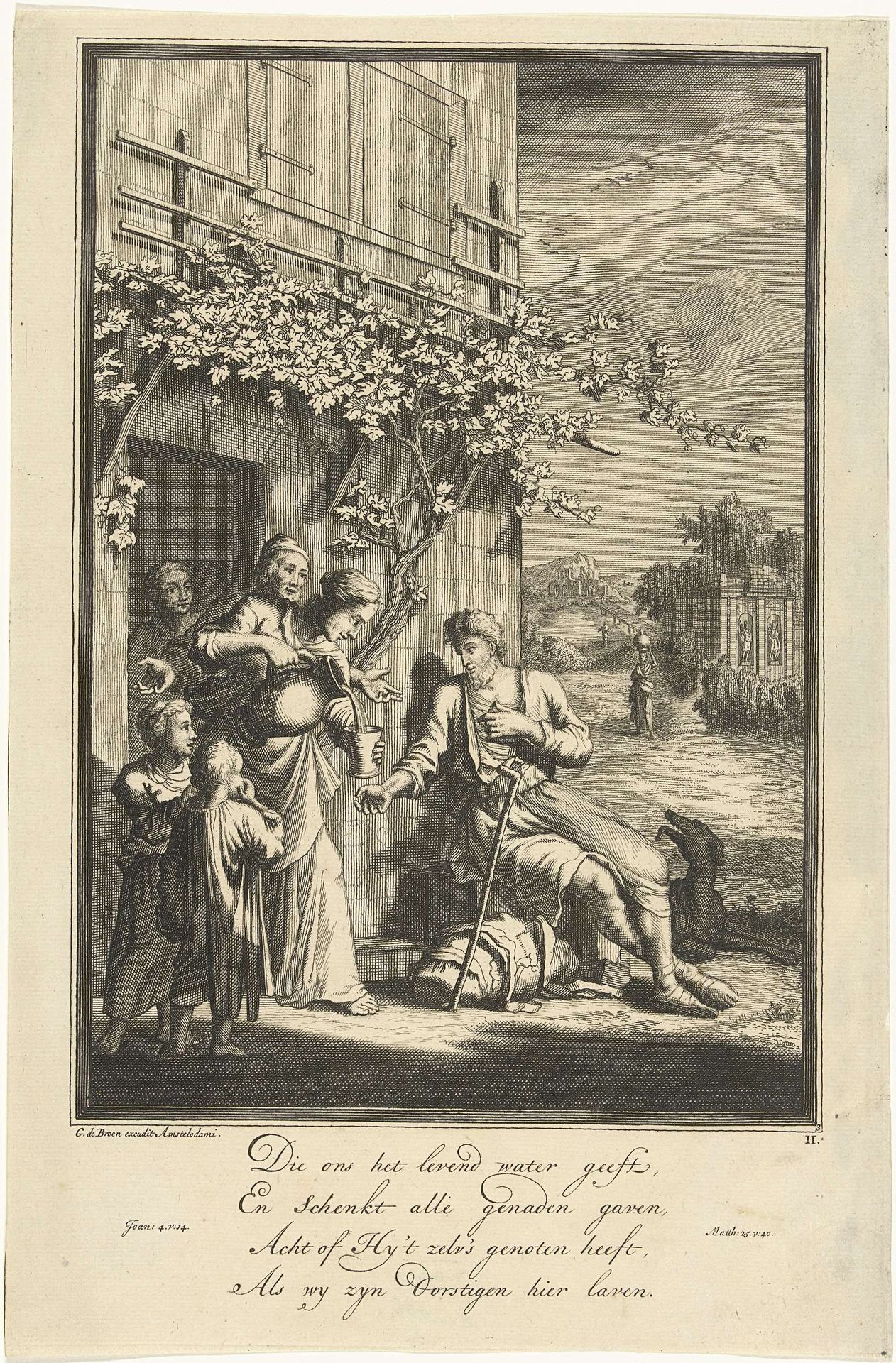
Gerrit de Broen produced this engraving, "De dorstigen laven", in the Netherlands, around the turn of the 18th century. It’s a fairly conventional piece of religious imagery, depicting a well-known scene of Christian charity. But let’s consider the social and cultural context in which it was produced. The Netherlands at this time was a mercantile republic, enriched by global trade, and with a powerful, confident merchant class. Charity became an important way for the wealthy to demonstrate their virtue and cement their social position. Broen’s image, therefore, is as much a reflection on Dutch social structures as it is an illustration of Christian doctrine. The art historian's role is to situate works like this within a broader web of social and institutional relations. By examining sources, such as guild records, religious pamphlets, and other images of the period, we can get a clearer sense of how it functioned in its own time.