About this artwork
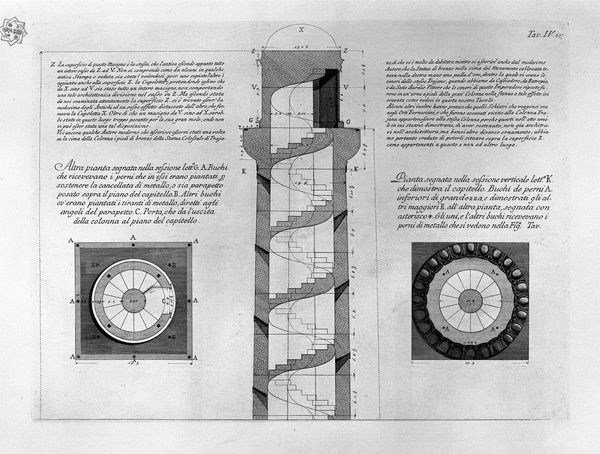
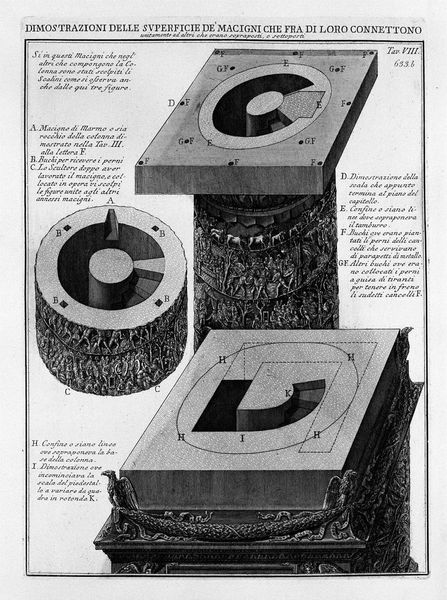
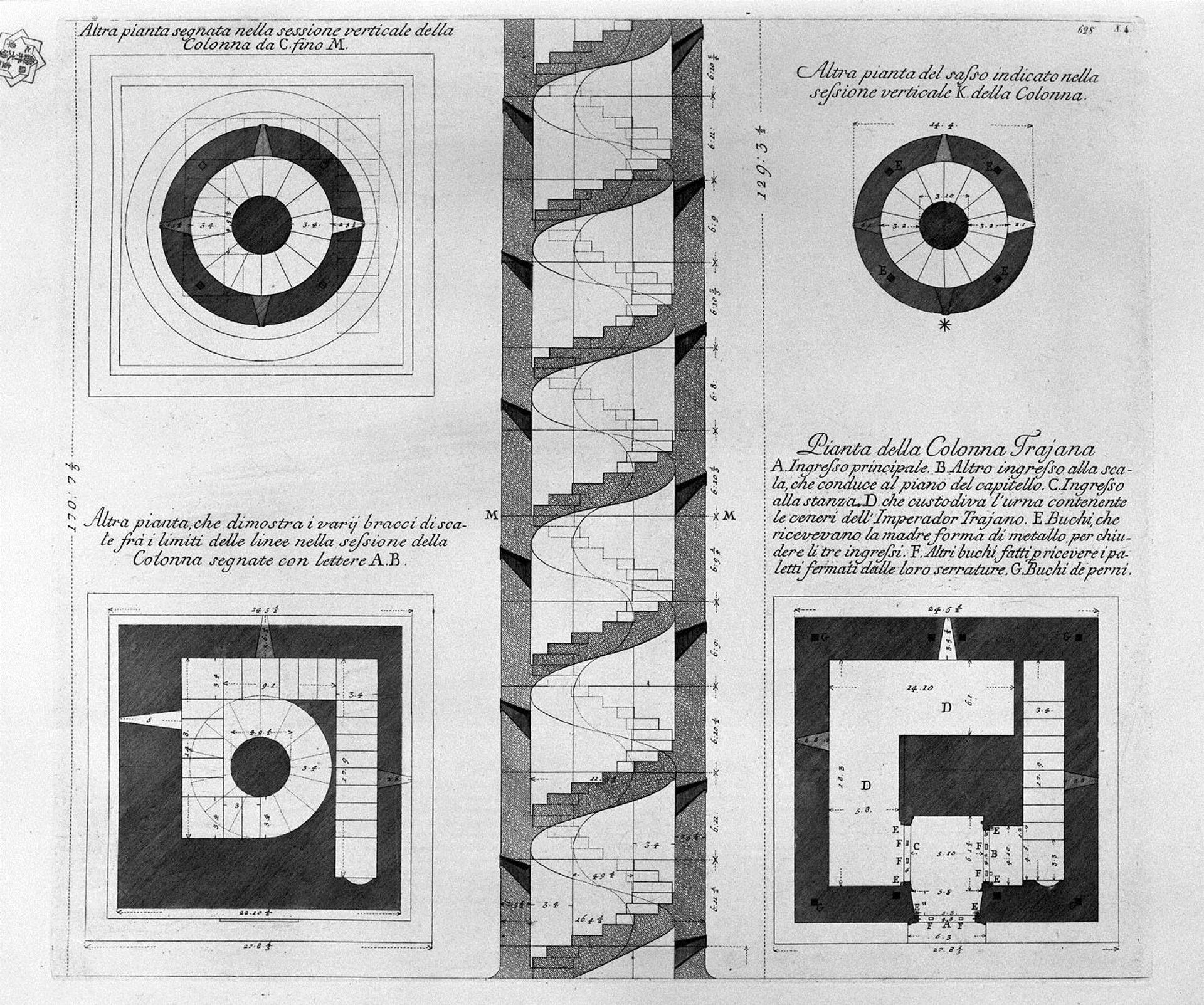
Giovanni Battista Piranesi created this print, a vertical section of the Trajan column, using etching, sometime before his death in 1778. Piranesi was a Venetian artist living in Rome, famed for his etchings of Roman monuments. In this print, Piranesi offers a cross-section of the column. Trajan's Column, built in 113 AD, commemorates the Roman emperor Trajan's victory in the Dacian Wars. Piranesi's Rome was a city filled with the ruins of its imperial past. This imagery served as a reminder of the power of the Roman Empire. Piranesi’s detailed study speaks to a growing interest in classical architecture. His work would have been of great interest to architects and artists who came to Rome to study the ruins. Understanding this print requires us to place it within the cultural and institutional context of 18th-century Rome, a city grappling with its layered history. By studying these images, we can better understand the social and cultural history of Rome.
Vertical section of the Trajan column, with six plants taken at various heights, three boards together

Artwork details
- Medium
- drawing, print, engraving
- Copyright
- Public domain
Tags
Comments
Share your thoughts
About this artwork
Giovanni Battista Piranesi created this print, a vertical section of the Trajan column, using etching, sometime before his death in 1778. Piranesi was a Venetian artist living in Rome, famed for his etchings of Roman monuments. In this print, Piranesi offers a cross-section of the column. Trajan's Column, built in 113 AD, commemorates the Roman emperor Trajan's victory in the Dacian Wars. Piranesi's Rome was a city filled with the ruins of its imperial past. This imagery served as a reminder of the power of the Roman Empire. Piranesi’s detailed study speaks to a growing interest in classical architecture. His work would have been of great interest to architects and artists who came to Rome to study the ruins. Understanding this print requires us to place it within the cultural and institutional context of 18th-century Rome, a city grappling with its layered history. By studying these images, we can better understand the social and cultural history of Rome.
Comments
Share your thoughts