About this artwork
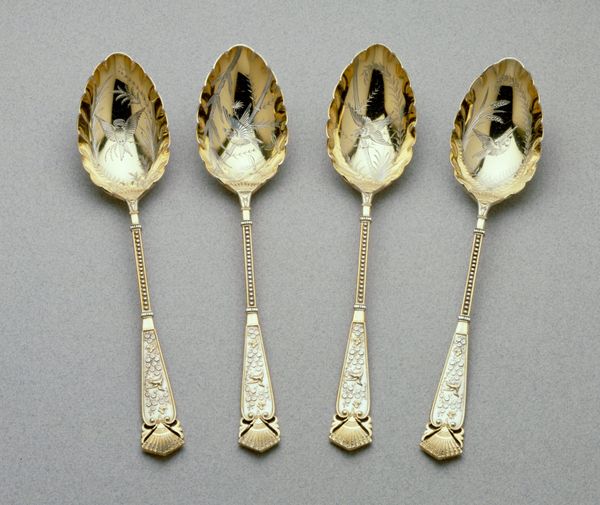
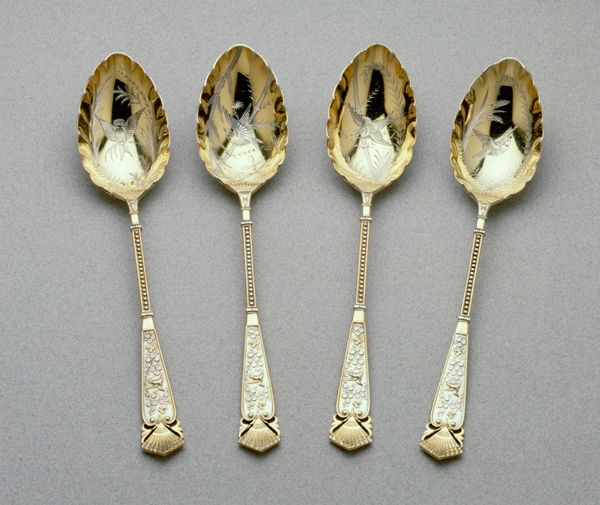
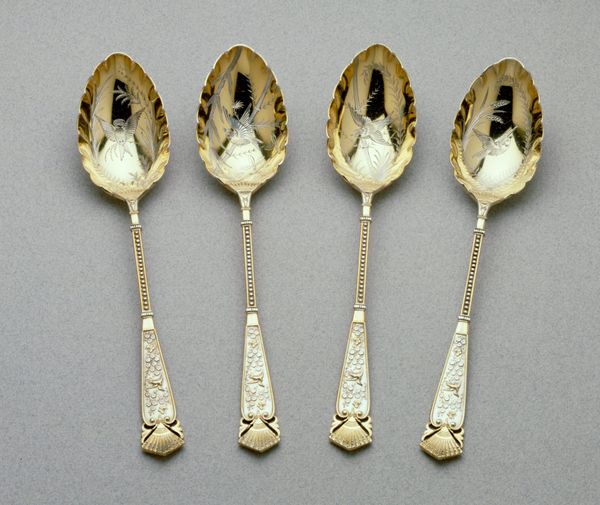
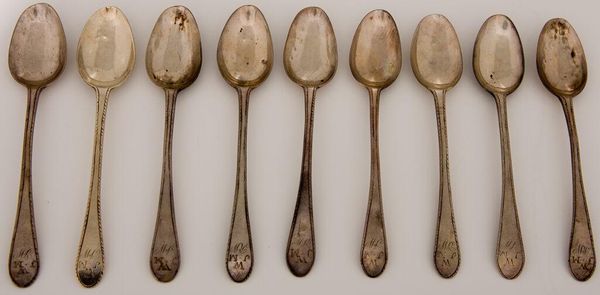
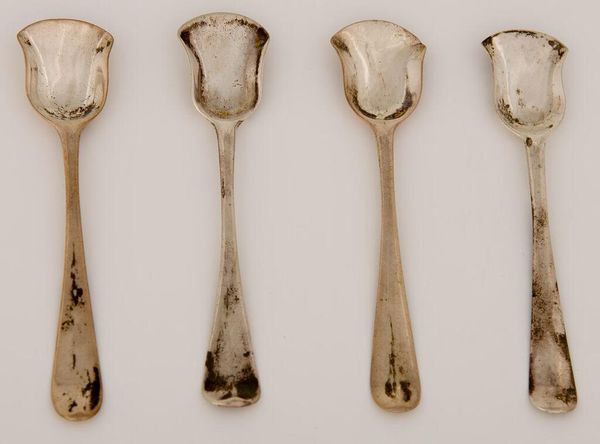
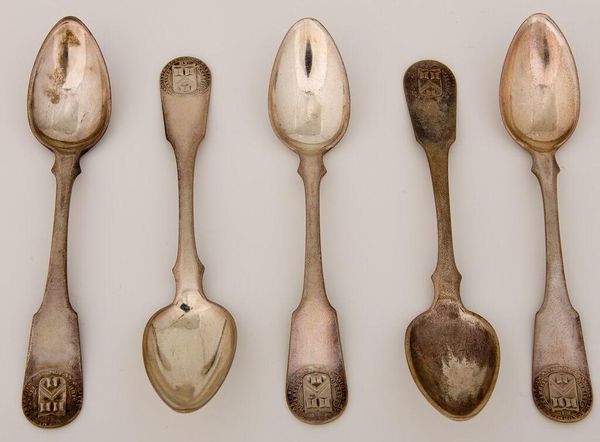
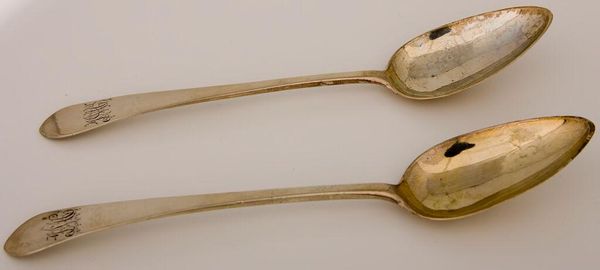
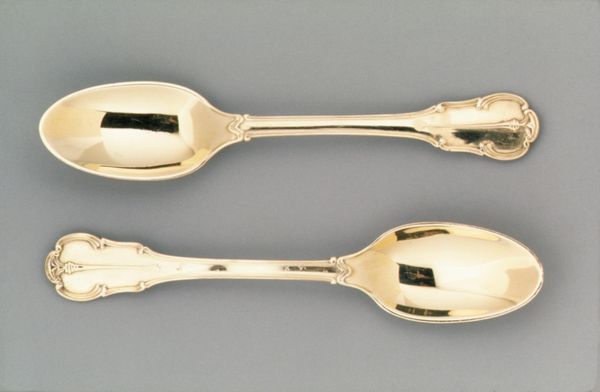
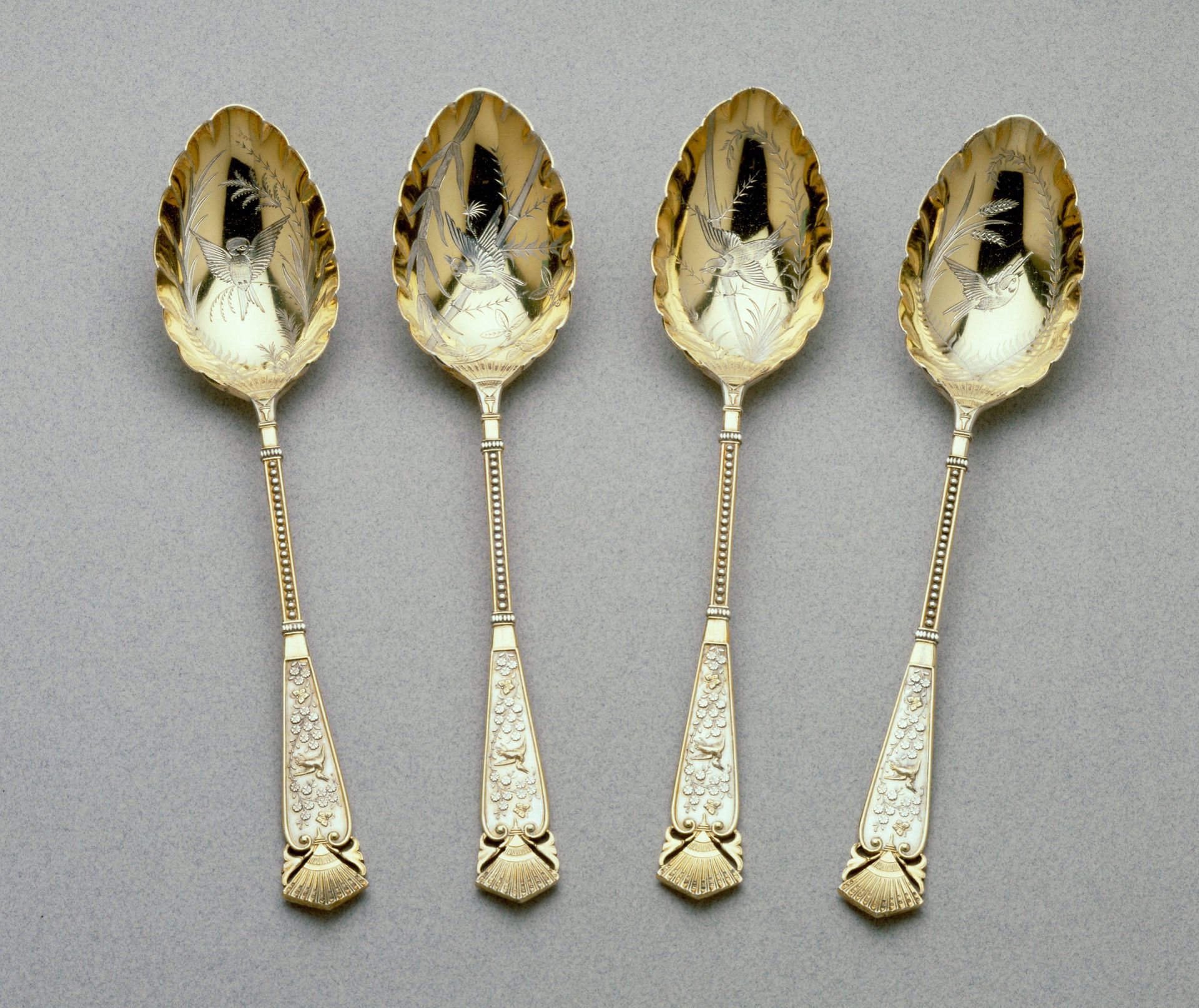
These parcel gilt spoons, made by Frederick Elkington, present a striking example of ornate design in functional objects. The gilded bowls immediately draw the eye, their warm, reflective surfaces contrasting with the matte finish of the handles. This juxtaposition enhances the visual richness, inviting closer inspection of the detailed engraving within each bowl. Notice how Elkington employs both line and form to create a sense of depth. The scalloped edges of the bowls are not merely decorative; they play with light, creating a subtle yet dynamic visual rhythm. Moving down to the handles, the intricate patterns and geometric shapes suggest a keen awareness of both Art Nouveau and classical motifs. The repeating elements—floral patterns, stylized shells—establish a visual harmony, yet each spoon bears its unique variation, hinting at the craftsperson's hand. These spoons challenge our understanding of utility. They transcend function, becoming intricate artworks that elevate the act of dining into an aesthetic experience.
Parcel Gilt Spoon c. 19th century


Artwork details
- Medium
- silver, metal
- Dimensions
- 8 7/16 x 1 3/4 in. (21.43 x 4.45 cm)
- Location
- Minneapolis Institute of Art
- Copyright
- Public Domain
Tags
decorative element
silver
metal
england
jewelry
decorative-art
Comments
No comments
About this artwork
These parcel gilt spoons, made by Frederick Elkington, present a striking example of ornate design in functional objects. The gilded bowls immediately draw the eye, their warm, reflective surfaces contrasting with the matte finish of the handles. This juxtaposition enhances the visual richness, inviting closer inspection of the detailed engraving within each bowl. Notice how Elkington employs both line and form to create a sense of depth. The scalloped edges of the bowls are not merely decorative; they play with light, creating a subtle yet dynamic visual rhythm. Moving down to the handles, the intricate patterns and geometric shapes suggest a keen awareness of both Art Nouveau and classical motifs. The repeating elements—floral patterns, stylized shells—establish a visual harmony, yet each spoon bears its unique variation, hinting at the craftsperson's hand. These spoons challenge our understanding of utility. They transcend function, becoming intricate artworks that elevate the act of dining into an aesthetic experience.
Comments
No comments