About this artwork
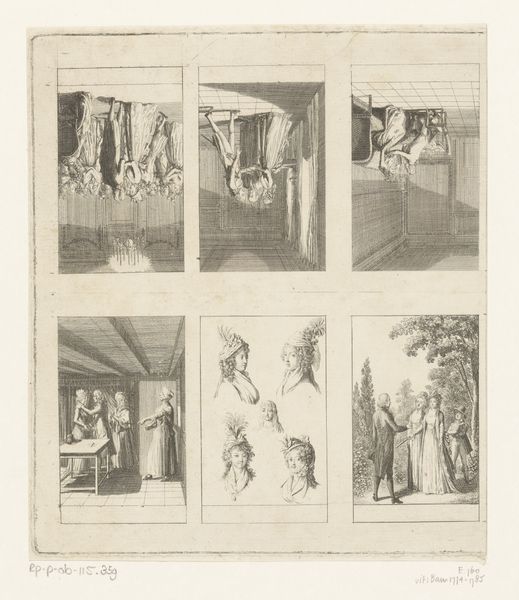
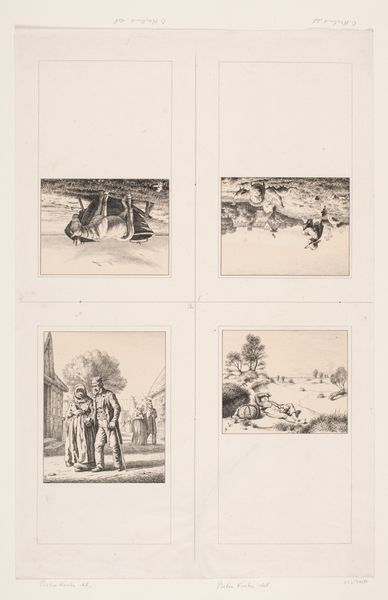
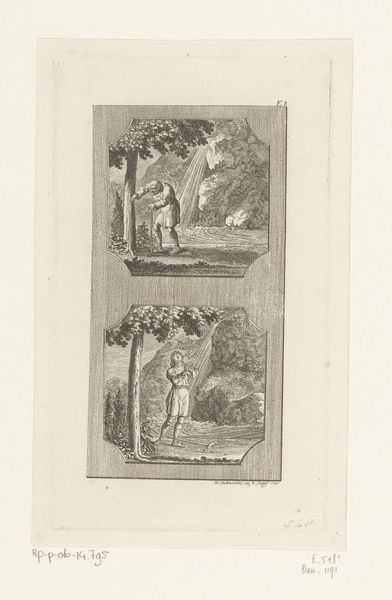
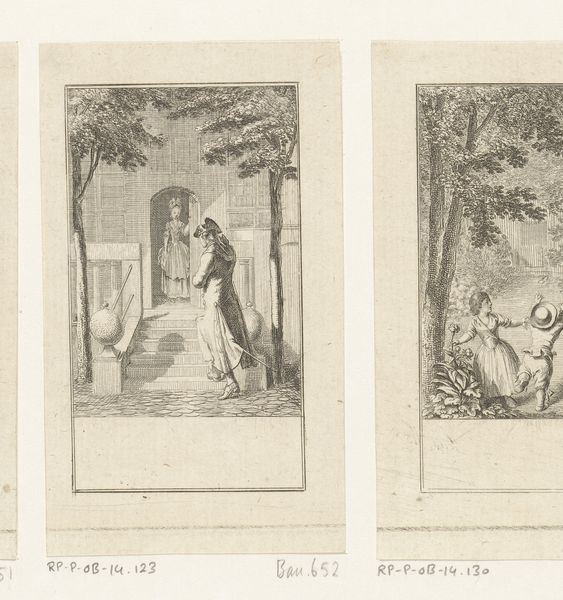
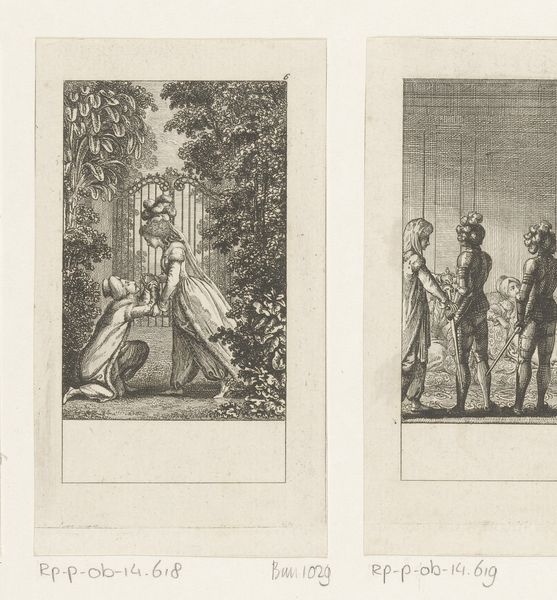
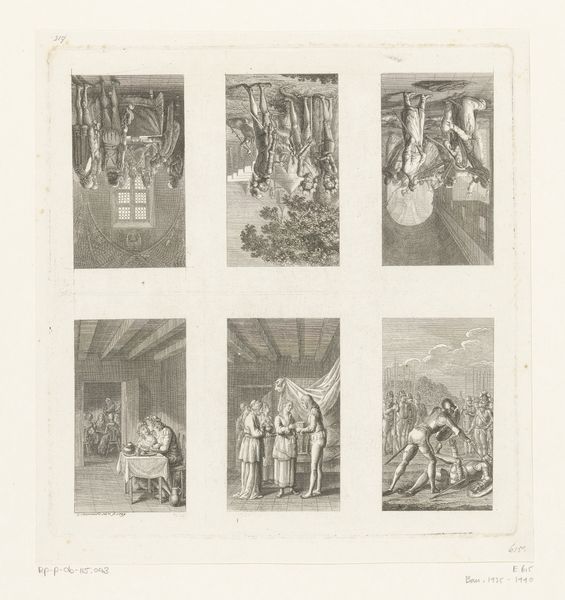
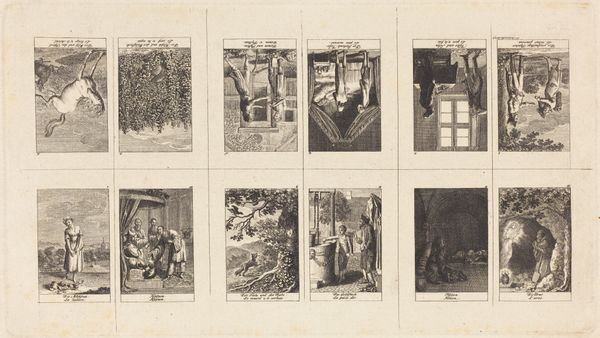
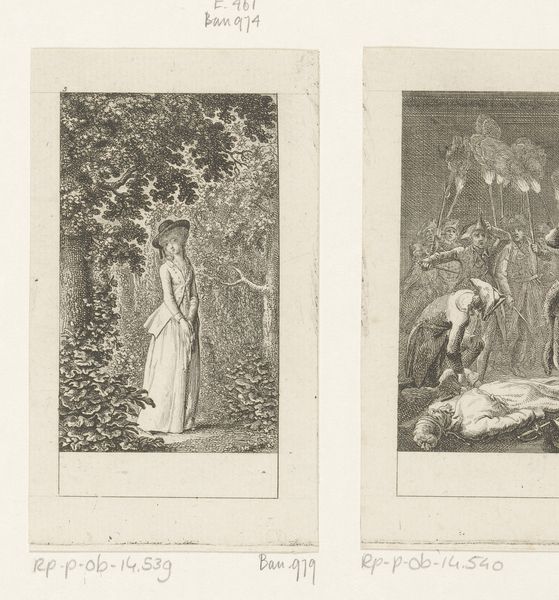
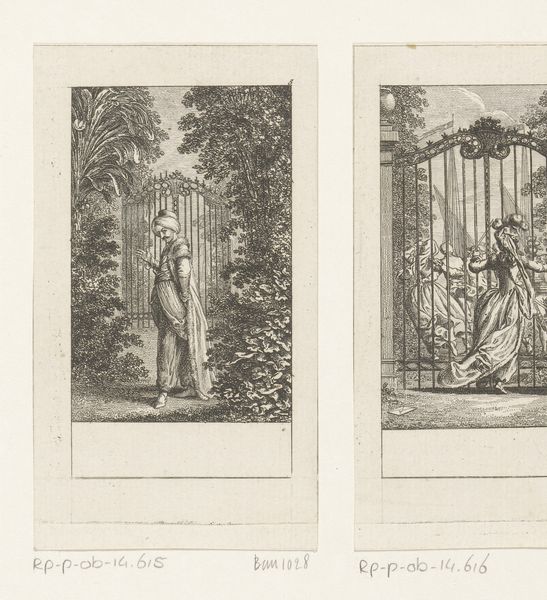
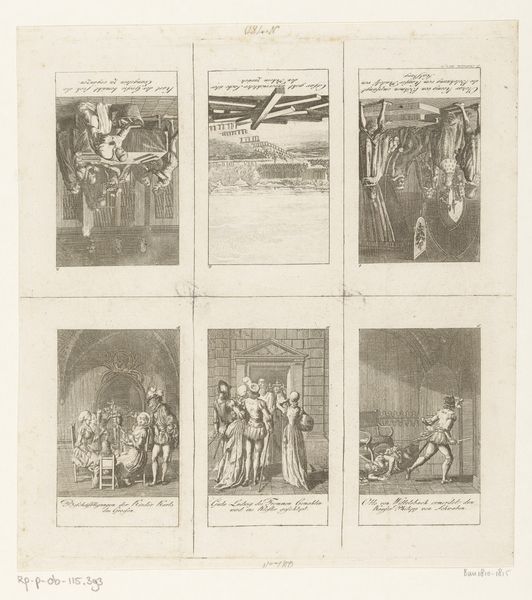
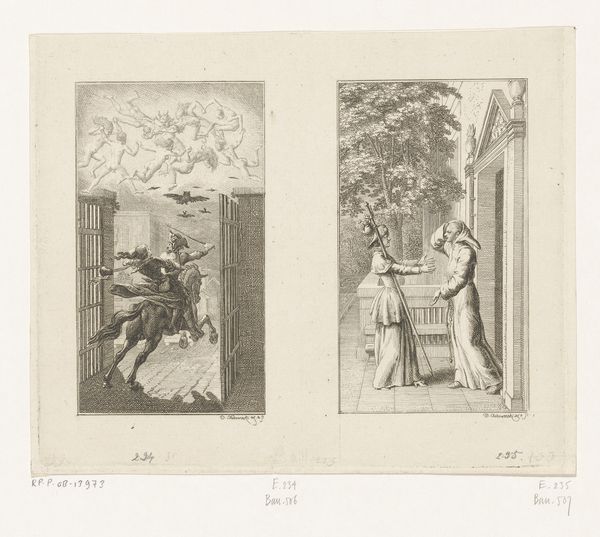
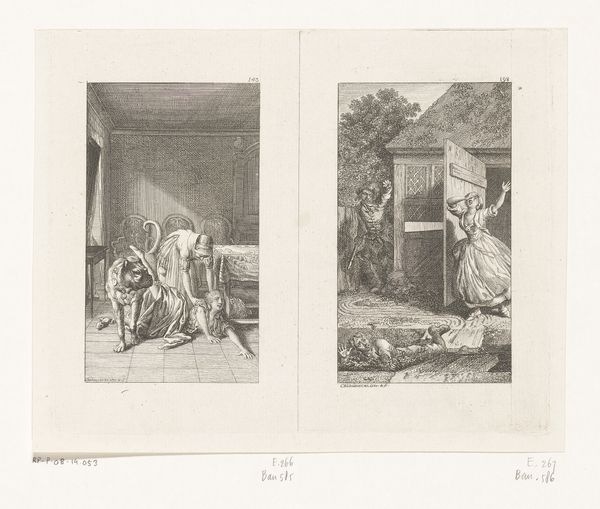
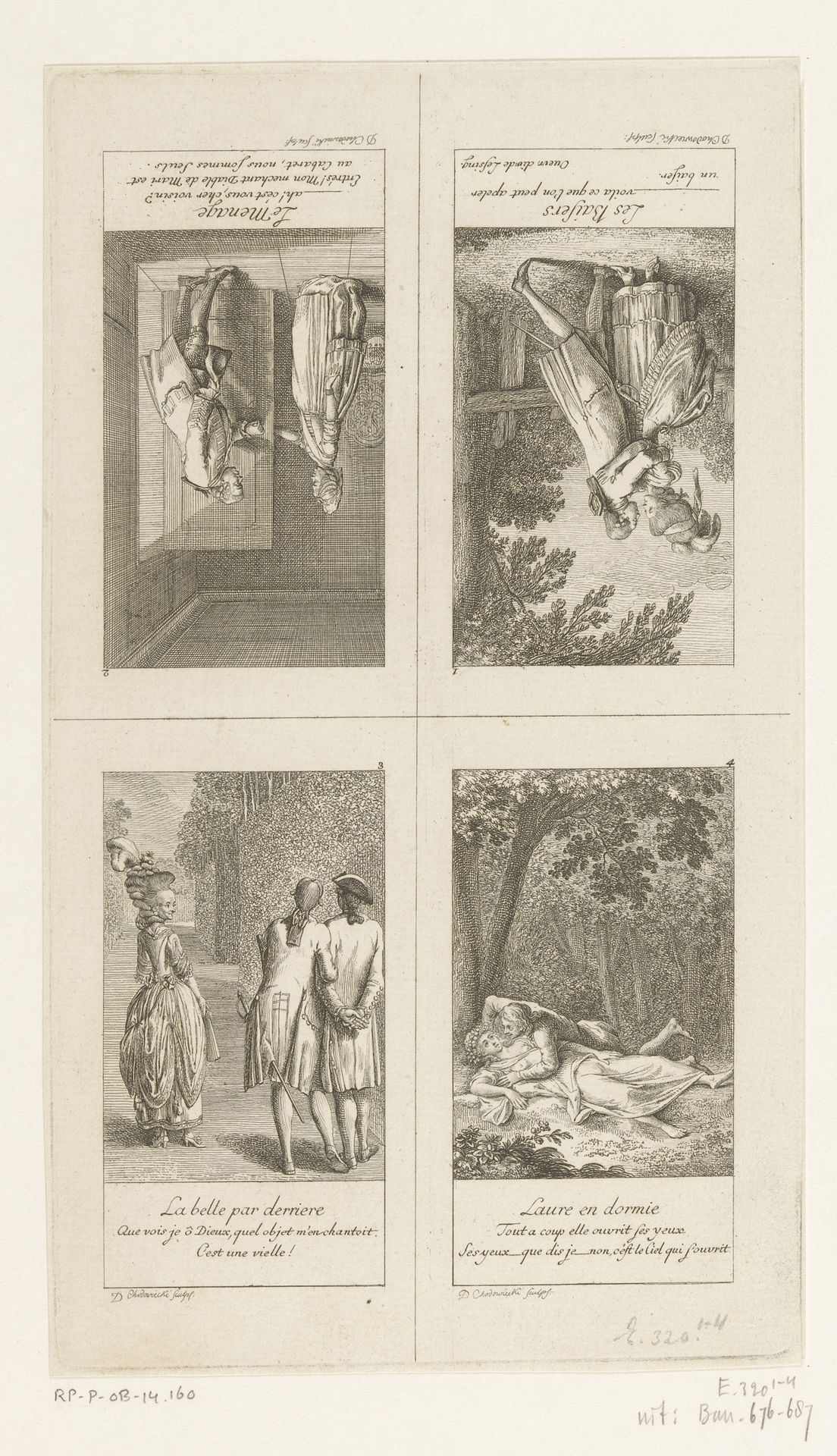
Here, at the Rijksmuseum, we see 'Vier scènes uit Lessing's Fabeln und Erzählungen', an engraving made by Daniel Nikolaus Chodowiecki, depicting scenes from Lessing's fables. Consider the final scene: a sleeping woman. The motif of the sleeping figure carries a profound weight, echoing through centuries. We find it in the slumbering Ariadne, abandoned on Naxos, or the dreaming Psyche, awaiting Cupid's embrace. Such images capture a moment of vulnerability, a pause where the subconscious reigns. The sleeping woman might evoke a collective memory of innocence lost or potential awakened. This recurs in art history, shifting from representations of holy figures to secular symbols of beauty and passivity. In Chodowiecki’s hands, she becomes part of a narrative, a fable that engages our deepest emotional responses. This cyclical resurgence reminds us that symbols are never fixed but constantly evolve, adapting to new contexts, reflecting the ever-changing human experience.
Vier scènes uit Lessing's Fabeln und Erzählungen 1779

Daniel Nikolaus Chodowiecki
1726 - 1801Location
RijksmuseumArtwork details
- Dimensions
- height mm, width mm
- Location
- Rijksmuseum
- Copyright
- Rijks Museum: Open Domain
Comments
No comments
About this artwork
Here, at the Rijksmuseum, we see 'Vier scènes uit Lessing's Fabeln und Erzählungen', an engraving made by Daniel Nikolaus Chodowiecki, depicting scenes from Lessing's fables. Consider the final scene: a sleeping woman. The motif of the sleeping figure carries a profound weight, echoing through centuries. We find it in the slumbering Ariadne, abandoned on Naxos, or the dreaming Psyche, awaiting Cupid's embrace. Such images capture a moment of vulnerability, a pause where the subconscious reigns. The sleeping woman might evoke a collective memory of innocence lost or potential awakened. This recurs in art history, shifting from representations of holy figures to secular symbols of beauty and passivity. In Chodowiecki’s hands, she becomes part of a narrative, a fable that engages our deepest emotional responses. This cyclical resurgence reminds us that symbols are never fixed but constantly evolve, adapting to new contexts, reflecting the ever-changing human experience.
Comments
No comments