About this artwork
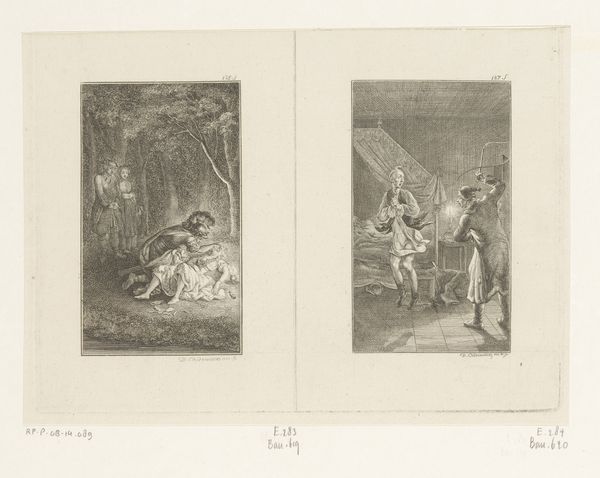
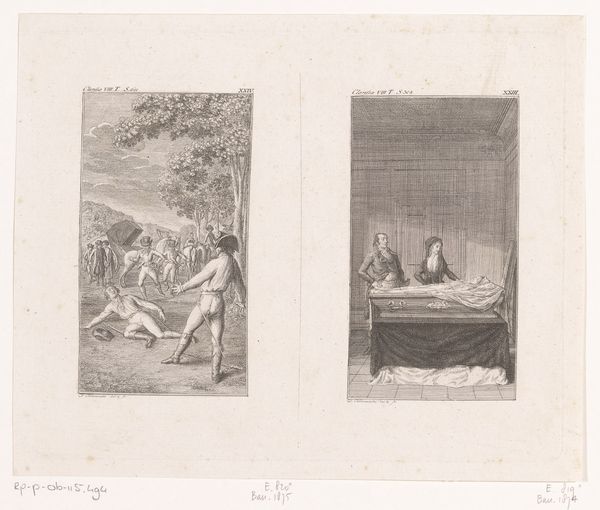
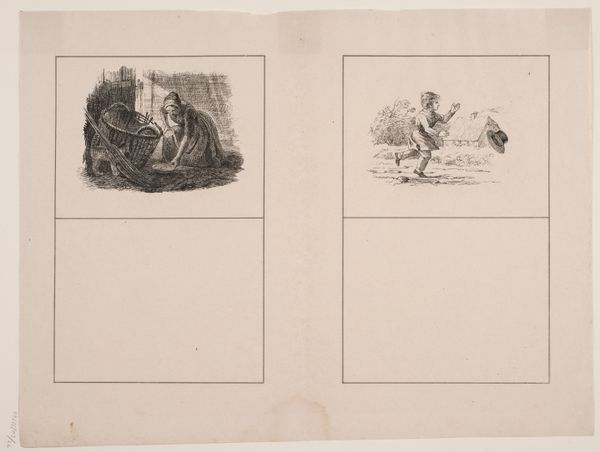
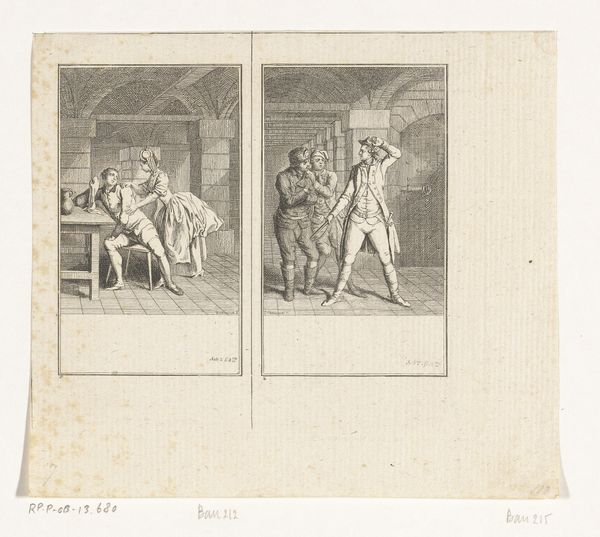
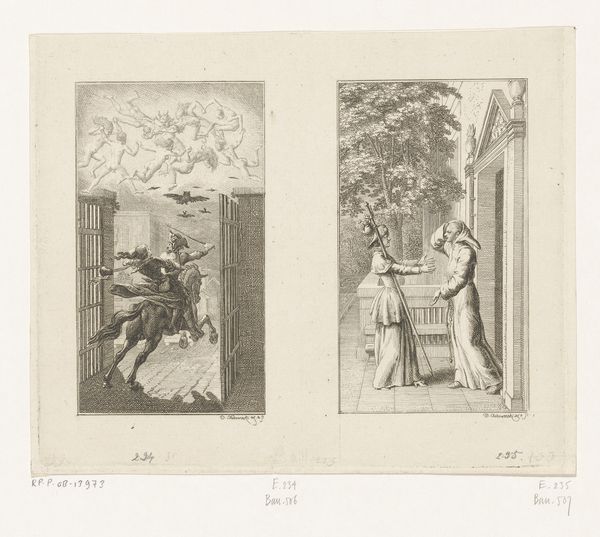
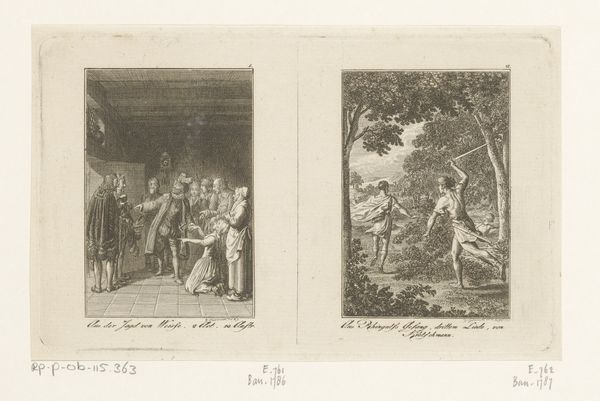
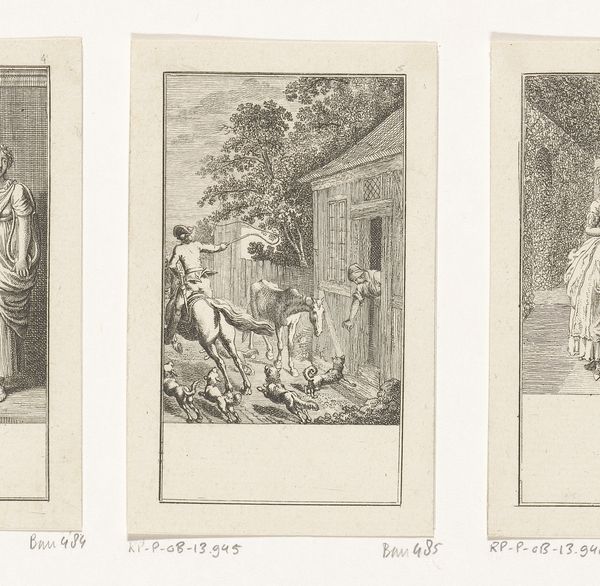
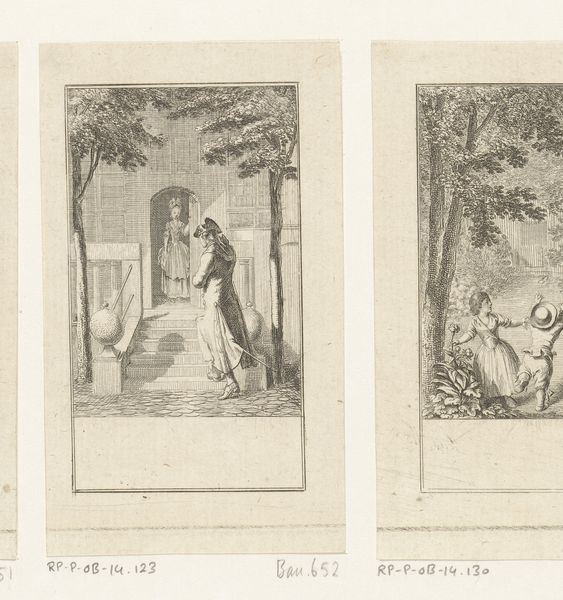
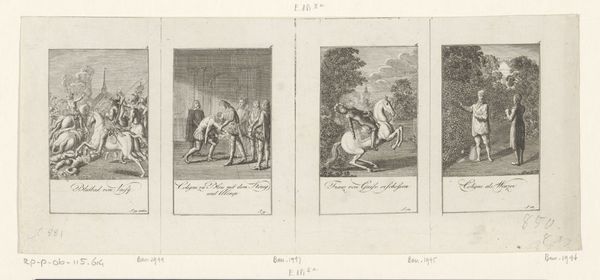
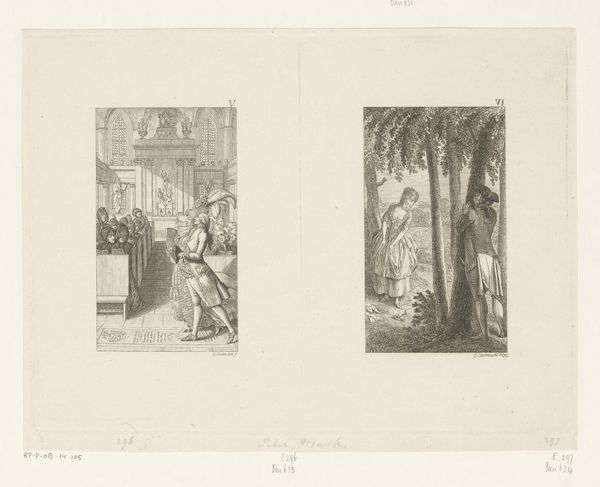
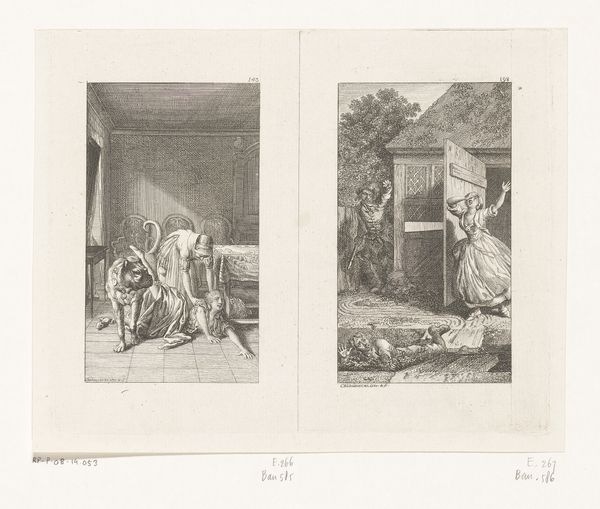
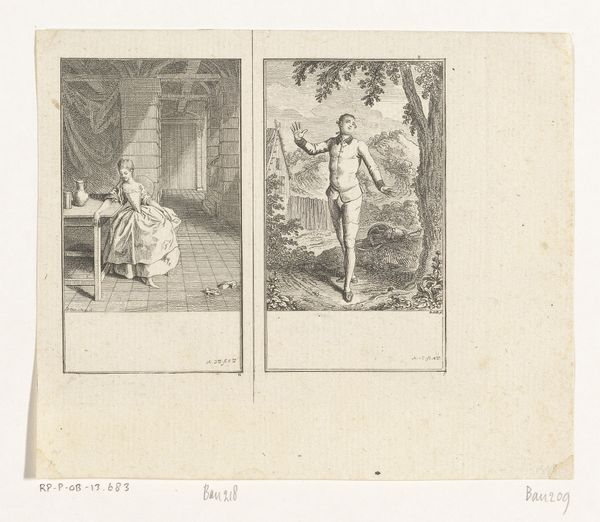
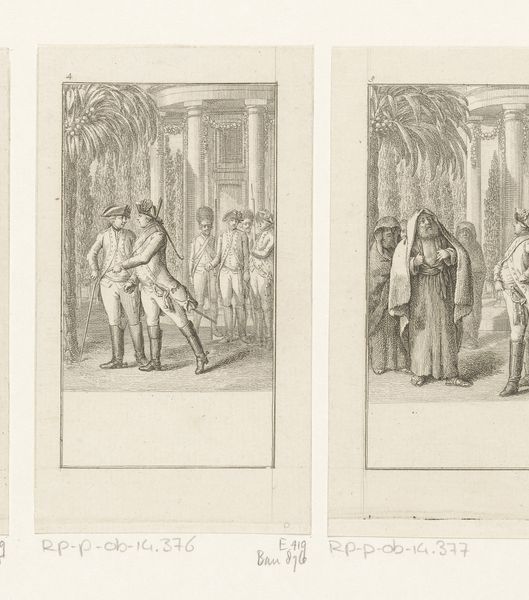
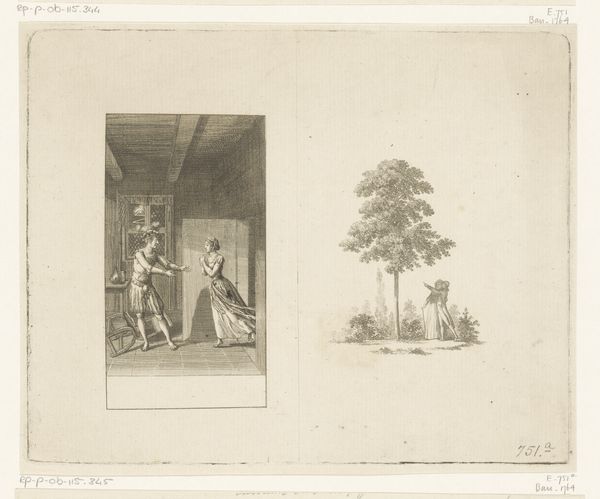
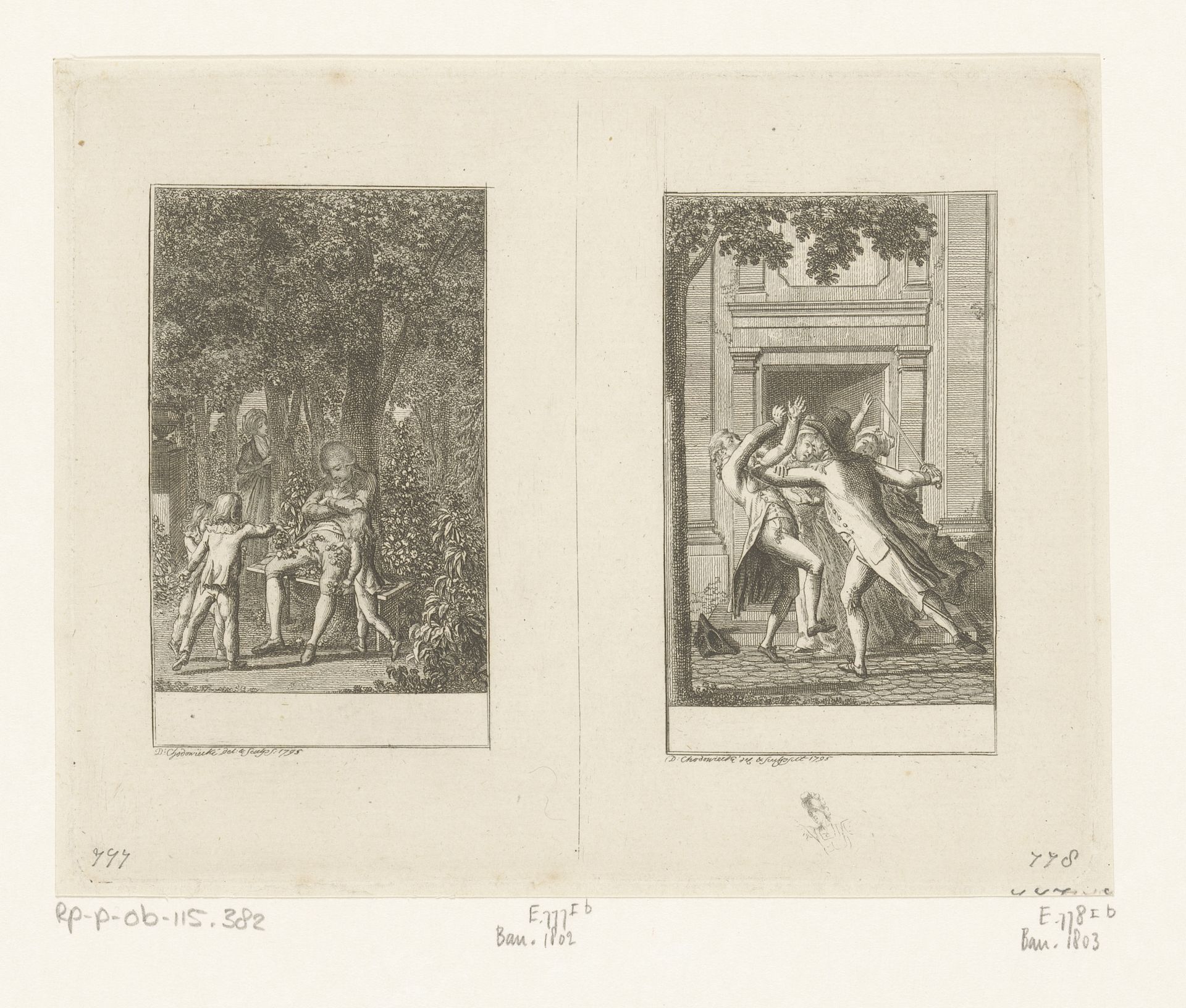
Daniel Nikolaus Chodowiecki made this print, "Twee voorstellingen uit het leven van Bendorf," using etching, a process that democratized image-making in the 18th century. The fine lines and detailed scenes were achieved by coating a metal plate with wax, drawing through it with a needle, and then bathing the plate in acid, which bites into the exposed metal. This process allows for the creation of multiple identical images, making art more accessible to a wider audience than traditional painting. The very act of etching, with its reliance on repeatable processes, reflects the burgeoning industrial era. Chodowiecki, in his choice of subject matter, everyday scenes, further bridges the gap between high art and the lives of ordinary people. The work embodies a shift towards a more egalitarian and accessible art world. The print’s inherent qualities of reproducibility and detailed line work are a testament to the changing landscape of art production, as well as consumption, in the 1700's.
Twee voorstellingen uit het leven van Bendorf 1795

Daniel Nikolaus Chodowiecki
1726 - 1801Location
RijksmuseumArtwork details
- Medium
- print, etching, paper, engraving
- Dimensions
- height 131 mm, width 166 mm
- Location
- Rijksmuseum
- Copyright
- Rijks Museum: Open Domain
Tags
neoclacissism
aged paper
etching
old engraving style
paper
romanticism
genre-painting
history-painting
engraving
Comments
No comments
About this artwork
Daniel Nikolaus Chodowiecki made this print, "Twee voorstellingen uit het leven van Bendorf," using etching, a process that democratized image-making in the 18th century. The fine lines and detailed scenes were achieved by coating a metal plate with wax, drawing through it with a needle, and then bathing the plate in acid, which bites into the exposed metal. This process allows for the creation of multiple identical images, making art more accessible to a wider audience than traditional painting. The very act of etching, with its reliance on repeatable processes, reflects the burgeoning industrial era. Chodowiecki, in his choice of subject matter, everyday scenes, further bridges the gap between high art and the lives of ordinary people. The work embodies a shift towards a more egalitarian and accessible art world. The print’s inherent qualities of reproducibility and detailed line work are a testament to the changing landscape of art production, as well as consumption, in the 1700's.
Comments
No comments