About this artwork
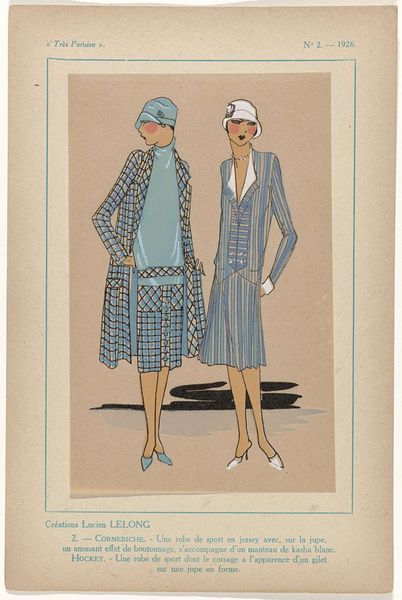
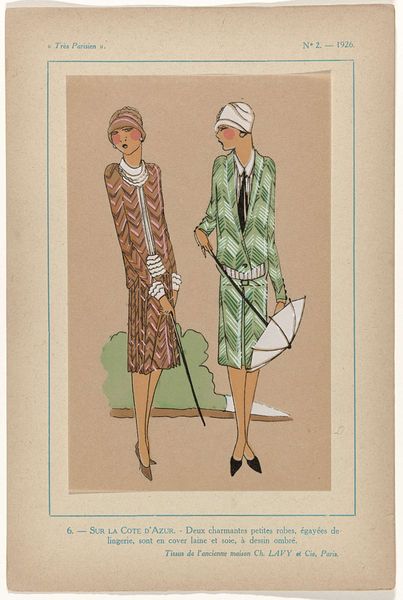
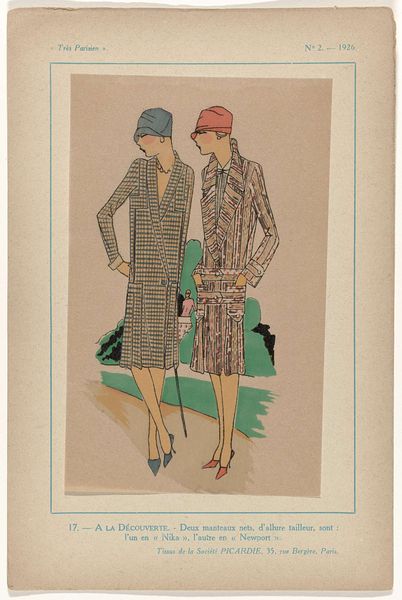
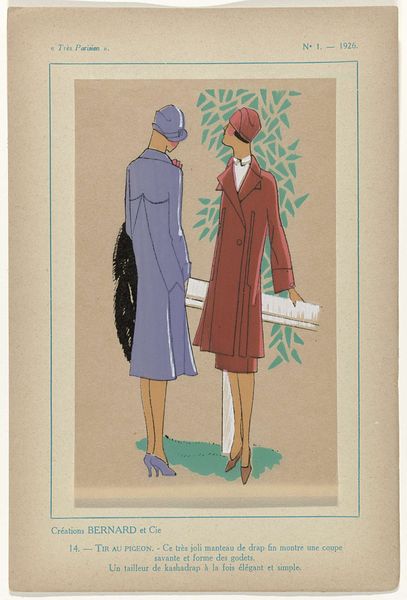
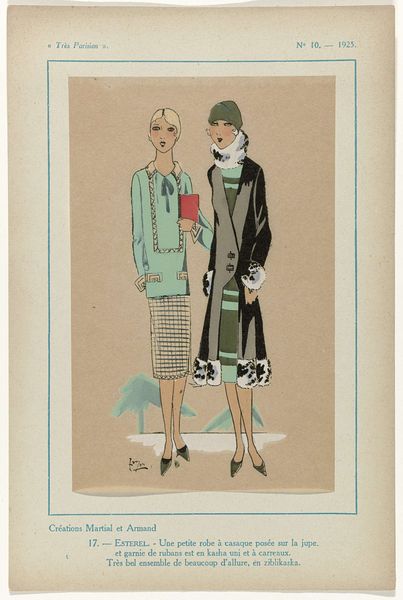
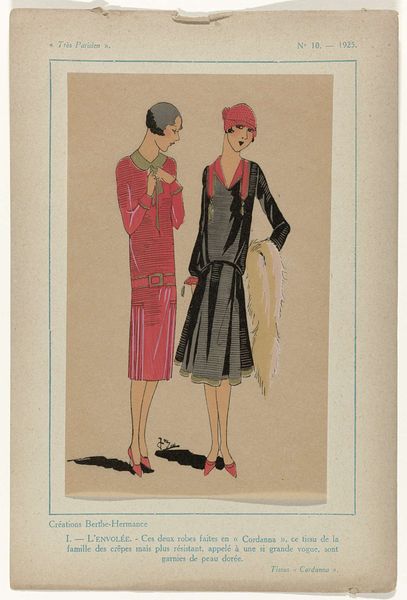
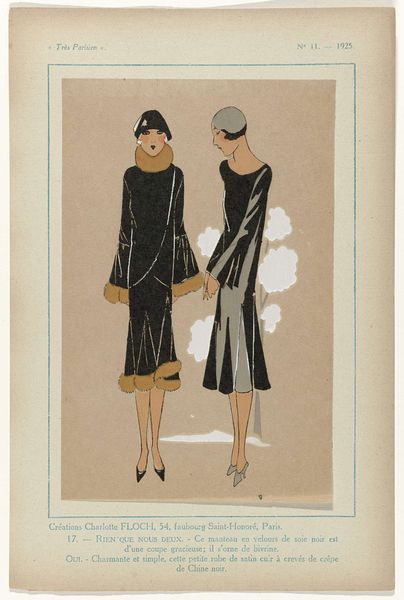
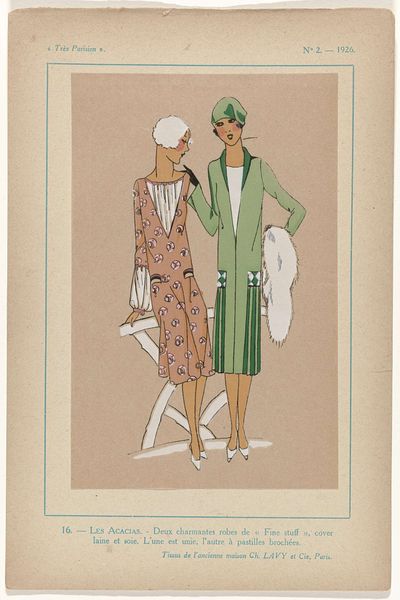
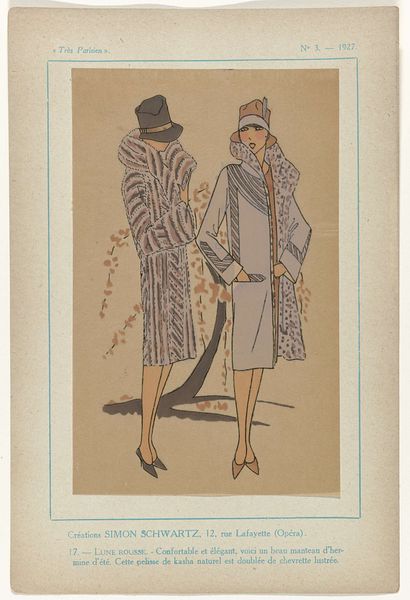
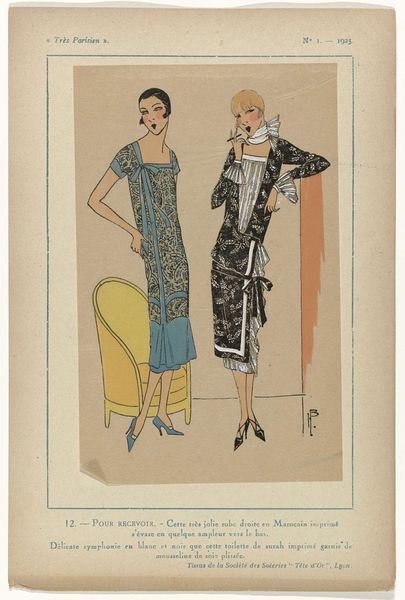
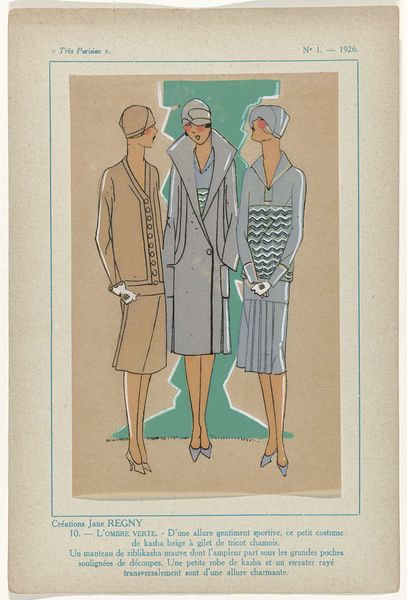
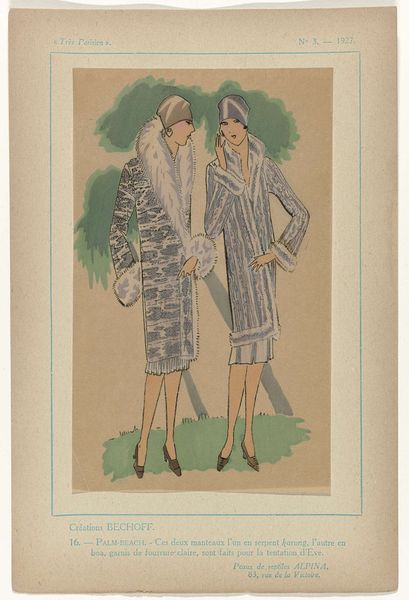
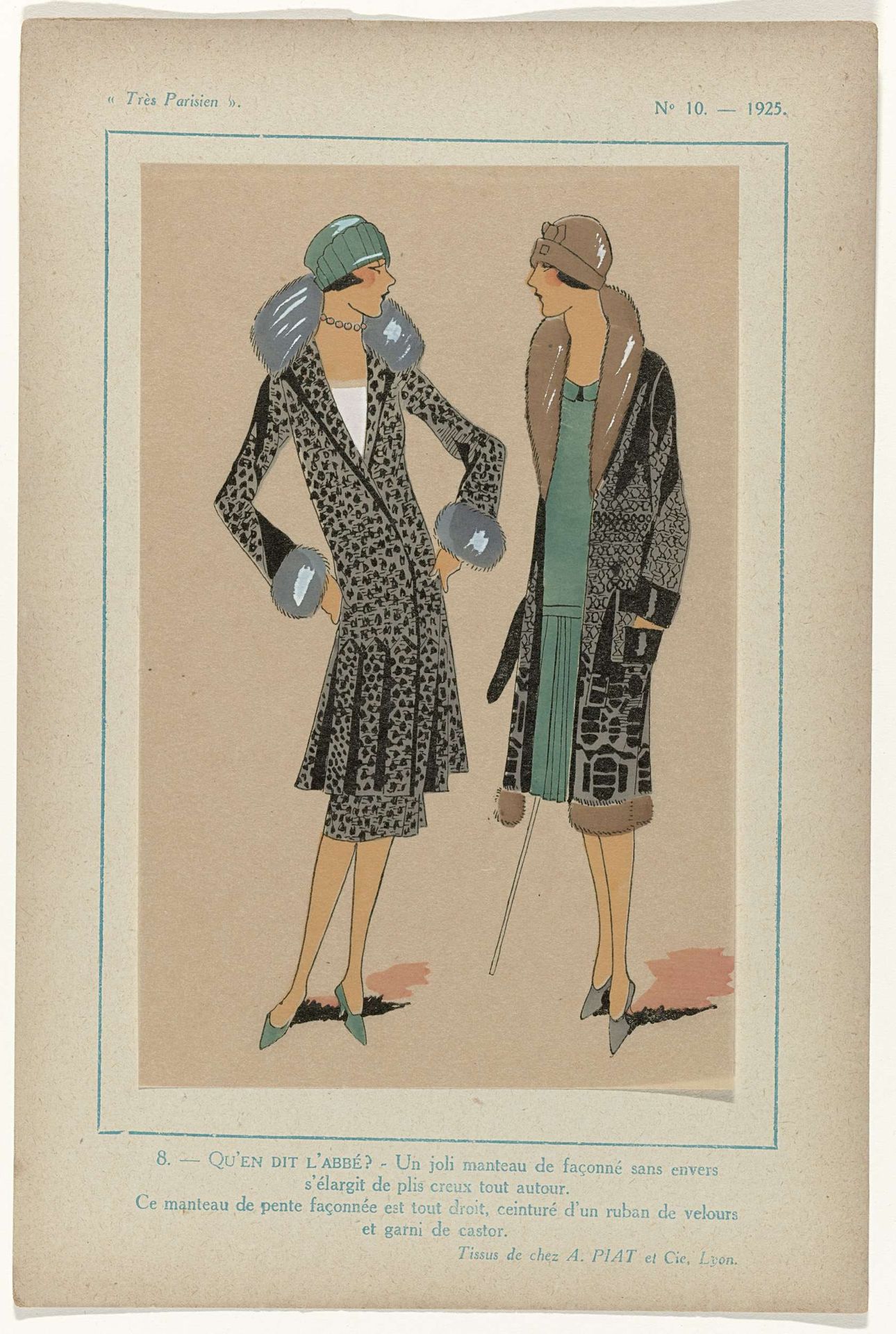
G-P. Joumard created this pochoir print titled "Très Parisien" in 1925. This piece captures a moment in the interwar period in France, a time of both exuberance and reflection following the profound disruptions of World War I. The print depicts two women modeling the latest in Parisian fashion. The garments, particularly the coats, blend luxury with the geometric aesthetics of the Art Deco movement. What strikes me is the way fashion here becomes a statement of identity. These are women embracing modernity, actively participating in shaping their roles in a rapidly changing society. The print invites us to consider how clothing can be a powerful form of expression, reflecting and shaping the narratives of gender, class, and cultural identity in the vibrant context of 1920s Paris. Joumard not only presents the fashion of the time but also suggests the complex negotiations of identity that these women navigated in their daily lives.
Très Parisien, 1925, No. 10, Pl. 8: - QU'EN DIT L'ABBÉ ?
1925

G-P. Joumard
@gpjoumardLocation
RijksmuseumArtwork details
- Medium
- mixed-media, print, watercolor
- Dimensions
- height 195 mm, width 120 mm, mm
- Location
- Rijksmuseum
- Copyright
- Rijks Museum: Open Domain
Tags
Comments
Share your thoughts
About this artwork
G-P. Joumard created this pochoir print titled "Très Parisien" in 1925. This piece captures a moment in the interwar period in France, a time of both exuberance and reflection following the profound disruptions of World War I. The print depicts two women modeling the latest in Parisian fashion. The garments, particularly the coats, blend luxury with the geometric aesthetics of the Art Deco movement. What strikes me is the way fashion here becomes a statement of identity. These are women embracing modernity, actively participating in shaping their roles in a rapidly changing society. The print invites us to consider how clothing can be a powerful form of expression, reflecting and shaping the narratives of gender, class, and cultural identity in the vibrant context of 1920s Paris. Joumard not only presents the fashion of the time but also suggests the complex negotiations of identity that these women navigated in their daily lives.
Comments
Share your thoughts