About this artwork
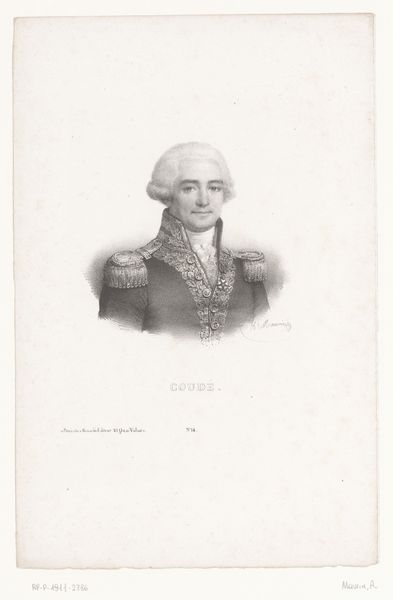
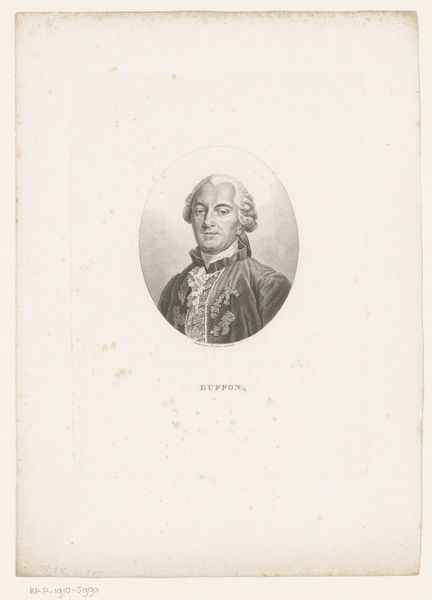
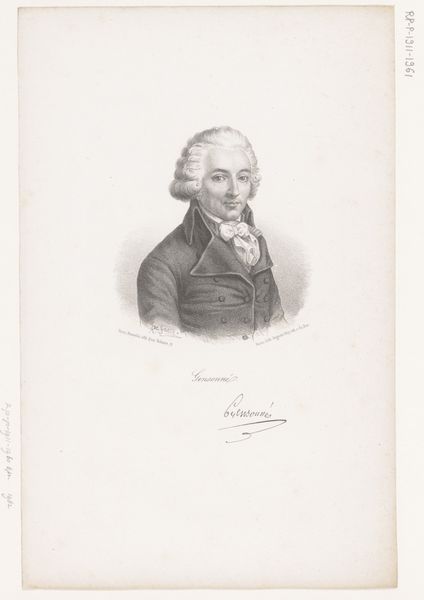
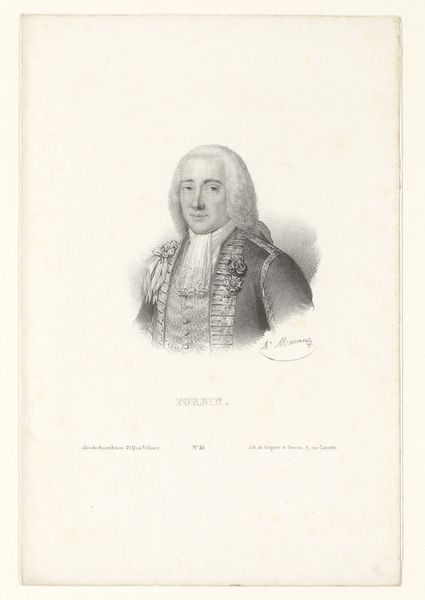
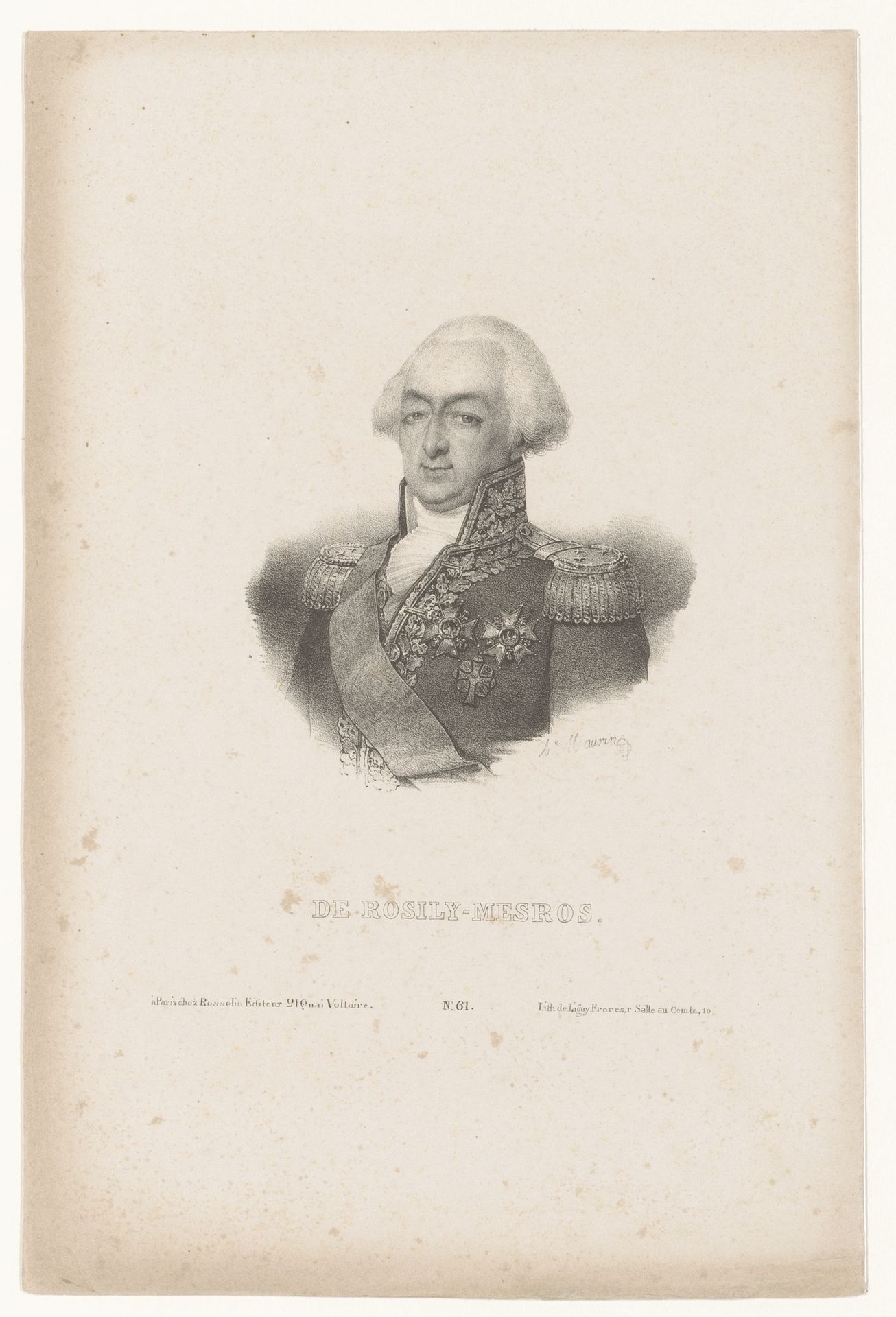
Curator: We’re looking at a portrait today of François Étienne de Rosily-Mesros by Antoine Maurin. The Rijksmuseum dates its creation to sometime between 1830 and 1853. Editor: It feels so formal, almost austere. All straight lines and clipped edges. The palette, so limited—grays, whites—emphasizes his seriousness, or perhaps, the artist’s reverence. Curator: As a materialist, I’m intrigued by the engraving process used to create the print. The precision required to render such detail using, I suspect, a relatively rudimentary tool is remarkable. I'd be keen to investigate Maurin's studio practice. Editor: What resonates with me are the decorations, specifically the symbols and insignia woven into his sash and adorning his coat. There's such a calculated performance of power, meticulously rendered to communicate a particular status and set of beliefs. Each carefully placed embellishment speaks volumes. Curator: Power manifested through production – the labour embedded in creating, distributing, and then wearing those decorations…consider the skilled artisans involved, their socio-economic status reflected, or perhaps, masked, by the elite’s adornments. Editor: Absolutely. Think about the starched white hair, a visual echo of Enlightenment ideals. His controlled, almost theatrical, gaze, intended to convey authority, reflects the codes and expectations of his time. Curator: I see it as a collision of different processes – the physical labor of the engraver meeting the symbolic labor embedded in Rosily-Mesros’ clothing, his rank declared not just through symbols but through textiles, the quality of the dye, the very fabric woven into his societal role. Editor: We see not only an individual but also a dense web of meaning. Curator: Precisely, meaning that only exists because of its creation. Editor: It certainly leaves you with plenty to contemplate. Curator: Indeed; a testament to the power of skilled production to both reflect and shape the values of its age.
Portret van François Étienne de Rosily-Mesros
1830 - 1853

Antoine Maurin
1793 - 1860Location
RijksmuseumArtwork details
- Dimensions
- height 273 mm, width 182 mm
- Location
- Rijksmuseum
- Copyright
- Rijks Museum: Open Domain
Tags
Comments
Share your thoughts
About this artwork
Curator: We’re looking at a portrait today of François Étienne de Rosily-Mesros by Antoine Maurin. The Rijksmuseum dates its creation to sometime between 1830 and 1853. Editor: It feels so formal, almost austere. All straight lines and clipped edges. The palette, so limited—grays, whites—emphasizes his seriousness, or perhaps, the artist’s reverence. Curator: As a materialist, I’m intrigued by the engraving process used to create the print. The precision required to render such detail using, I suspect, a relatively rudimentary tool is remarkable. I'd be keen to investigate Maurin's studio practice. Editor: What resonates with me are the decorations, specifically the symbols and insignia woven into his sash and adorning his coat. There's such a calculated performance of power, meticulously rendered to communicate a particular status and set of beliefs. Each carefully placed embellishment speaks volumes. Curator: Power manifested through production – the labour embedded in creating, distributing, and then wearing those decorations…consider the skilled artisans involved, their socio-economic status reflected, or perhaps, masked, by the elite’s adornments. Editor: Absolutely. Think about the starched white hair, a visual echo of Enlightenment ideals. His controlled, almost theatrical, gaze, intended to convey authority, reflects the codes and expectations of his time. Curator: I see it as a collision of different processes – the physical labor of the engraver meeting the symbolic labor embedded in Rosily-Mesros’ clothing, his rank declared not just through symbols but through textiles, the quality of the dye, the very fabric woven into his societal role. Editor: We see not only an individual but also a dense web of meaning. Curator: Precisely, meaning that only exists because of its creation. Editor: It certainly leaves you with plenty to contemplate. Curator: Indeed; a testament to the power of skilled production to both reflect and shape the values of its age.
Comments
Share your thoughts