
Curatorial notes
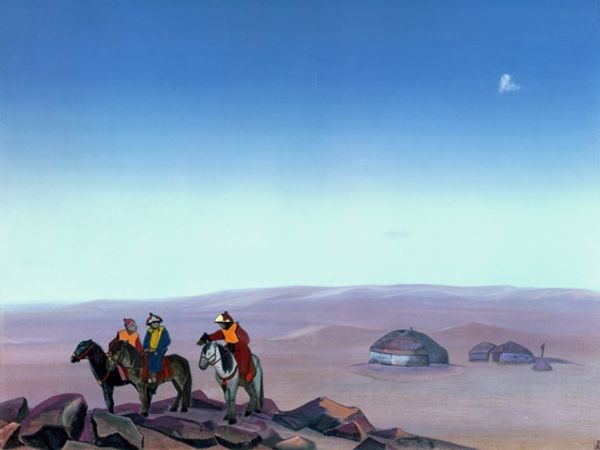
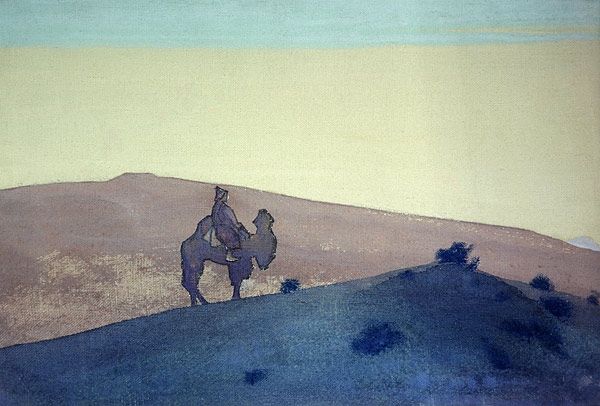
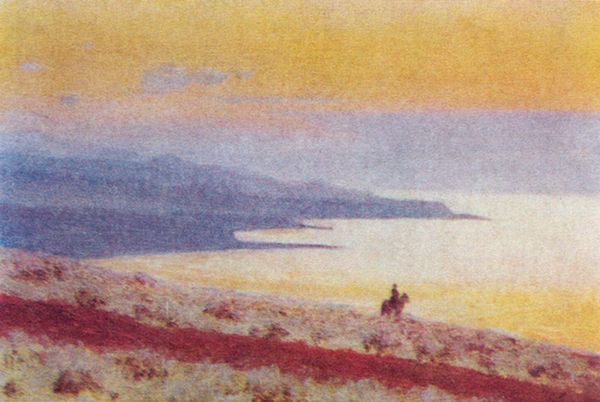
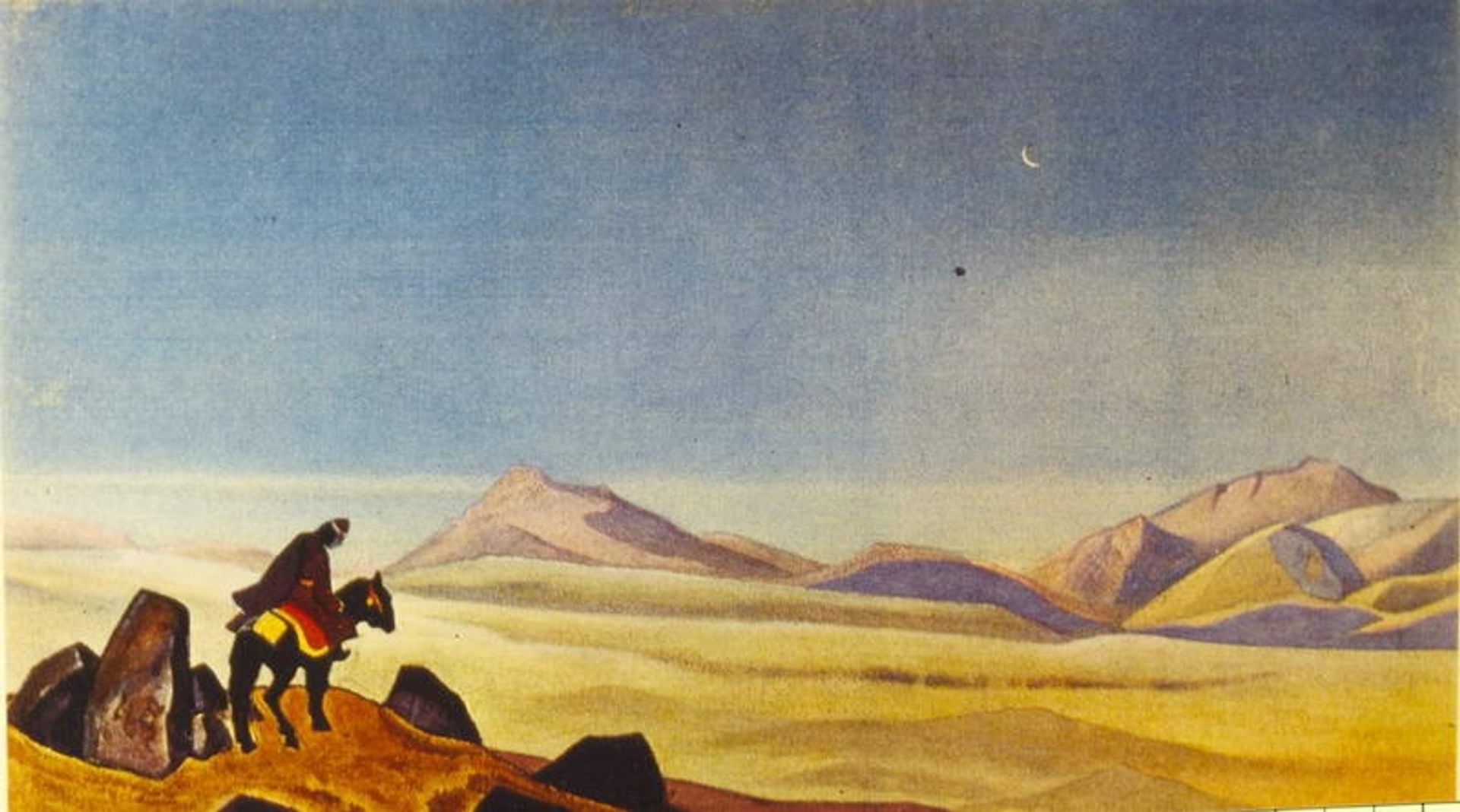
Curator: Ah, another evocative work by Nicholas Roerich. This is "Mongolian Horseman," created in 1935, using tempera on board. What's your first impression? Editor: My first thought goes straight to 'pathos of distance,' like a Nietzschean landscape reflecting profound solitude, that rider and horse dwarfed by the vast panorama, all under a crescent moon! Curator: Pathos of distance... intriguing. The muted tones, the gentle gradations of color, they do evoke a sense of quiet grandeur. What draws you to that concept so strongly? Editor: Well, isn't that figure rendered so small against the backdrop of immensity a poignant emblem of the individual confronting something almost ineffable? I think of other 'horsemen' figures in art history and myth - like the nomadic ideal expressed in Romantic art, the wanderer, a stoic symbol. Curator: I can see that. Roerich had a deep interest in Eastern philosophy and spirituality. Perhaps the smallness is about humility, an acknowledgement of the forces larger than ourselves? Roerich believed art could be a conduit to higher consciousness. Editor: Yes, but let’s also acknowledge the potent symbolism of the horse, a vital link to nomadic cultures of central Asia: strength, freedom, raw power—it's a dynamic symbol tethered to both earth and sky. Curator: The colors are really lovely. That sort of soft pastel palette lends an almost dreamlike quality, blurring the line between the real and the symbolic, don't you think? Editor: Absolutely, that deliberate vagueness of color pulls the painting into a realm of symbolic potential. Even that pale crescent moon suggests liminality, transitions, secrets held. I can imagine Roerich trying to invoke something lasting about that culture. Curator: He really invites you to reflect on your own place in the universe and I see it reflected in my current state as I was a military nomadic wandering about. Roerich, despite the tranquil surface, often challenges us to consider deeper philosophical questions through his paintings. Editor: A fitting end, reflecting on those mysteries we encounter within ourselves and our continuous quest for direction and meaning across temporal and historical paths.