About this artwork
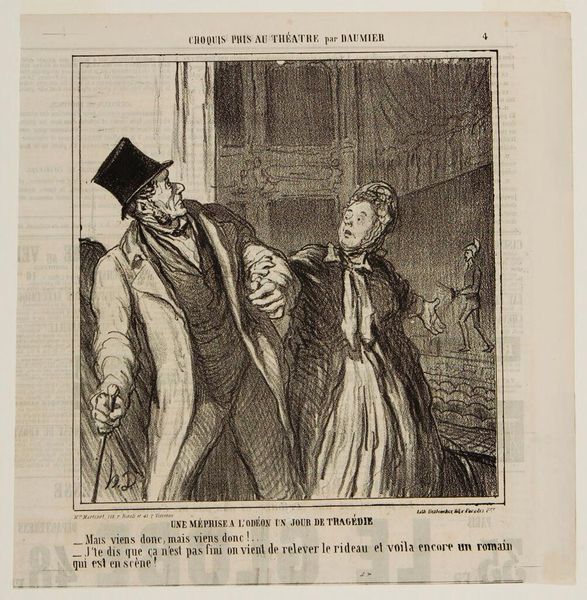
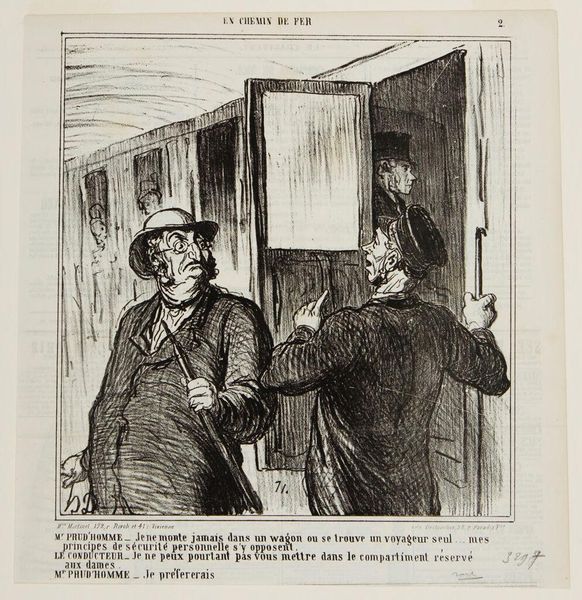
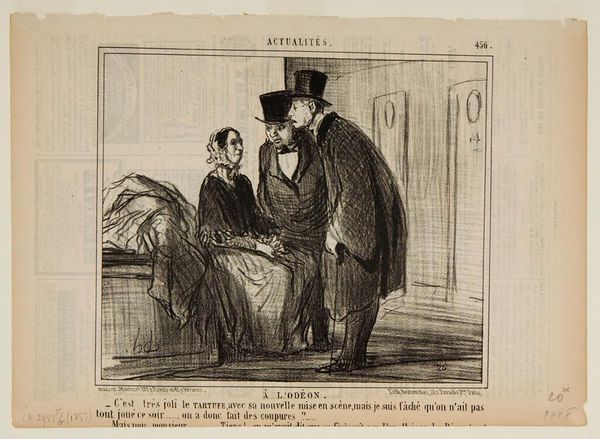
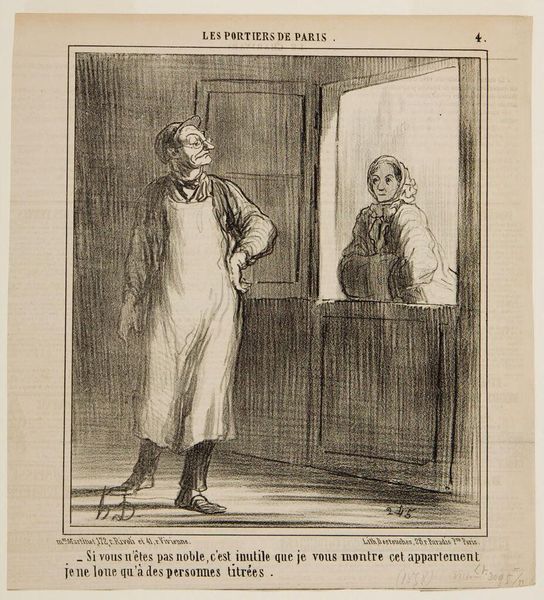
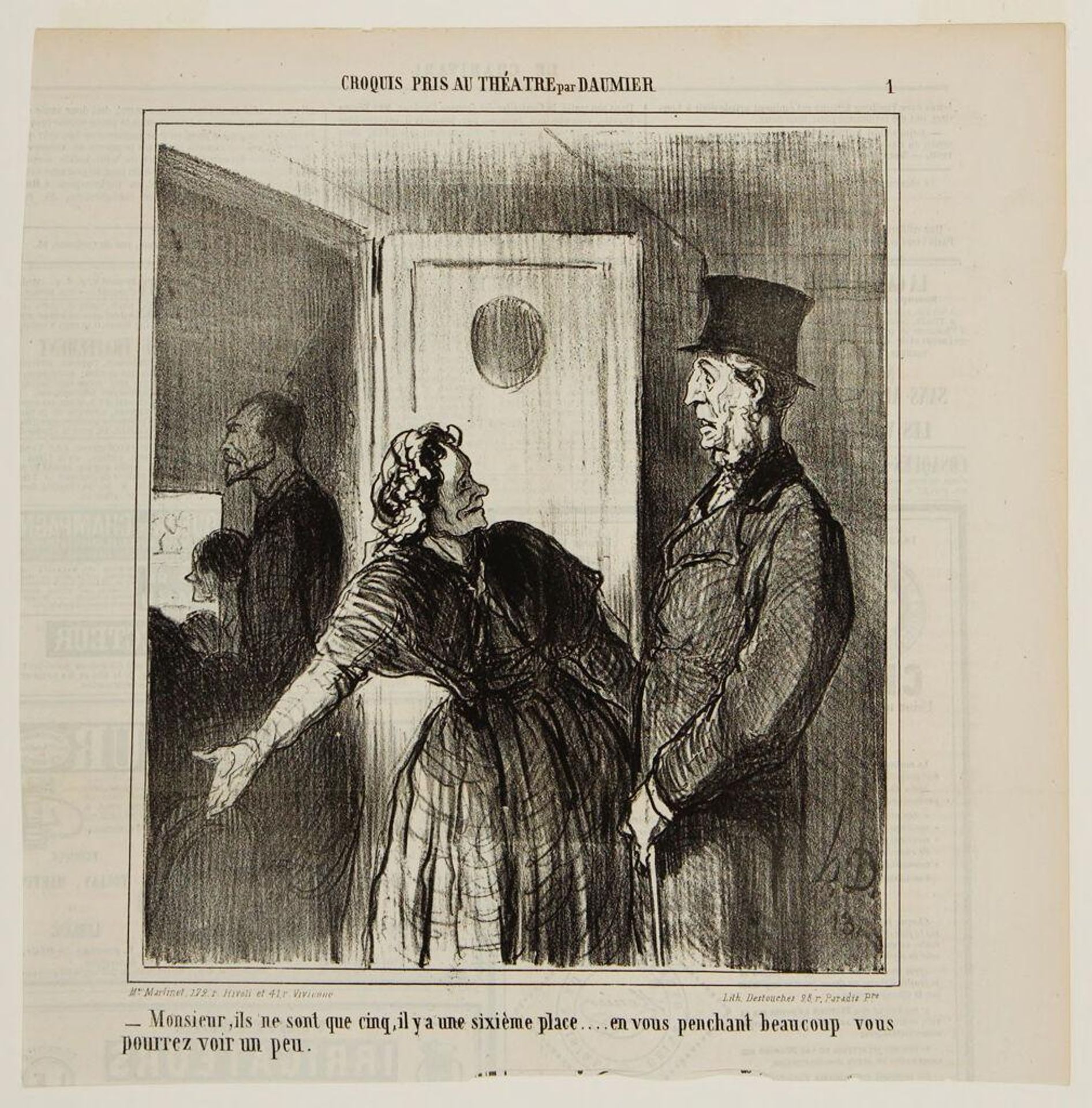
Curator: What strikes me immediately about this lithograph by Honoré Daumier is the raw sketchiness. It feels so immediate, almost like a fleeting thought captured on paper. Editor: Indeed, it's from a series titled "Croquis Pris au Théâtre," sketches taken from the theater. The title, as inscribed, "Mister, there's only five there, there's a sixth seat...if you stoop down, you can see a little," adds to the satirical observation of Parisian society. Curator: The way he uses light and shadow is remarkable. It really heightens the drama and emphasizes the social dynamics at play. Do you notice the claustrophobia here? Editor: Absolutely. Daumier often used the theater as a stage to explore class differences and social pretension. His art became an important social commentary and record of the everyday lives of ordinary people. Curator: It's a reminder that art doesn't always have to be grand or monumental to be powerful. Sometimes, the simplest observations can offer the most profound insights. Editor: I agree. It serves as an important reminder of how art can be used as an instrument for reflection and critique.
"Mister, there's only five there, there's a sixth seat...if you stoop down, you can see a little."
1864


Artwork details
- Location
- Harvard Art Museums
- Copyright
- CC0 1.0
Comments
Share your thoughts
About this artwork
Curator: What strikes me immediately about this lithograph by Honoré Daumier is the raw sketchiness. It feels so immediate, almost like a fleeting thought captured on paper. Editor: Indeed, it's from a series titled "Croquis Pris au Théâtre," sketches taken from the theater. The title, as inscribed, "Mister, there's only five there, there's a sixth seat...if you stoop down, you can see a little," adds to the satirical observation of Parisian society. Curator: The way he uses light and shadow is remarkable. It really heightens the drama and emphasizes the social dynamics at play. Do you notice the claustrophobia here? Editor: Absolutely. Daumier often used the theater as a stage to explore class differences and social pretension. His art became an important social commentary and record of the everyday lives of ordinary people. Curator: It's a reminder that art doesn't always have to be grand or monumental to be powerful. Sometimes, the simplest observations can offer the most profound insights. Editor: I agree. It serves as an important reminder of how art can be used as an instrument for reflection and critique.
Comments
Share your thoughts