About this artwork
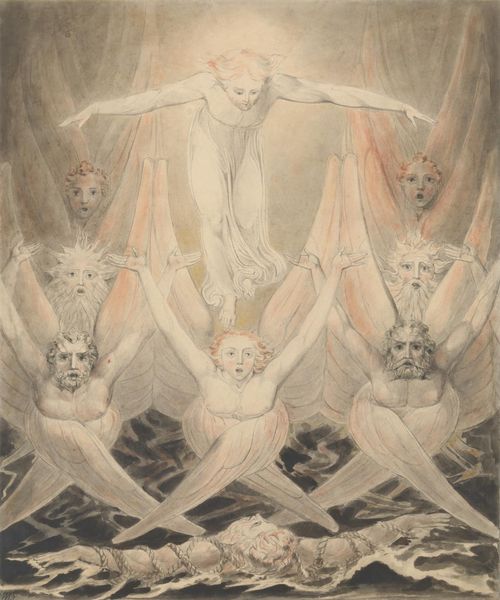
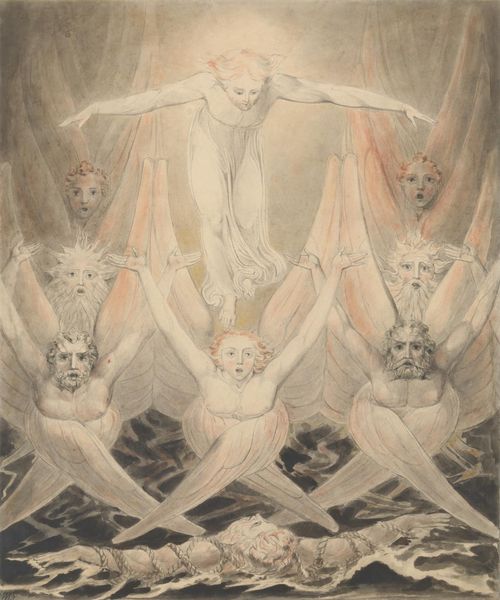
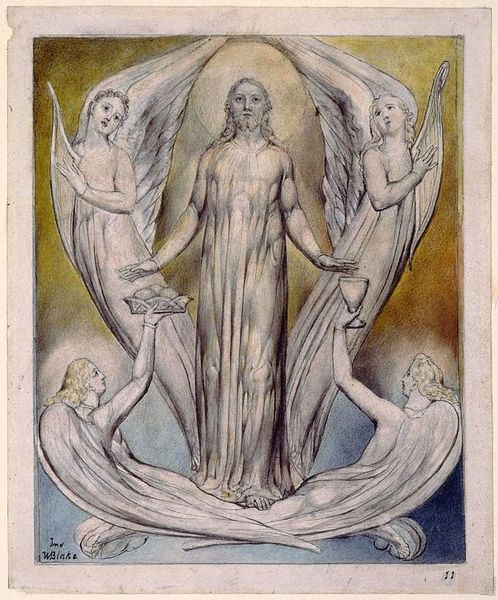
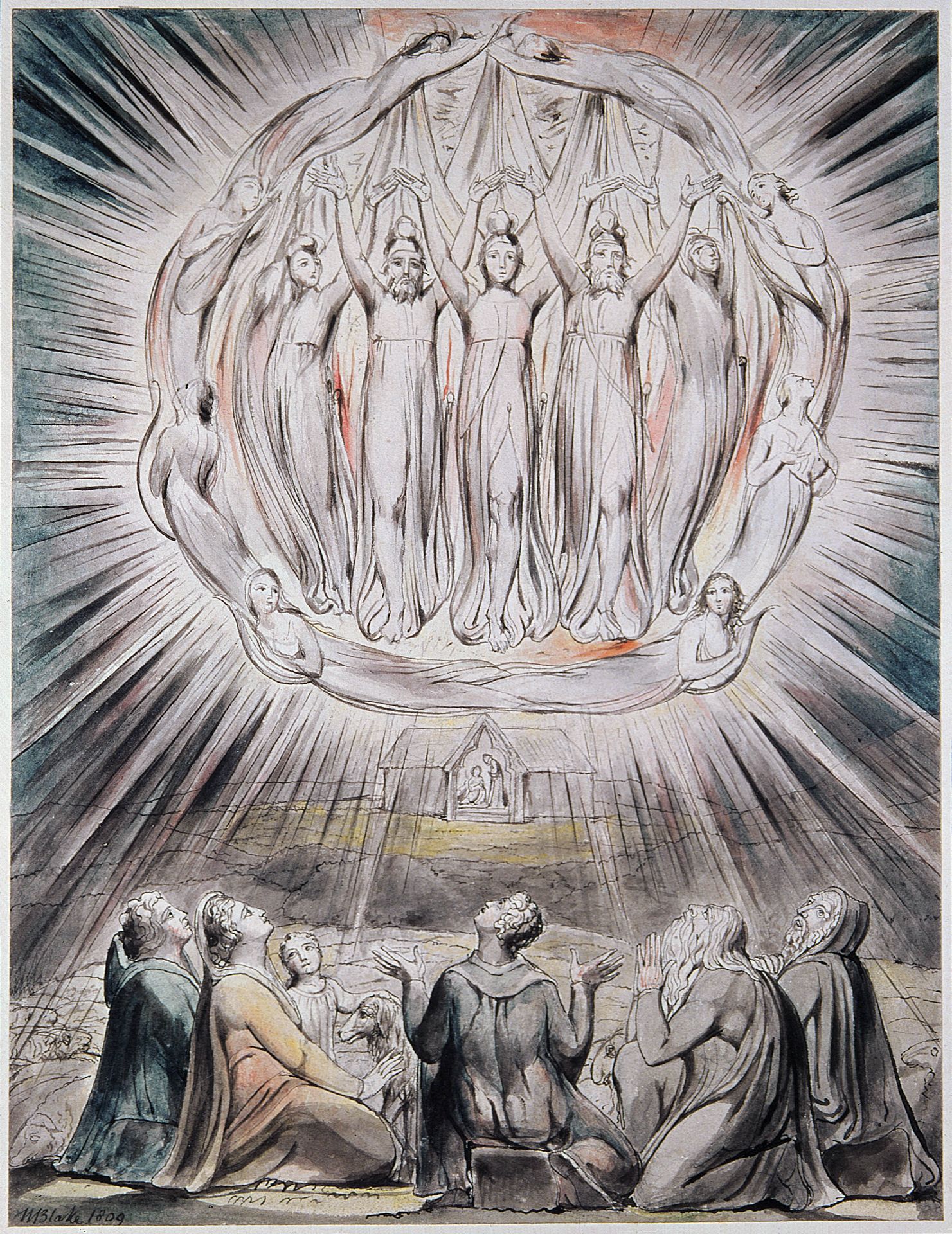
William Blake created "The Angels Appearing to the Shepherds" using watercolor. Notice the radiant angels hovering above the awestruck shepherds, their arms raised in gestures of revelation. This upward reaching, a universal symbol of supplication and openness to divine communication, echoes across millennia, from ancient Roman orators to Christian iconography. The halo of light around the angels, here, is not merely decorative; it’s a visual echo of the divine mandorla, seen in medieval art, signifying sacred space and transformative encounters. Observe how Blake captures the shepherds’ emotional response—a blend of fear, wonder, and reverence. The image taps into our collective unconscious. The gesture has carried through time, yet also evolved: from a pagan sign of reverence to a modern expression of joy. This cyclical progression speaks to how symbols resurface, evolve, and are imbued with new meanings across historical contexts.
The Angels appearing to the Shepherds
1809

William Blake
1757 - 1827Location
Whitworth Art Gallery (University of Manchester), Manchester, UKArtwork details
- Medium
- painting, watercolor
- Location
- Whitworth Art Gallery (University of Manchester), Manchester, UK
- Copyright
- Public domain
Tags
Comments
Share your thoughts
About this artwork
William Blake created "The Angels Appearing to the Shepherds" using watercolor. Notice the radiant angels hovering above the awestruck shepherds, their arms raised in gestures of revelation. This upward reaching, a universal symbol of supplication and openness to divine communication, echoes across millennia, from ancient Roman orators to Christian iconography. The halo of light around the angels, here, is not merely decorative; it’s a visual echo of the divine mandorla, seen in medieval art, signifying sacred space and transformative encounters. Observe how Blake captures the shepherds’ emotional response—a blend of fear, wonder, and reverence. The image taps into our collective unconscious. The gesture has carried through time, yet also evolved: from a pagan sign of reverence to a modern expression of joy. This cyclical progression speaks to how symbols resurface, evolve, and are imbued with new meanings across historical contexts.
Comments
Share your thoughts