1800 - 1850
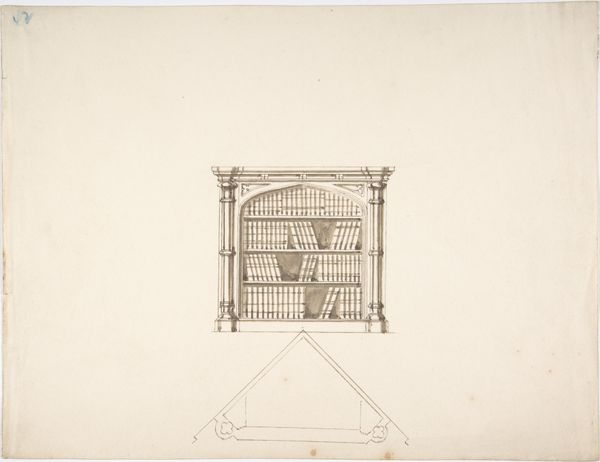
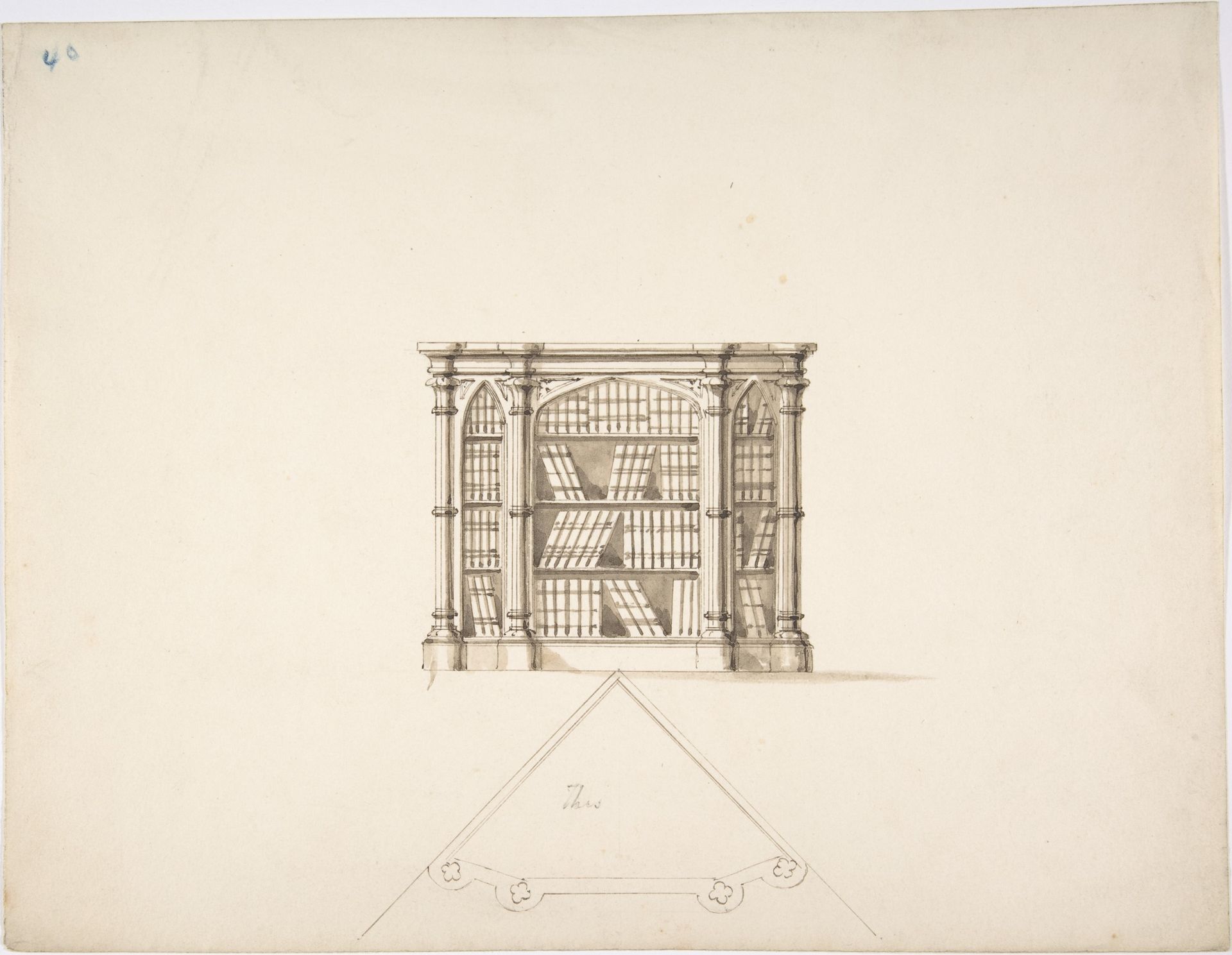
Design for a Gothic Style Corner Book Cabinet: Elevation and Plan


Listen to curator's interpretation
Curatorial notes
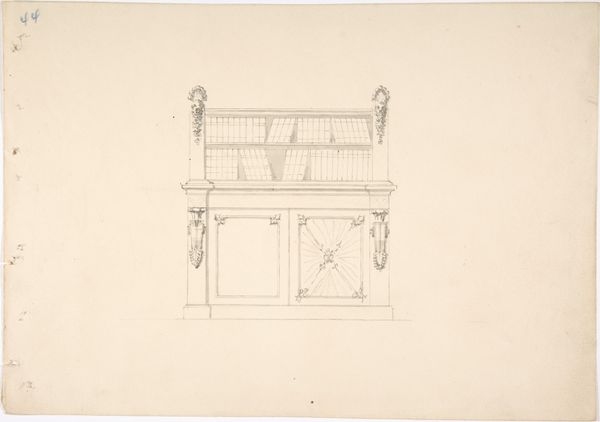
Editor: Here we have an intriguing design, "Design for a Gothic Style Corner Book Cabinet: Elevation and Plan," created between 1800 and 1850 by an anonymous artist. It's a mix of pencil, ink, etching, and possibly other media, detailing what looks like an architectural blueprint. What first jumps out is the sort of somber elegance; even as a sketch, the weight of historical and academic precedent is palpable. What symbolic elements stand out to you in this piece? Curator: The choice of Gothic style is deeply significant. Recall the Gothic period – associated with soaring cathedrals striving towards the heavens. This cabinet design appropriates that verticality, compressing it into a domestic setting. What psychological impact might that compressed aspiration have, do you think? Editor: Perhaps a constant, internalized striving for knowledge, made manifest in the domestic sphere? The books become a kind of personal cathedral. Curator: Precisely. Notice how the pointed arches, a signature of Gothic architecture, frame each shelf. They speak of enlightenment, of a gateway to knowledge. How does this contrast with the rise of Neoclassicism, another movement present at the time, with its own set of symbolism? Editor: Neoclassicism favored symmetry and order, a return to the 'rational' ideals of antiquity, didn't it? This design, while ordered, has a certain romantic flourish, a hint of medieval mystery absent from Neoclassical forms. Curator: Indeed. This drawing represents a fascinating tension between those aesthetic ideals. Look closely at the base - how do those curves at the corner relate to that overall verticality? Editor: Now that you mention it, that contrast in shapes feels like a struggle to reconcile groundedness with soaring intellect! I appreciate seeing the drawing as more than just a design for furniture; it really captures the intellectual climate of its time. Curator: And perhaps hints at the enduring human desire to find harmony between our earthly existence and our aspirational selves.