About this artwork
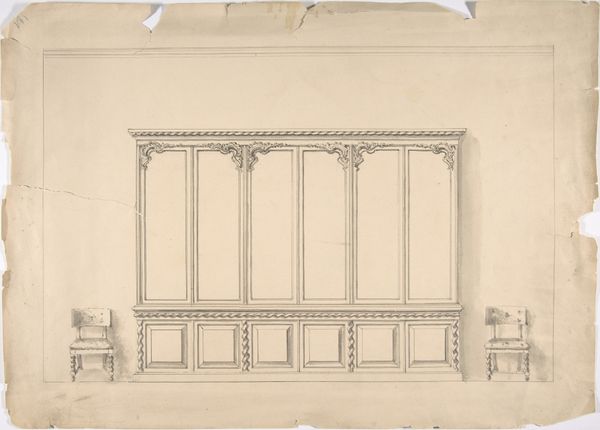
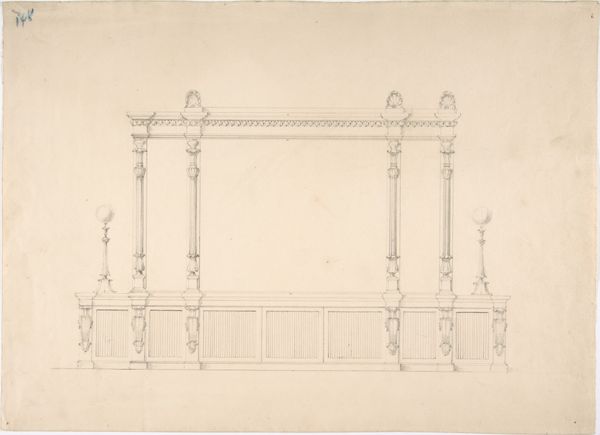
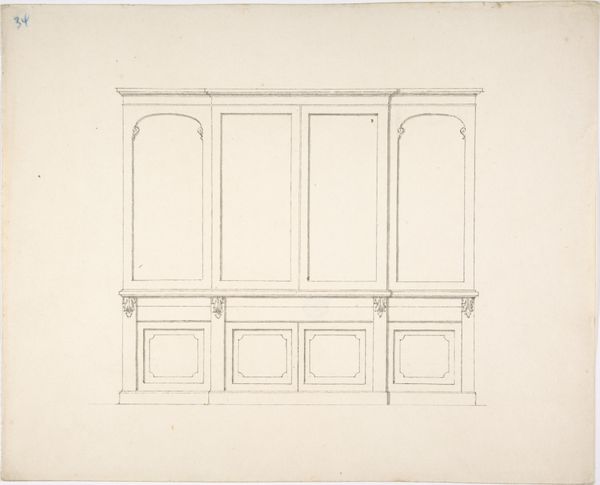
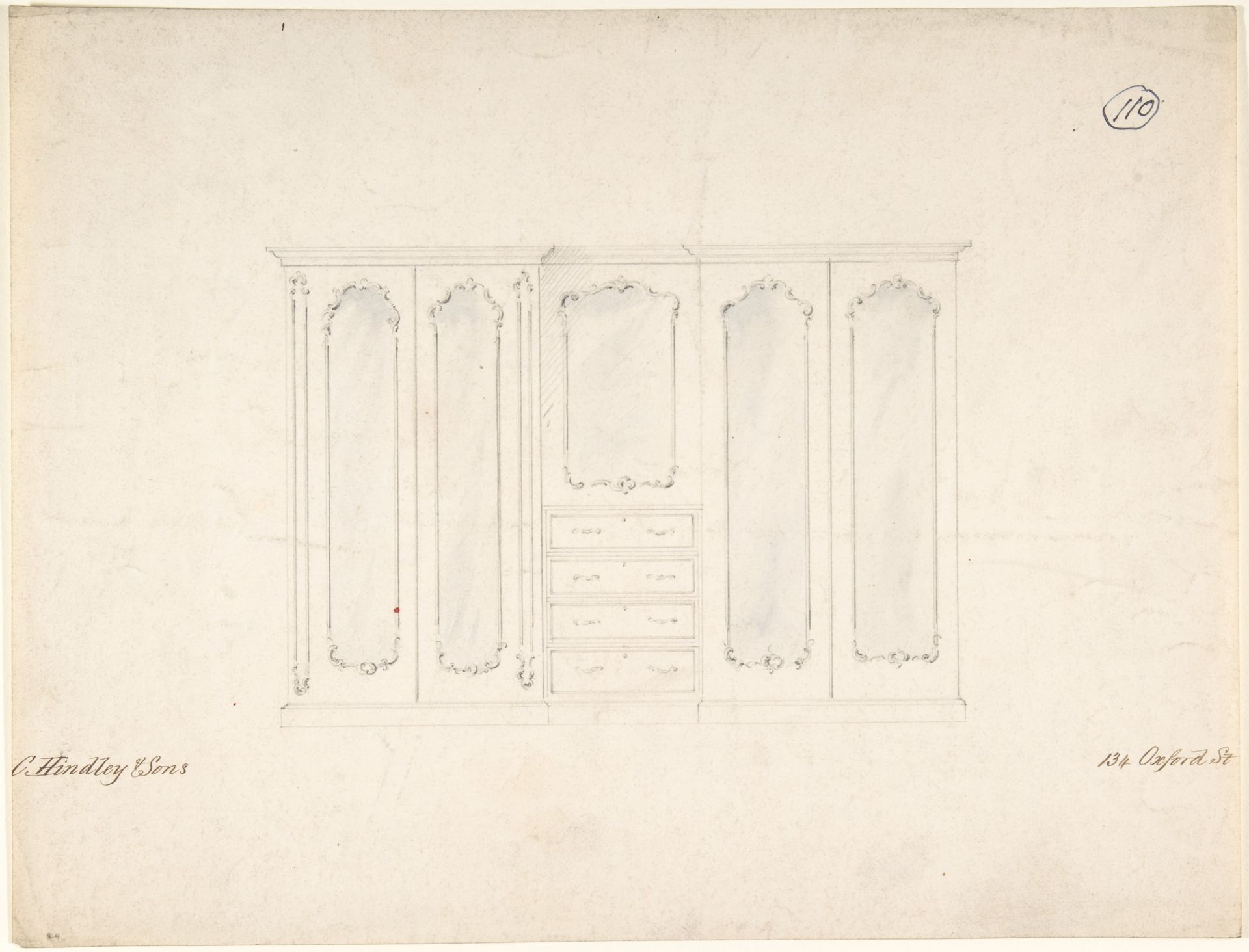
Editor: So, this is “Design for Armoire with Mirrors” by Charles Hindley and Sons, dating from 1841 to 1884. It’s a drawing, pencil and print, and what strikes me immediately is its elegance. It’s more than just a functional design, it looks like something quite fancy for its time! How would you interpret it? Curator: Considering its materiality, it speaks volumes about Victorian society's evolving relationship with furniture production. A design like this, rendered in pencil and print, signifies a shift from bespoke craftsmanship to potentially mass-produced elegance. Editor: Mass-produced? But it looks so detailed and high-end. Curator: Exactly! The tension between the appearance of luxury and the potential for wider distribution is key. We have to consider where the materials came from, the labour involved in its construction – perhaps even child labour, unfortunately common then – and the aspirational middle classes who would consume such pieces. How does this design facilitate or conceal those realities? Editor: So you’re saying it is less about the aesthetic and more about… who made it and for whom? Curator: Not solely, but understanding the production chain informs our reading of its aesthetic. Was this intended as a unique piece, or for reproduction? How might the quality of the final materials affect the consumer experience? Editor: That’s… sobering. I’ll never look at furniture the same way. It opens up new perspectives about design's connection to industry and labor. Curator: Indeed! Seeing the layers of labor, social aspiration, and the mechanisms of production inherent in a "simple" design helps dismantle traditional notions of art historical value, placing emphasis instead on the process and context.
Design for Armoire with Mirrors
1841 - 1884

Charles Hindley and Sons
1841 - 1917
The Metropolitan Museum of Art
Metropolitan Museum of Art, New York, NYArtwork details
- Medium
- drawing, print, pencil
- Dimensions
- sheet: 9 5/8 x 12 5/8 in. (24.5 x 32.1 cm)
- Location
- Metropolitan Museum of Art, New York, NY
- Copyright
- Public Domain
Tags
Comments
Share your thoughts
About this artwork
Editor: So, this is “Design for Armoire with Mirrors” by Charles Hindley and Sons, dating from 1841 to 1884. It’s a drawing, pencil and print, and what strikes me immediately is its elegance. It’s more than just a functional design, it looks like something quite fancy for its time! How would you interpret it? Curator: Considering its materiality, it speaks volumes about Victorian society's evolving relationship with furniture production. A design like this, rendered in pencil and print, signifies a shift from bespoke craftsmanship to potentially mass-produced elegance. Editor: Mass-produced? But it looks so detailed and high-end. Curator: Exactly! The tension between the appearance of luxury and the potential for wider distribution is key. We have to consider where the materials came from, the labour involved in its construction – perhaps even child labour, unfortunately common then – and the aspirational middle classes who would consume such pieces. How does this design facilitate or conceal those realities? Editor: So you’re saying it is less about the aesthetic and more about… who made it and for whom? Curator: Not solely, but understanding the production chain informs our reading of its aesthetic. Was this intended as a unique piece, or for reproduction? How might the quality of the final materials affect the consumer experience? Editor: That’s… sobering. I’ll never look at furniture the same way. It opens up new perspectives about design's connection to industry and labor. Curator: Indeed! Seeing the layers of labor, social aspiration, and the mechanisms of production inherent in a "simple" design helps dismantle traditional notions of art historical value, placing emphasis instead on the process and context.
Comments
Share your thoughts