About this artwork
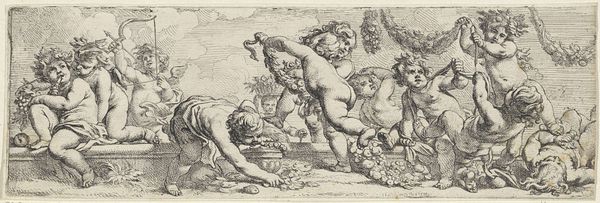
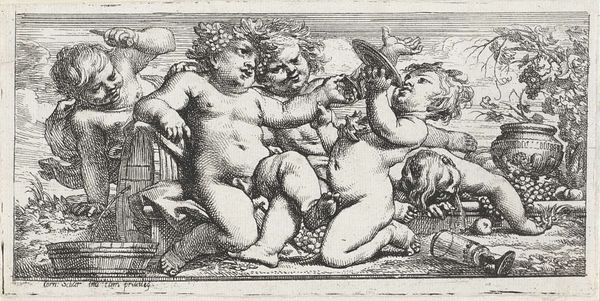
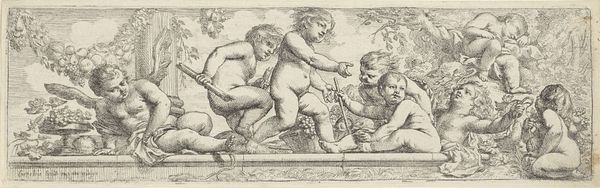
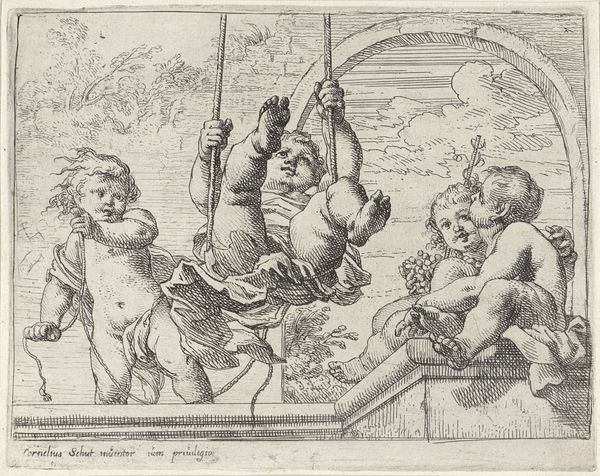
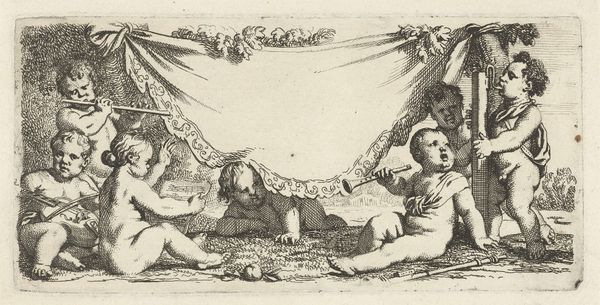
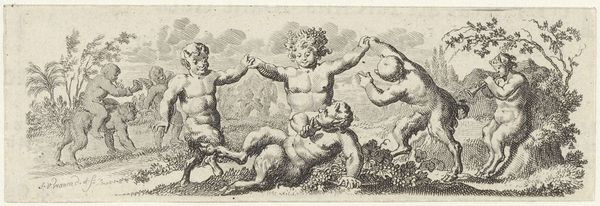
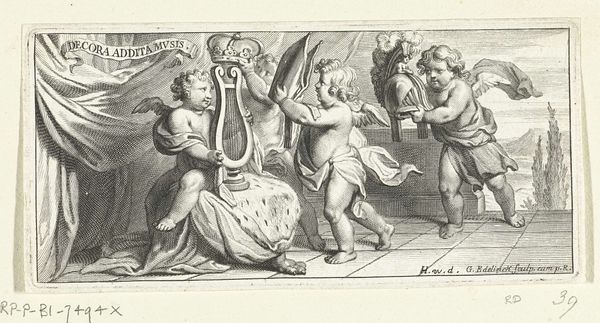
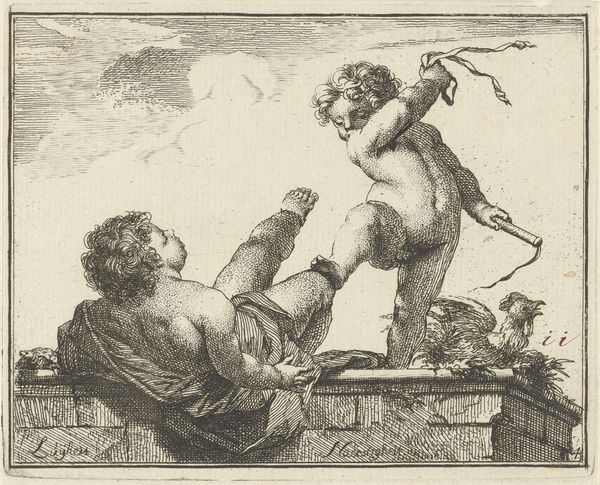
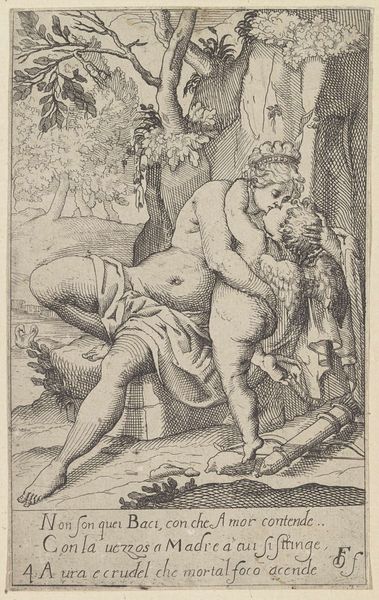
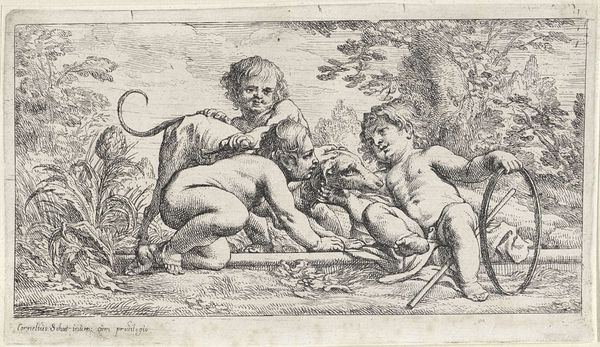
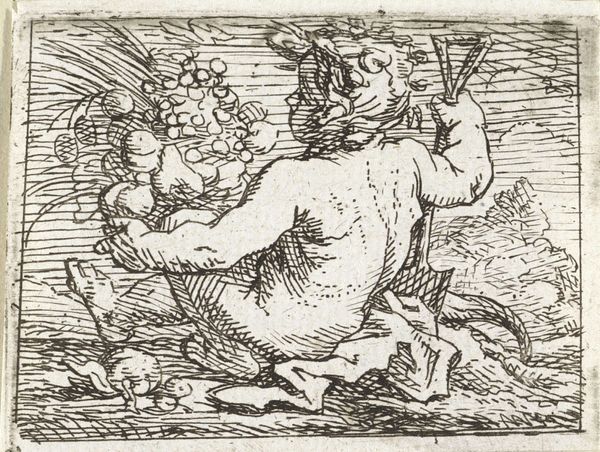
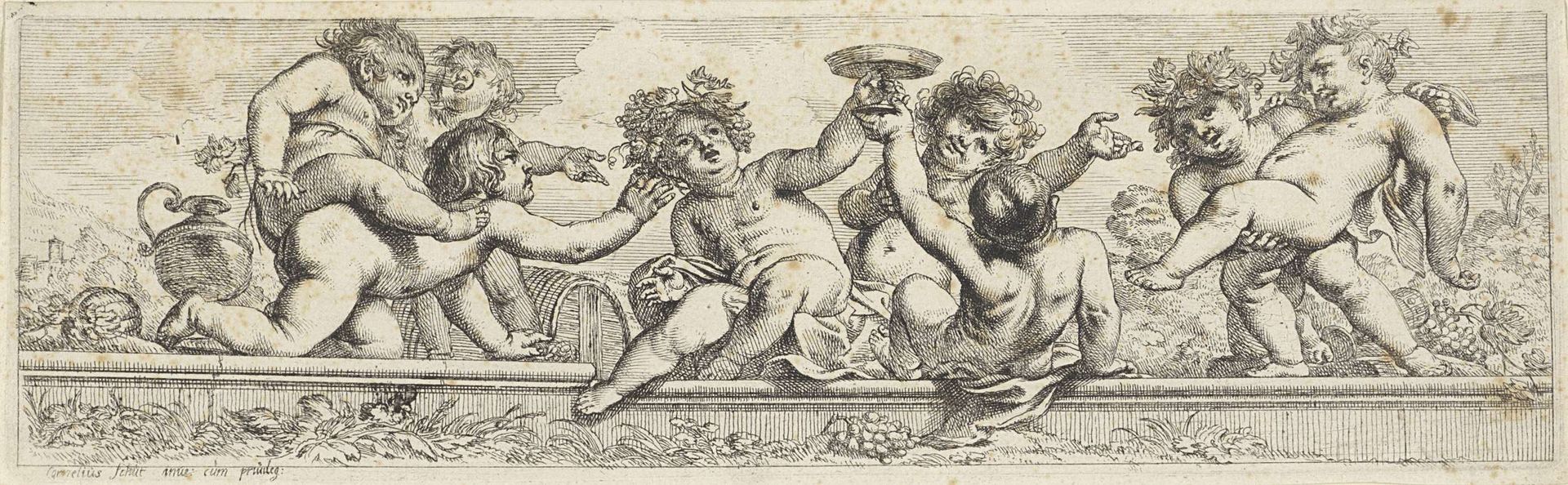
Cornelis Schut created this etching titled 'Fries met acht bacchanten' - or 'Frieze with eight Bacchants' - during the Dutch Golden Age, a period of immense cultural and economic prosperity for the Netherlands. The etching depicts eight putti, or 'bacchanten' – winged figures, often associated with love, lust and fertility. They are playfully engaging in what seems like a Bacchic revelry; a celebration of wine and pleasure associated with the Roman god Bacchus. These figures were not merely decorative; they were potent symbols that reflected the era's complex relationship with pleasure, excess, and the classical past. Looking closely, we see these aren't just any children; they’re chubby, active, and unreserved. Their nakedness and activity defy the strictures of conventional morality. This challenges the rigid social norms of the time. The print becomes a subtle rebellion, a space where pleasure and freedom take center stage, even if just for a moment. The Dutch Golden Age was not just about wealth and art, but also about navigating the tensions between tradition and modernity. Schut's etching provides a glimpse into that world, where societal boundaries were tested and the celebration of life's simple pleasures was elevated.

Artwork details
- Dimensions
- height 99 mm, width 329 mm
- Location
- Rijksmuseum
- Copyright
- Rijks Museum: Open Domain
Tags
toned paper
light pencil work
pen sketch
pencil sketch
personal sketchbook
pen-ink sketch
pen work
sketchbook drawing
sketchbook art
initial sketch
Comments
No comments
About this artwork
Cornelis Schut created this etching titled 'Fries met acht bacchanten' - or 'Frieze with eight Bacchants' - during the Dutch Golden Age, a period of immense cultural and economic prosperity for the Netherlands. The etching depicts eight putti, or 'bacchanten' – winged figures, often associated with love, lust and fertility. They are playfully engaging in what seems like a Bacchic revelry; a celebration of wine and pleasure associated with the Roman god Bacchus. These figures were not merely decorative; they were potent symbols that reflected the era's complex relationship with pleasure, excess, and the classical past. Looking closely, we see these aren't just any children; they’re chubby, active, and unreserved. Their nakedness and activity defy the strictures of conventional morality. This challenges the rigid social norms of the time. The print becomes a subtle rebellion, a space where pleasure and freedom take center stage, even if just for a moment. The Dutch Golden Age was not just about wealth and art, but also about navigating the tensions between tradition and modernity. Schut's etching provides a glimpse into that world, where societal boundaries were tested and the celebration of life's simple pleasures was elevated.
Comments
No comments