![[Three Children and a Dog Playing in the Creek, July 4, 1883] by Thomas Eakins](https://d2w8kbdekdi1gv.cloudfront.net/eyJidWNrZXQiOiAiYXJ0ZXJhLWltYWdlcy1idWNrZXQiLCAia2V5IjogImFydHdvcmtzL2VhNTZlNzZhLTFjZWItNDQ2ZS1iNmFjLTIwOTQ1NjU1MDVmNi9lYTU2ZTc2YS0xY2ViLTQ0NmUtYjZhYy0yMDk0NTY1NTA1ZjZfZnVsbC5qcGciLCAiZWRpdHMiOiB7InJlc2l6ZSI6IHsid2lkdGgiOiAxOTIwLCAiaGVpZ2h0IjogMTkyMCwgImZpdCI6ICJpbnNpZGUifX19)
About this artwork
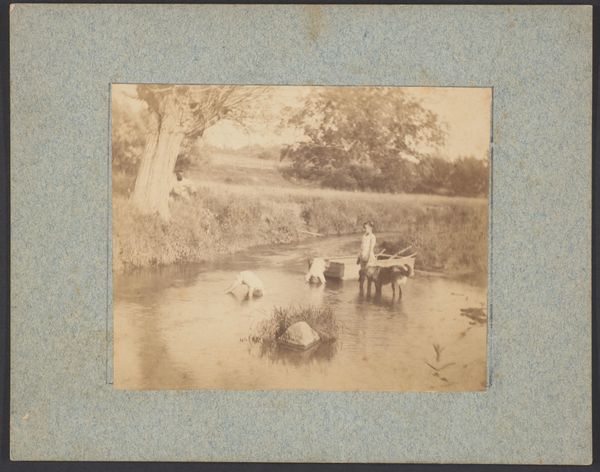
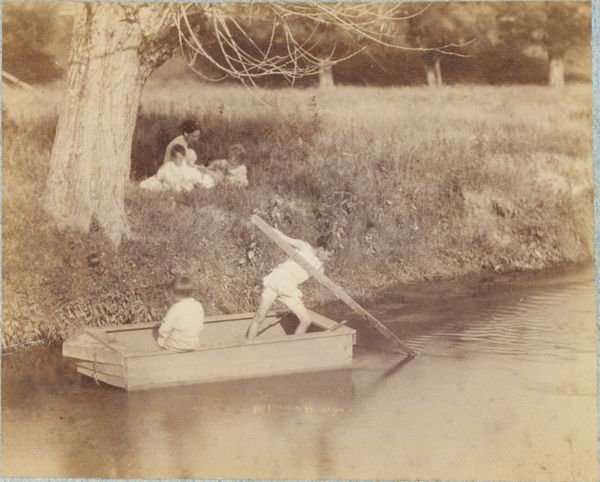
Thomas Eakins captured "Three Children and a Dog Playing in the Creek, July 4, 1883" using gelatin silver print, a process which replaced the older, more cumbersome wet collodion method, and was an early form of snapshot photography. The gelatin silver process, with its pre-prepared dry plates, made photography more accessible and immediate. Here, it lends a soft, almost dreamlike quality to the image, emphasizing the idyllic moment rather than sharp detail. Eakins’s choice speaks to a shift in photographic practice, from staged portraiture to capturing spontaneous, everyday life. Consider how this gelatin silver print contrasts with traditional fine art. Its accessibility democratized image-making, challenging the elitism often associated with painting and sculpture. Eakins, himself a painter, embraced photography for its truthfulness, blurring the lines between artistic disciplines and opening new avenues for creative expression.
[Three Children and a Dog Playing in the Creek, July 4, 1883]
1883


Artwork details
- Medium
- photography, albumen-print
- Dimensions
- 8.9 x 11.2 cm (3 1/2 x 4 7/16 in.)
- Location
- Metropolitan Museum of Art, New York, NY
- Copyright
- Public Domain
Tags
Comments
Share your thoughts
About this artwork
Thomas Eakins captured "Three Children and a Dog Playing in the Creek, July 4, 1883" using gelatin silver print, a process which replaced the older, more cumbersome wet collodion method, and was an early form of snapshot photography. The gelatin silver process, with its pre-prepared dry plates, made photography more accessible and immediate. Here, it lends a soft, almost dreamlike quality to the image, emphasizing the idyllic moment rather than sharp detail. Eakins’s choice speaks to a shift in photographic practice, from staged portraiture to capturing spontaneous, everyday life. Consider how this gelatin silver print contrasts with traditional fine art. Its accessibility democratized image-making, challenging the elitism often associated with painting and sculpture. Eakins, himself a painter, embraced photography for its truthfulness, blurring the lines between artistic disciplines and opening new avenues for creative expression.
Comments
Share your thoughts