1849 - 1855
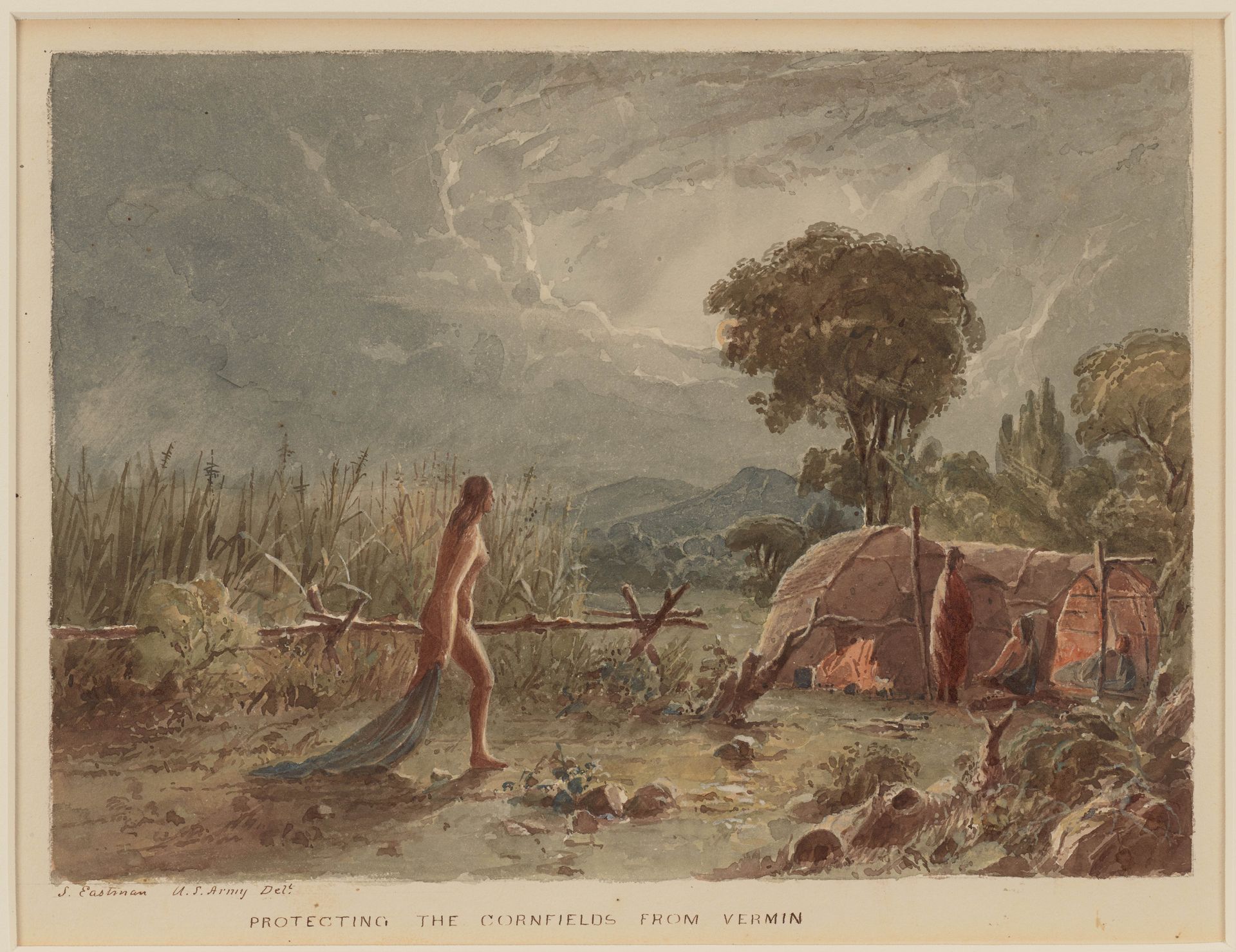
Protecting the Cornfields from Vermin


Listen to curator's interpretation
Curatorial notes
Seth Eastman, a 19th-century American artist, created "Protecting the Cornfields from Vermin" using watercolor and graphite. The cool washes and neutral palette create a somber mood, contrasting the vulnerability of the scene with the implied threat to the crops. The composition, viewed through the lens of structuralism, can be deconstructed into binary oppositions: civilization versus nature, safety versus danger, clothed versus unclothed. The cornfields represent cultivation and sustenance, while the vermin symbolize potential destruction. The figure walking out to the fields is unclothed, seemingly unprotected, which destabilizes established meanings of protection and vulnerability. Eastman's delicate application of watercolor, reminiscent of early ethnographic documentation, obscures a more complex engagement with cultural representation. The painting's semiotic system uses visual elements to convey cultural codes and meanings. The contrast between the woman's vulnerability and the vital task she undertakes challenges fixed notions of gender, labor, and the relationship between humans and the natural world. By examining the formal qualities of the artwork, we gain insights into the intricate relationship between aesthetics, representation, and cultural discourse.