About this artwork
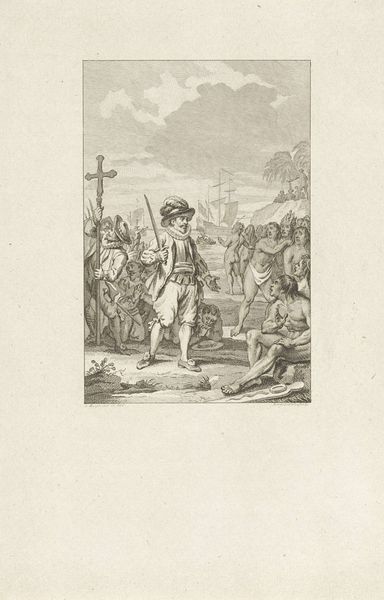
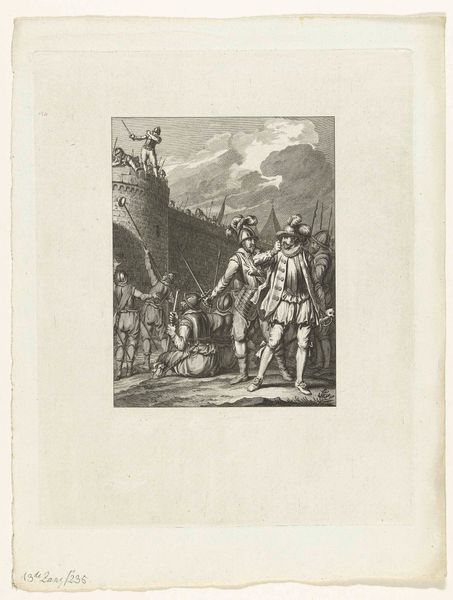
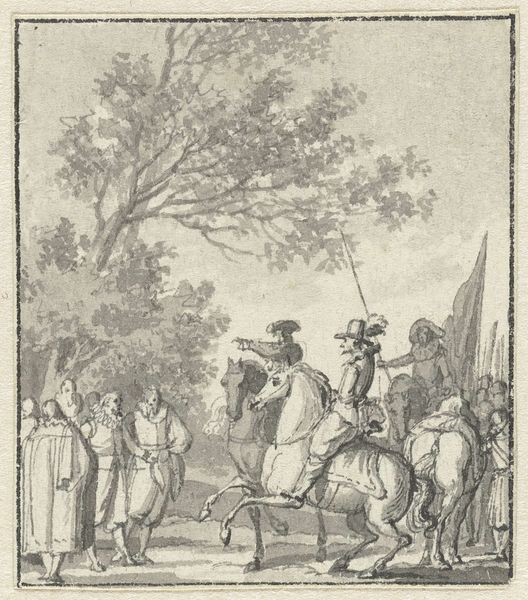
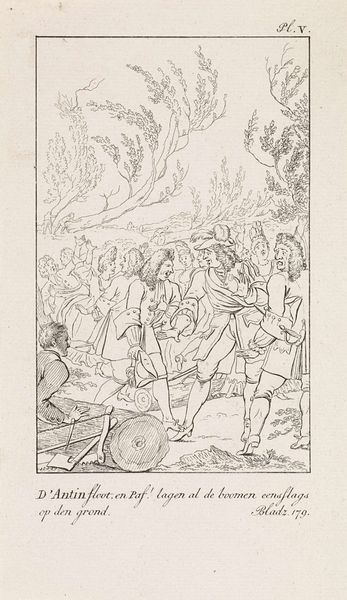
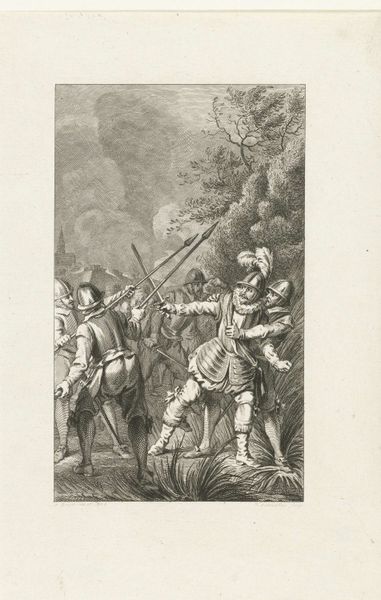
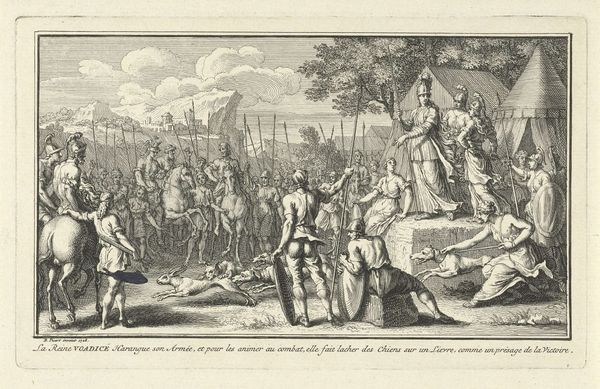
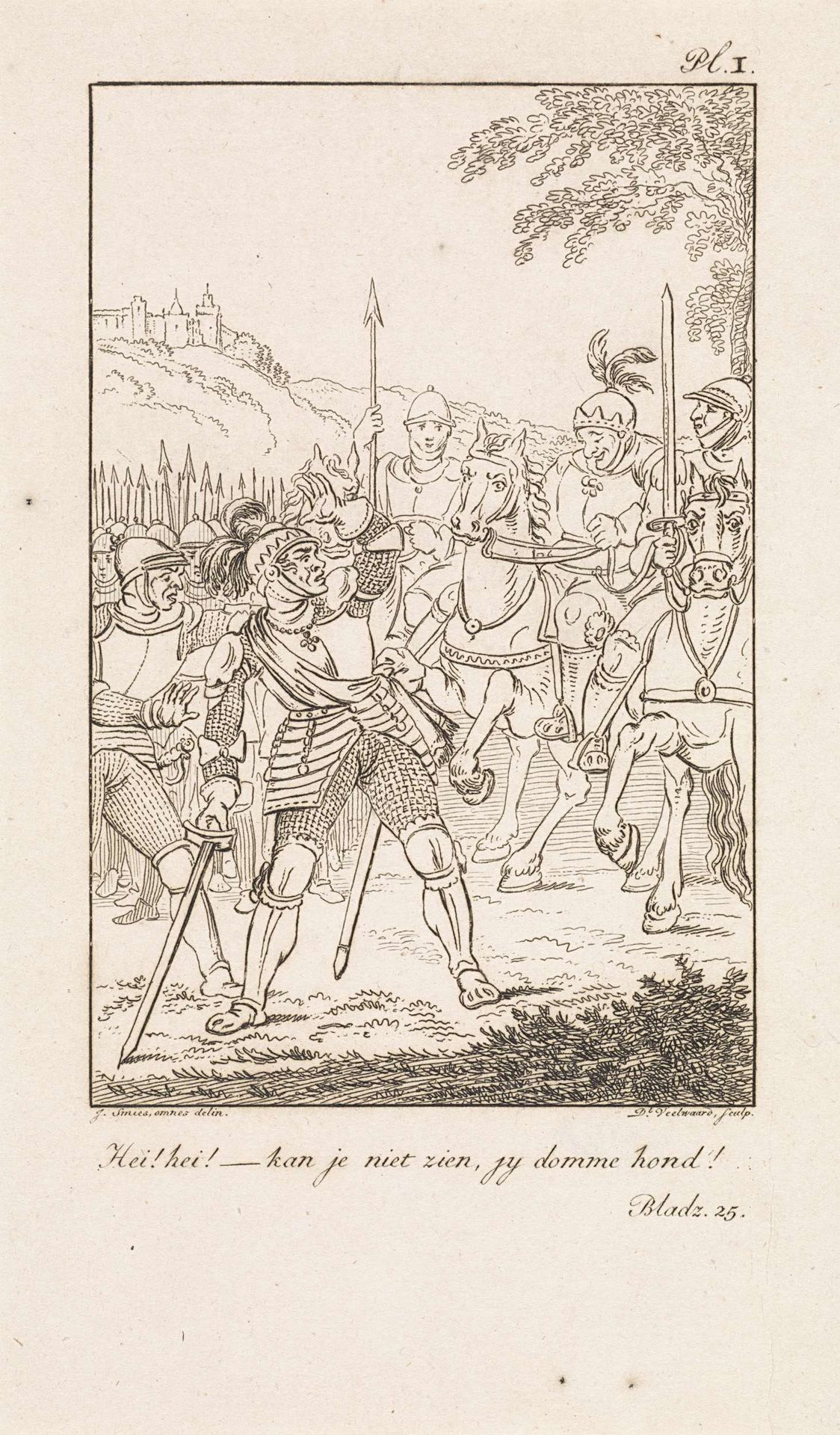
Daniël Veelwaard created this print of knights around the turn of the 19th century. Here, the knight's attire speaks volumes, evoking a sense of chivalry and martial prowess. Observe the knight’s raised arm, a gesture we see echoed across centuries. Think of classical depictions of emperors, saints, or heroes. This motif transcends mere representation; it embodies leadership, divine approval, or moral authority. It’s a visual language rooted deeply in our collective consciousness. Yet, consider how this gesture evolves. In a Renaissance painting, it might signify blessing or command; here, it seems to signal something less certain. Is this a call to arms, or a frustrated outburst, as the text below seems to suggest? The emotional ambiguity is palpable, and the viewer engages in a psychological dance, oscillating between reverence and skepticism. The power of the symbol, it seems, lies not in its fixed meaning, but in its capacity to reflect and refract the ever-shifting currents of human experience.

Artwork details
- Medium
- drawing, ink
- Dimensions
- height 198 mm, width 116 mm
- Location
- Rijksmuseum
- Copyright
- Rijks Museum: Open Domain
Tags
drawing
narrative-art
figuration
ink
line
history-painting
Comments
No comments
About this artwork
Daniël Veelwaard created this print of knights around the turn of the 19th century. Here, the knight's attire speaks volumes, evoking a sense of chivalry and martial prowess. Observe the knight’s raised arm, a gesture we see echoed across centuries. Think of classical depictions of emperors, saints, or heroes. This motif transcends mere representation; it embodies leadership, divine approval, or moral authority. It’s a visual language rooted deeply in our collective consciousness. Yet, consider how this gesture evolves. In a Renaissance painting, it might signify blessing or command; here, it seems to signal something less certain. Is this a call to arms, or a frustrated outburst, as the text below seems to suggest? The emotional ambiguity is palpable, and the viewer engages in a psychological dance, oscillating between reverence and skepticism. The power of the symbol, it seems, lies not in its fixed meaning, but in its capacity to reflect and refract the ever-shifting currents of human experience.
Comments
No comments