engraving
#
portrait
#
baroque
#
old engraving style
#
form
#
line
#
portrait drawing
#
history-painting
#
engraving
Dimensions: height 156 mm, width 97 mm
Copyright: Rijks Museum: Open Domain
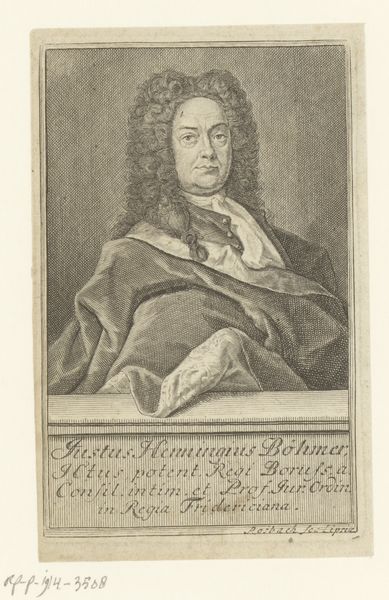
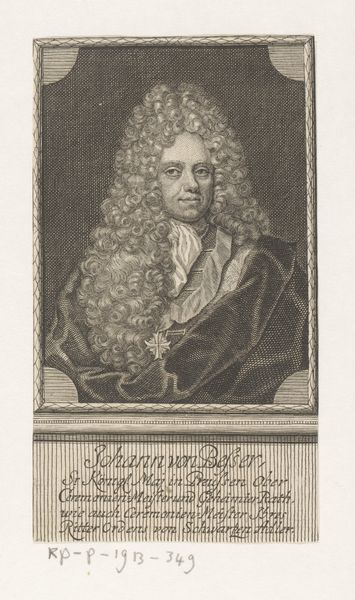
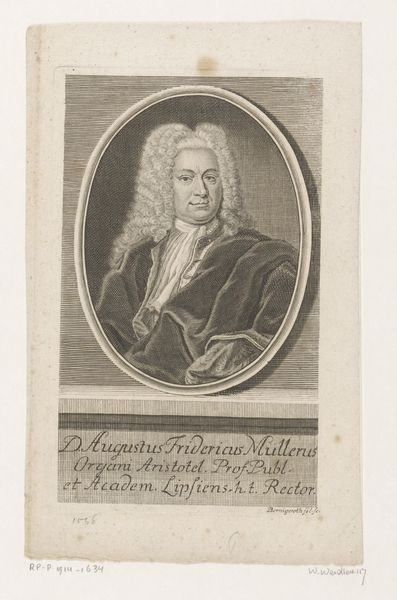
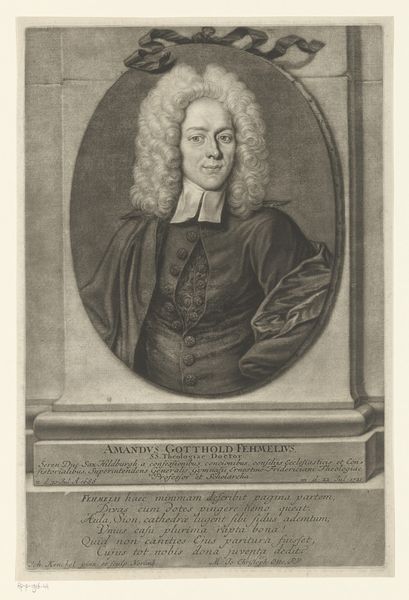
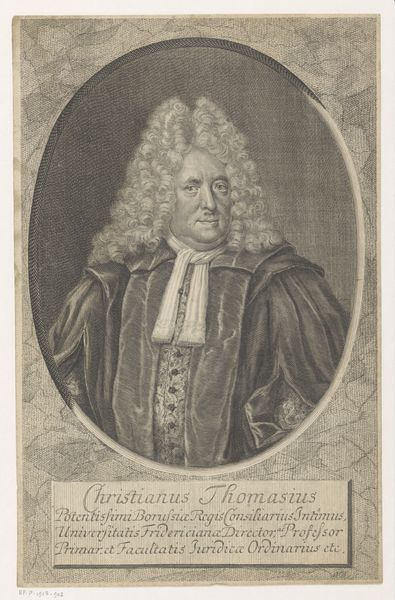
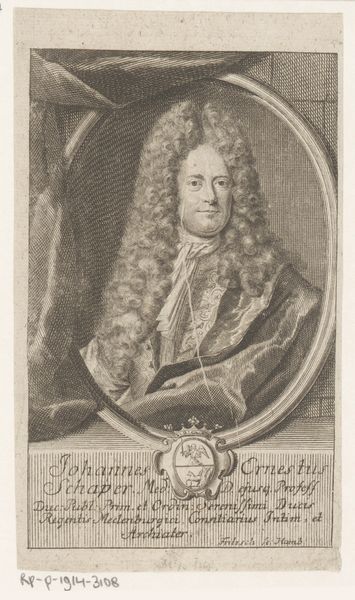
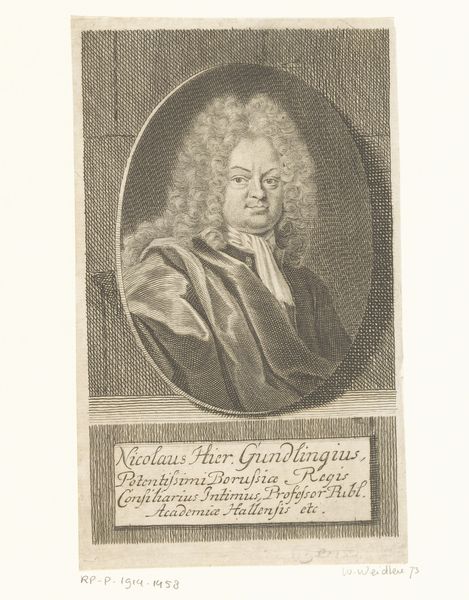
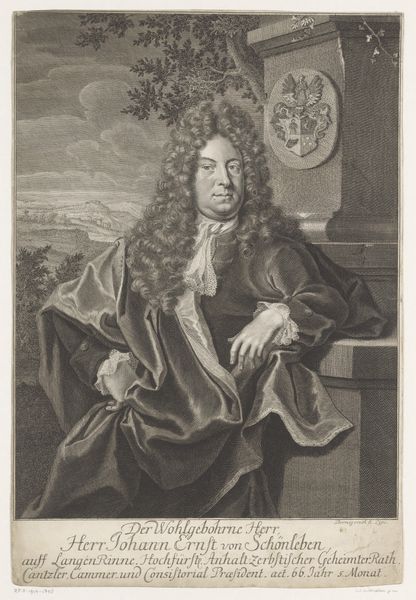
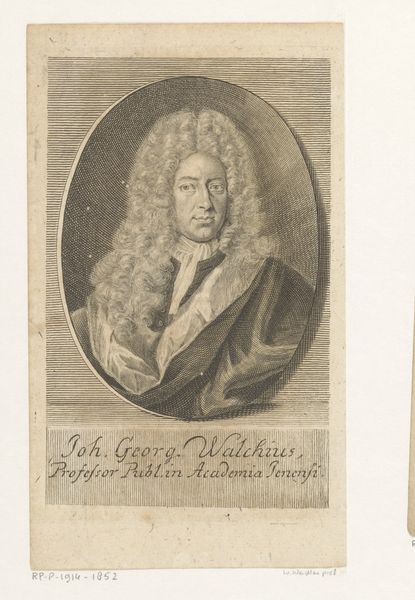
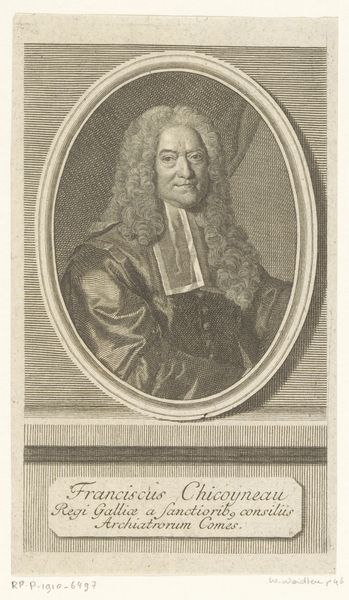
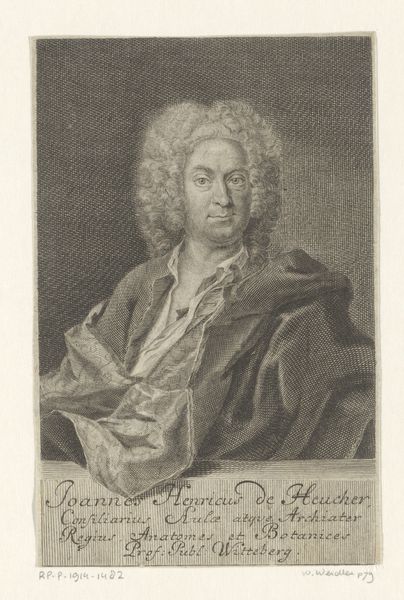
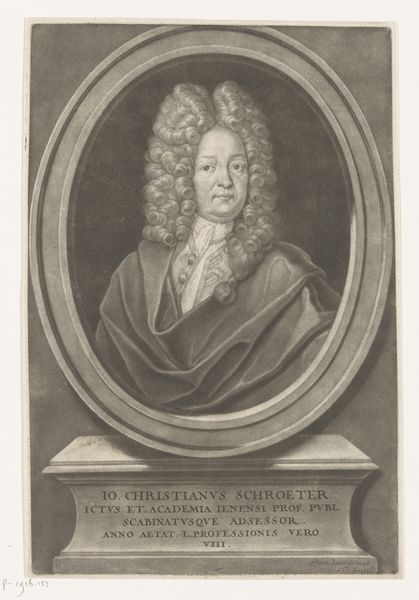
Editor: This engraving from 1731 by Christian Fritzsch, titled "Portret van Johann Friedrich Pfeffinger," has a really formal and almost imposing feel. All those tight lines, the elaborate wig... it definitely speaks to a certain era. What do you see in this piece? Curator: Well, the overwhelming presence of Pfeffinger's wig, precisely rendered in the engraving, acts as a potent signifier of status. The swirling mass becomes a visual representation of power and belonging to a specific social stratum. But does it also hint at something performative about identity, a masking or deliberate construction of self for public consumption? What cultural memory does this wig evoke? Editor: So the wig isn’t just a fashion statement, it’s loaded with meaning. I guess it also shows the sitter’s connection to a British identity. Curator: Exactly! “Britannicus” he is named as. Think about what visual symbols denote prestige at this moment. What makes you worthy of memorializing? Consider too how the text at the base mirrors the curls above. What is the symbolic significance of text in this kind of formal depiction? Editor: It seems like the inscription is almost grounding him – from those extravagant curls and that imposing status, he is anchored by text. It's about making him real. Curator: Precisely. He is a fixed identity. The portrait, as a symbolic object, seeks to preserve not just his image but his memory and impact. He looks like an anchor of the state. Editor: That connection between image and text really makes you think about how we build up identity, both visually and through language. Thank you. Curator: Absolutely! Exploring the ways symbols build individual and cultural narratives opens up so many avenues for understanding the past and present.
Comments
No comments
Be the first to comment and join the conversation on the ultimate creative platform.
 Collect
 React
React Comment
More like this