About this artwork
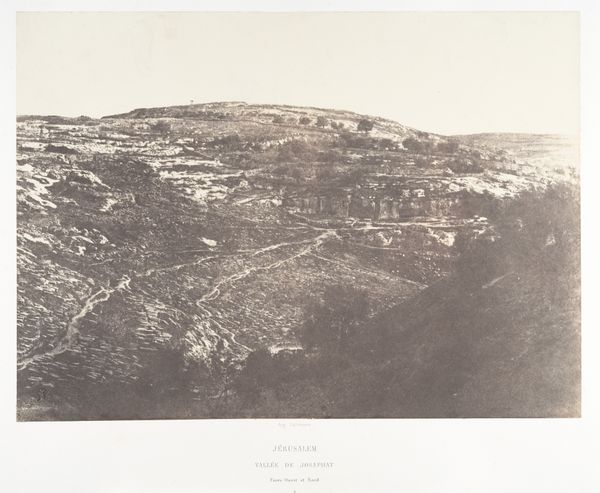
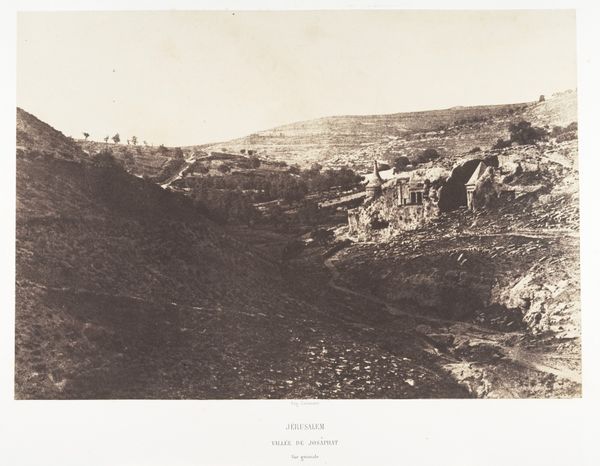
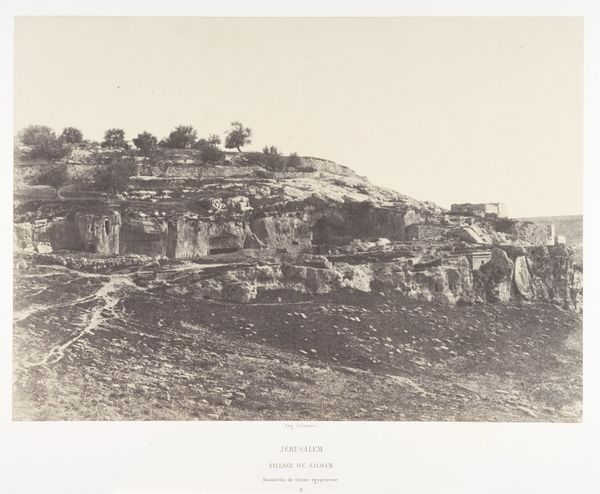
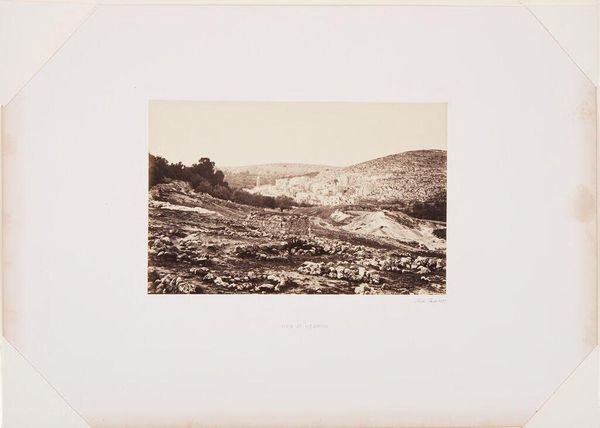
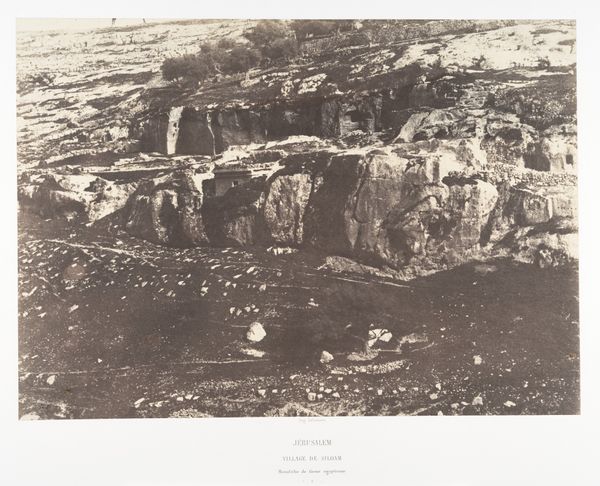
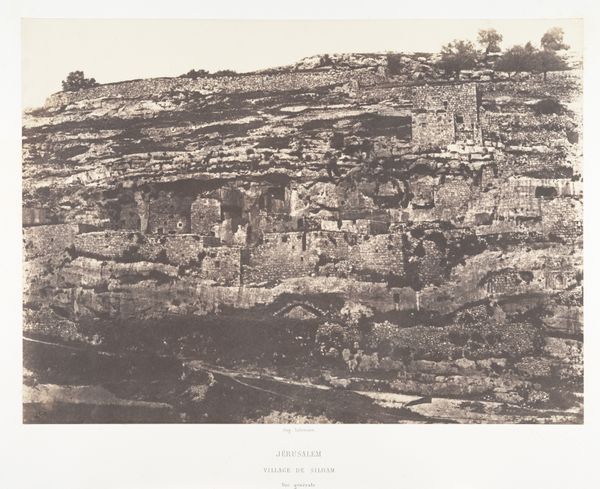
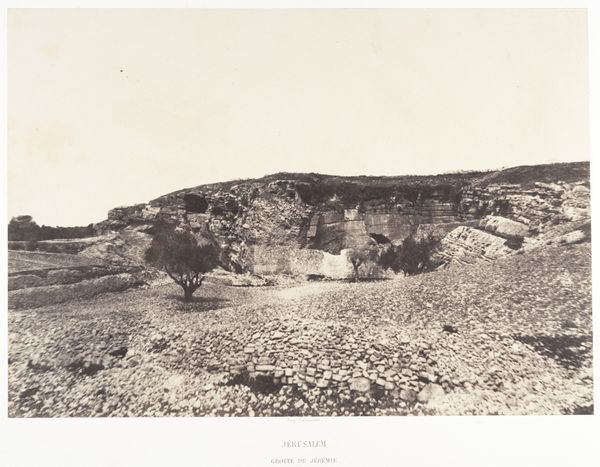
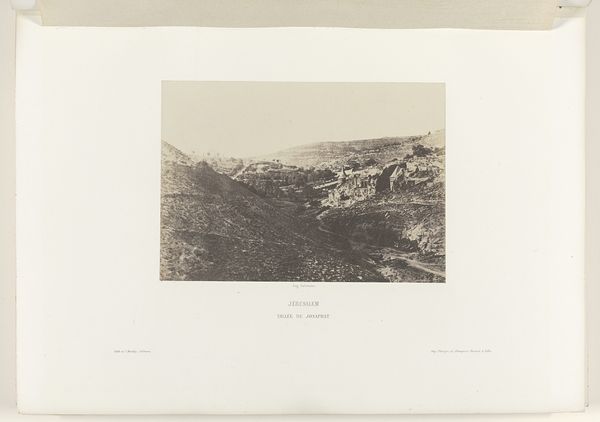
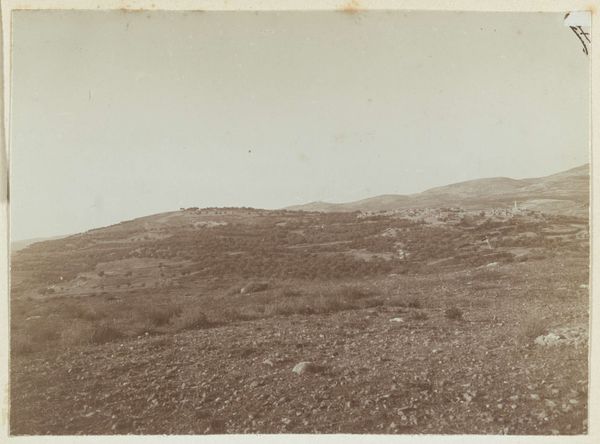
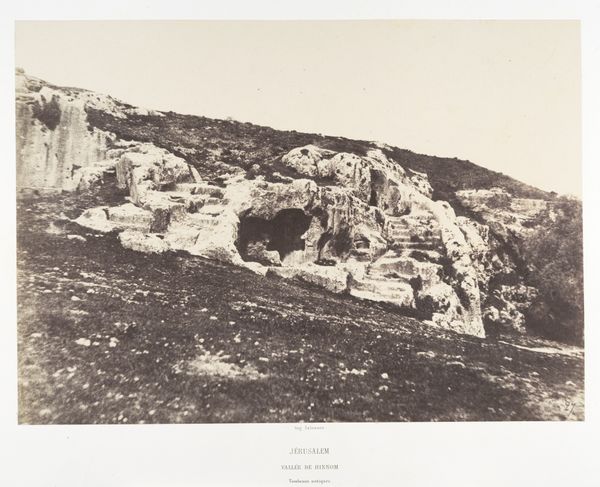
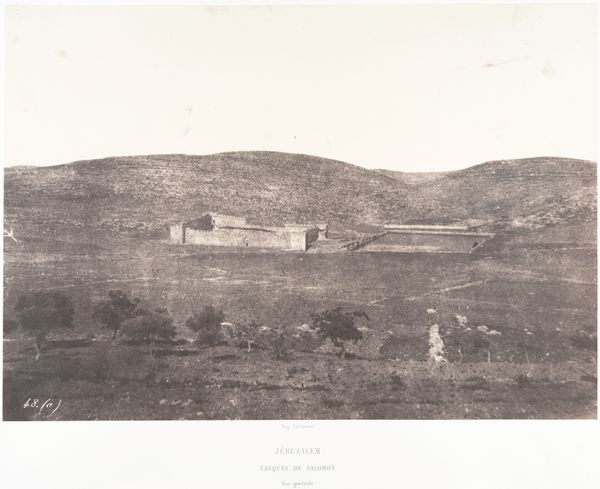
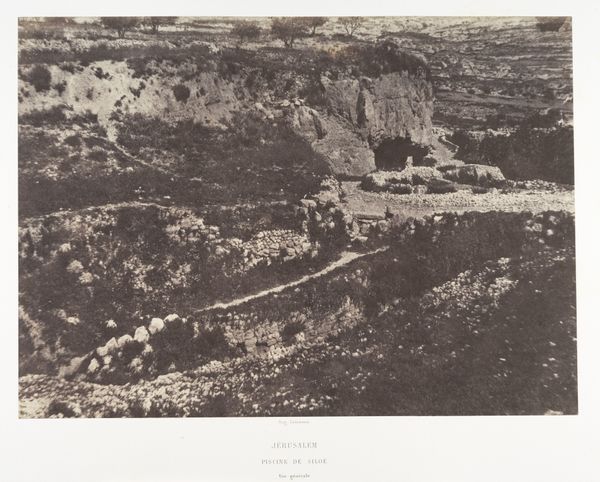
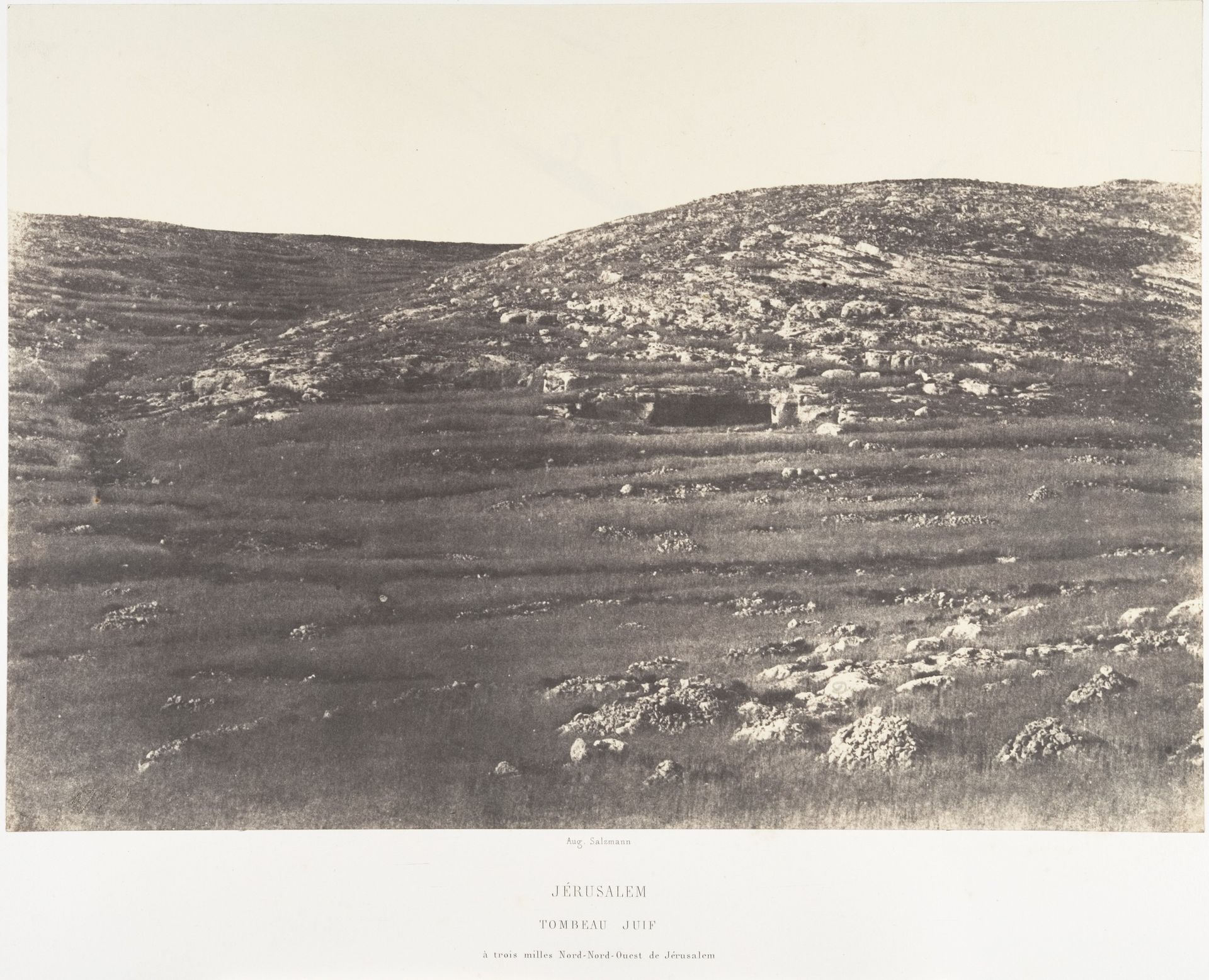
This albumen print, made by Auguste Salzmann, presents a view of Jerusalem. The stark contrast between light and shadow immediately grabs our attention. The composition is structured around a careful arrangement of horizontal planes, emphasizing the terrain’s undulating form. The light, almost uniformly distributed across the scene, gives the impression of a landscape bathed in a soft, diffused glow. The textures vary from the smooth sky to the rough, rocky earth, creating a tactile quality. Salzmann’s choice of albumen print, with its capacity for capturing fine detail, allows him to document the topography with great accuracy. However, beyond mere documentation, the photograph engages with deeper themes. By meticulously recording the geological features and ancient ruins, Salzmann seems to be investigating the relationship between the land and its historical narratives. The repetitive patterns of stone and vegetation evoke a sense of timelessness, inviting reflection on the layers of history embedded within the landscape. The stark materiality of the rocks, combined with the subtle gradations of light, transforms the photograph into a space of contemplation, where the tangible world meets the ethereal.
Jérusalem, Tombeau Juif, à trois milles Nord-Nord-Ouest de Jérusalem 1854 - 1859


Artwork details
- Medium
- photography, gelatin-silver-print
- Dimensions
- Image: 23 x 33.3 cm (9 1/16 x 13 1/8 in.) Mount: 45 x 60.3 cm (17 11/16 x 23 3/4 in.)
- Location
- Metropolitan Museum of Art, New York, NY
- Copyright
- Public Domain
Tags
landscape
photography
gelatin-silver-print
realism
Comments
No comments
About this artwork
This albumen print, made by Auguste Salzmann, presents a view of Jerusalem. The stark contrast between light and shadow immediately grabs our attention. The composition is structured around a careful arrangement of horizontal planes, emphasizing the terrain’s undulating form. The light, almost uniformly distributed across the scene, gives the impression of a landscape bathed in a soft, diffused glow. The textures vary from the smooth sky to the rough, rocky earth, creating a tactile quality. Salzmann’s choice of albumen print, with its capacity for capturing fine detail, allows him to document the topography with great accuracy. However, beyond mere documentation, the photograph engages with deeper themes. By meticulously recording the geological features and ancient ruins, Salzmann seems to be investigating the relationship between the land and its historical narratives. The repetitive patterns of stone and vegetation evoke a sense of timelessness, inviting reflection on the layers of history embedded within the landscape. The stark materiality of the rocks, combined with the subtle gradations of light, transforms the photograph into a space of contemplation, where the tangible world meets the ethereal.
Comments
No comments