About this artwork
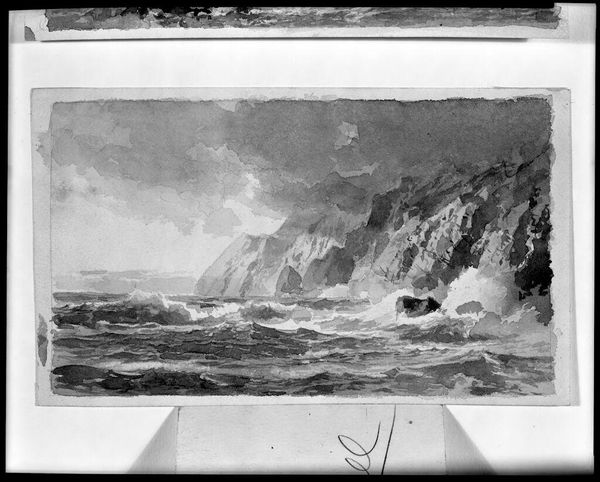
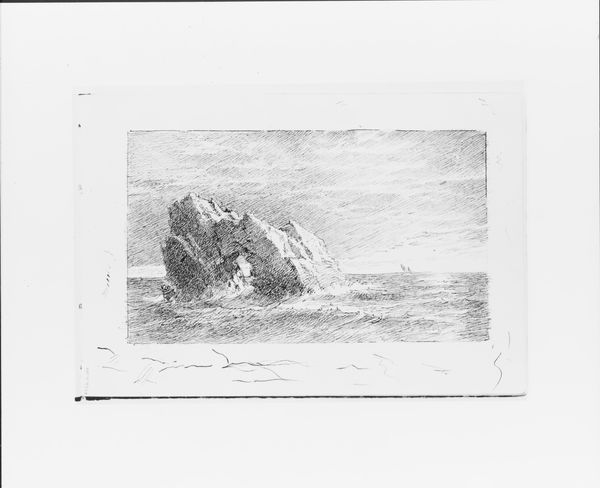
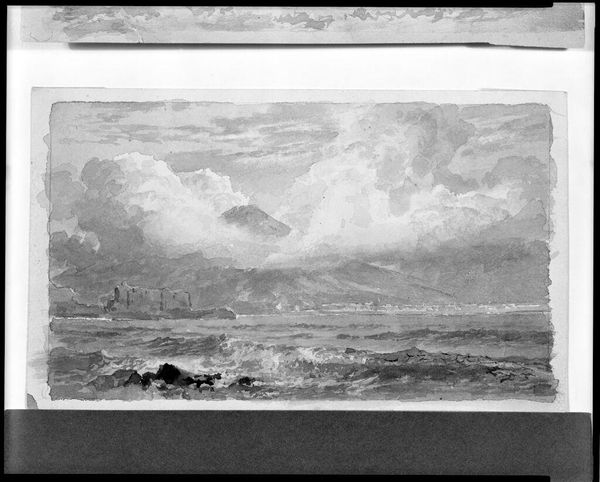
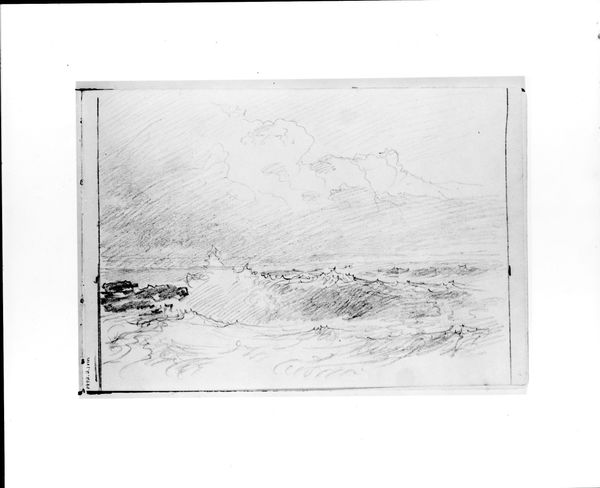
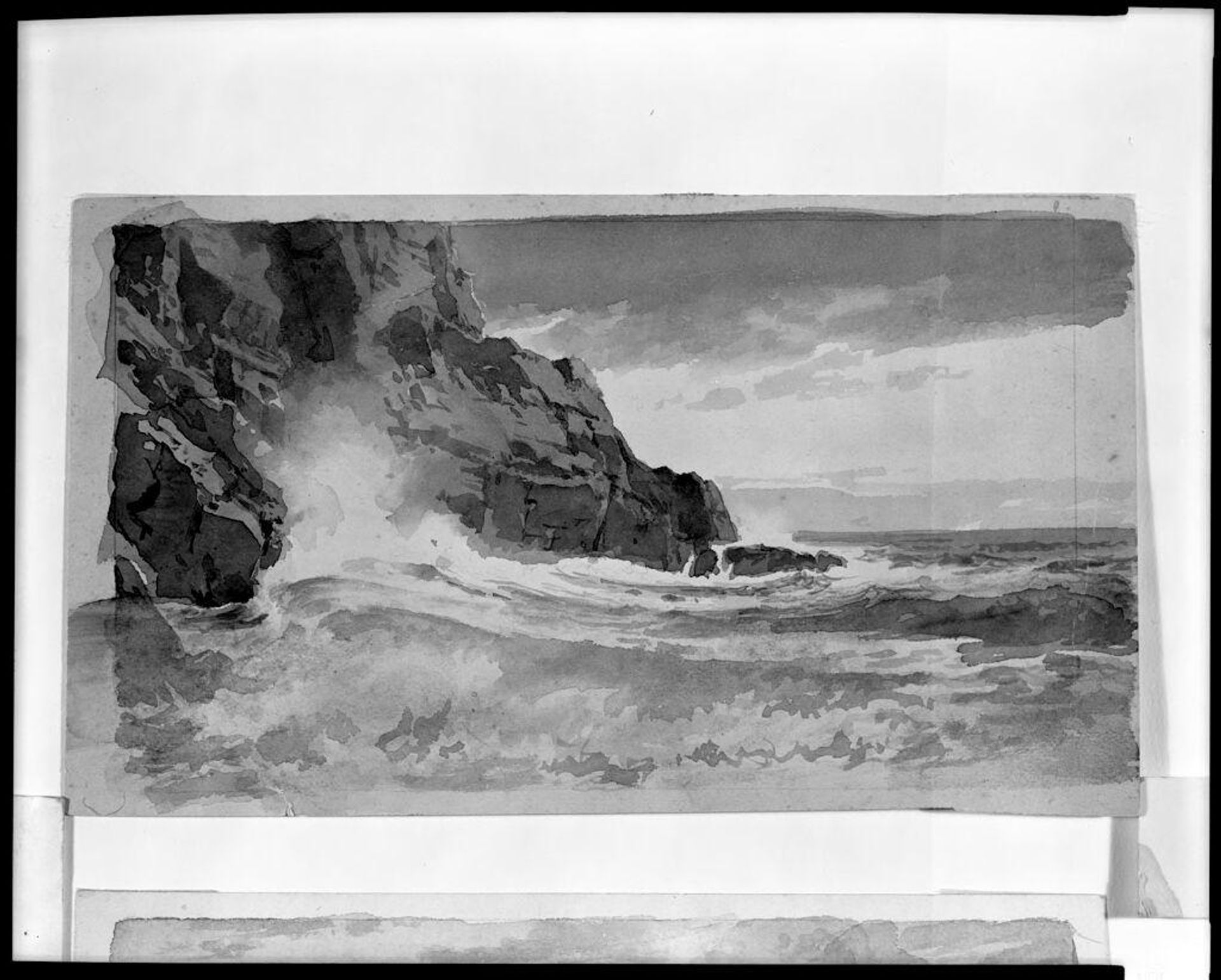
Editor: This is William Trost Richards' "Seascape," we don't know the date, and it's rendered in watercolor. It feels both turbulent and carefully observed. What compositional elements stand out to you? Curator: The interplay of light and shadow, the contrasts between the jagged rocks and the fluid water. Consider the structural dichotomy of the solid, imposing cliff against the kinetic energy of the waves. Editor: So, you see the structure as a conversation between those two forms? Curator: Precisely. The gradations of tone, from the inky blacks of the rocks to the shimmering grays of the water, create a powerful visual rhythm. How does that rhythm resonate with you? Editor: It's in every stroke! I see how focusing on the line and the form allows a new level of discovery. Curator: Indeed, it unveils the artwork's intrinsic dialogue.
Seascape c. 1882 - 1885


Artwork details
- Dimensions
- 15.1 x 26.2 cm (5 15/16 x 10 5/16 in.) Border drawn around image: 13.9 x 25 cm (5 1/2 x 9 13/16 in.)
- Location
- Harvard Art Museums
- Copyright
- CC0 1.0
Comments
No comments
About this artwork
Editor: This is William Trost Richards' "Seascape," we don't know the date, and it's rendered in watercolor. It feels both turbulent and carefully observed. What compositional elements stand out to you? Curator: The interplay of light and shadow, the contrasts between the jagged rocks and the fluid water. Consider the structural dichotomy of the solid, imposing cliff against the kinetic energy of the waves. Editor: So, you see the structure as a conversation between those two forms? Curator: Precisely. The gradations of tone, from the inky blacks of the rocks to the shimmering grays of the water, create a powerful visual rhythm. How does that rhythm resonate with you? Editor: It's in every stroke! I see how focusing on the line and the form allows a new level of discovery. Curator: Indeed, it unveils the artwork's intrinsic dialogue.
Comments
No comments