1510 - 1569
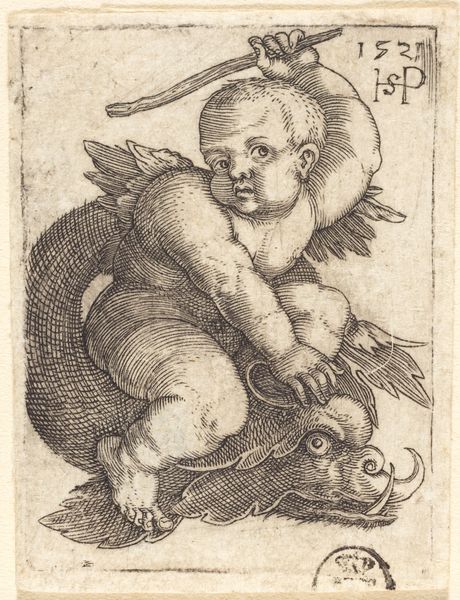
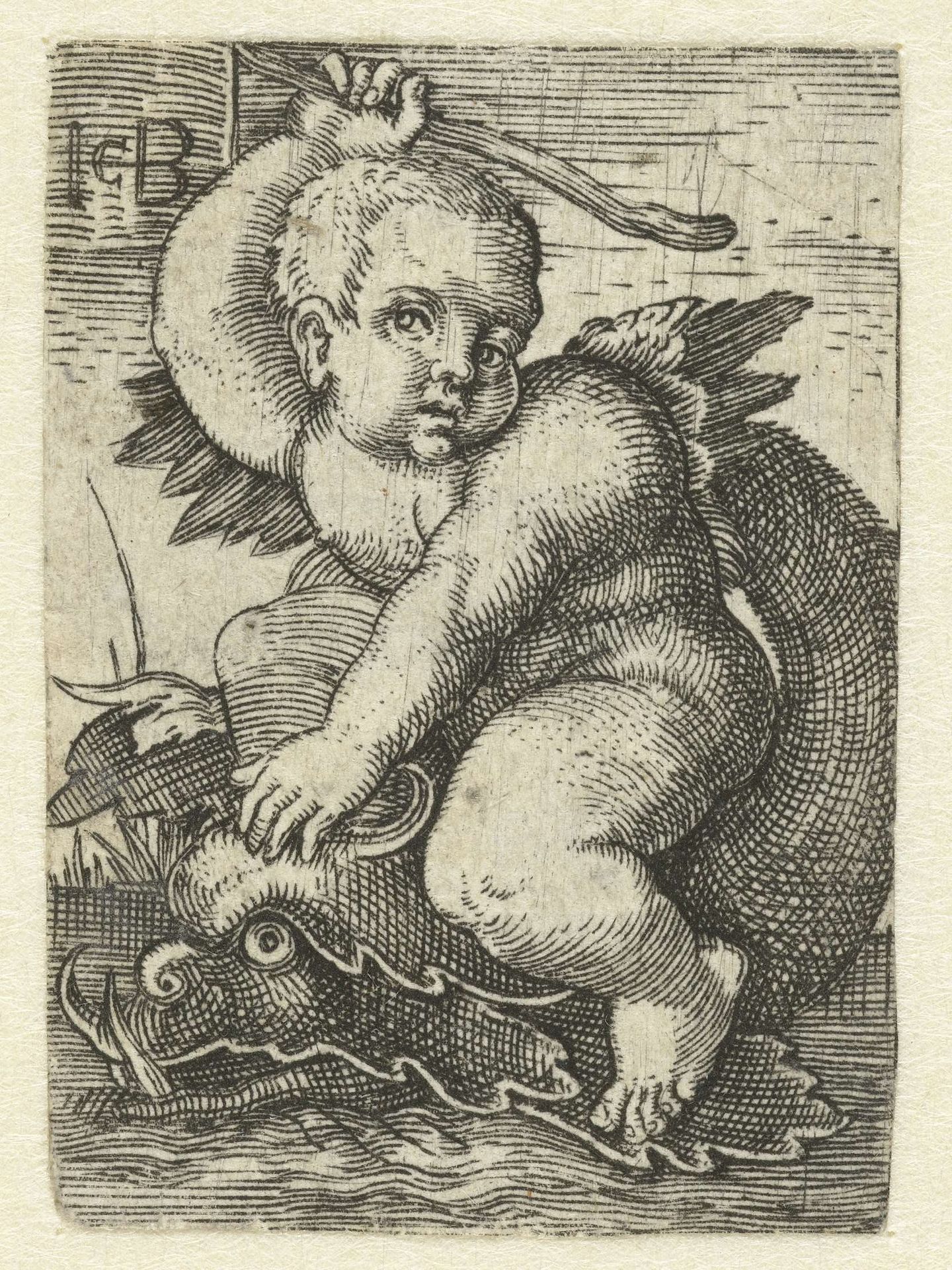
Putto op dolfijn

Jacob Binck
1494 - 1569Location
RijksmuseumListen to curator's interpretation
Curatorial notes
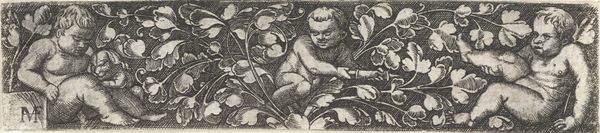
This tiny print, "Putto op dolfijn," was made by Jacob Binck around the mid-16th century using the intaglio process. The image comes to life through the precise, laborious act of incising lines into a metal plate, likely copper. These fine lines, dug into the surface, hold the ink, and when pressed onto paper, they create the image we see: a cherubic child riding a dolphin. The texture of the print reveals the hand of the artist, each line a testament to Binck's skill. In the context of the Northern Renaissance, printmaking was increasingly important as a means of circulating images widely, allowing artists like Binck to reach a broader audience. This also shows that he possessed not only artistic skill, but technical mastery. Works like this challenge the distinction between art and craft, and point to the social impact of skilled practices in the early modern world.