About this artwork
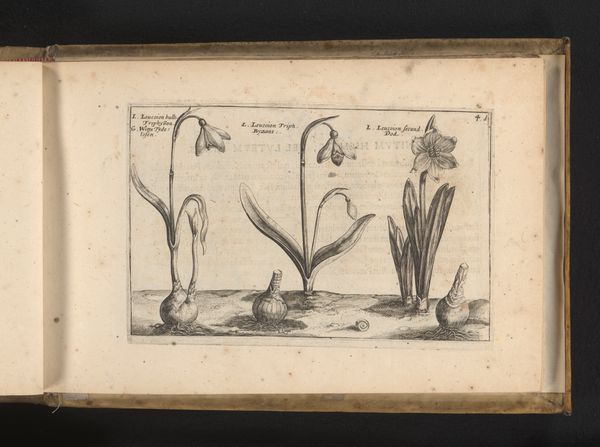
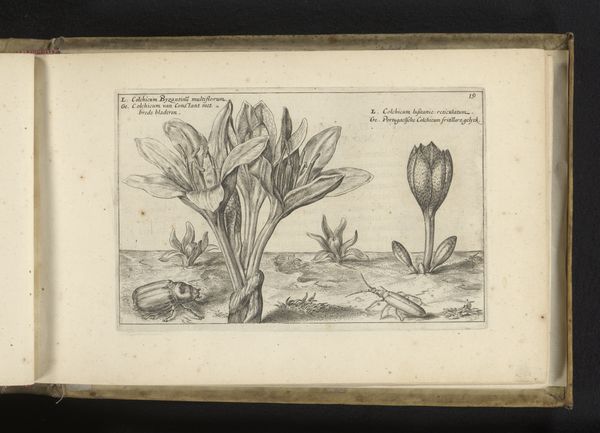
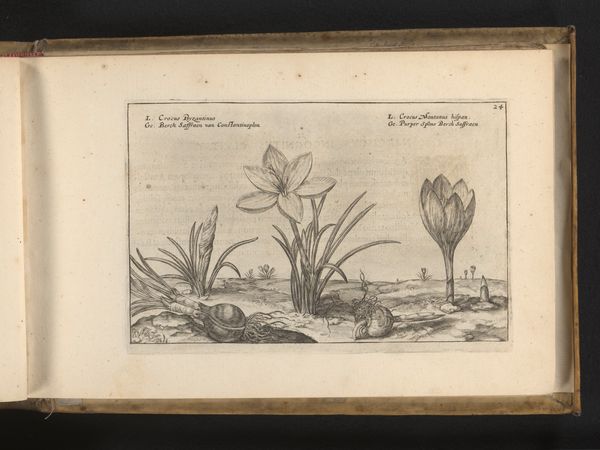
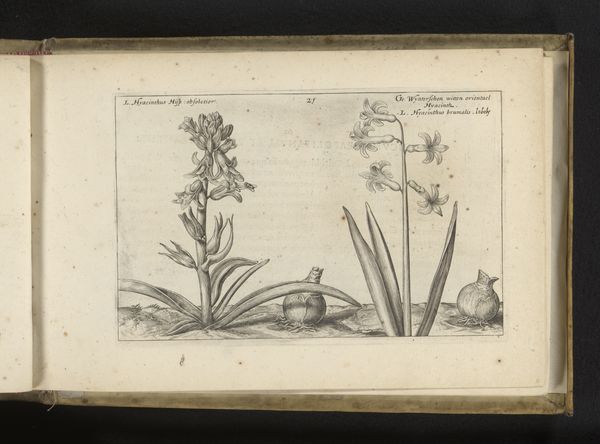
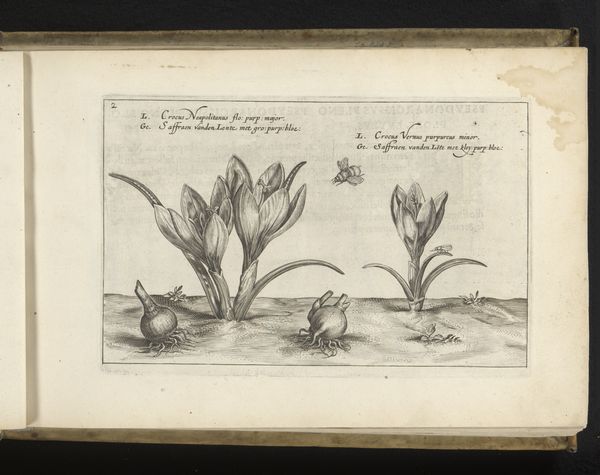
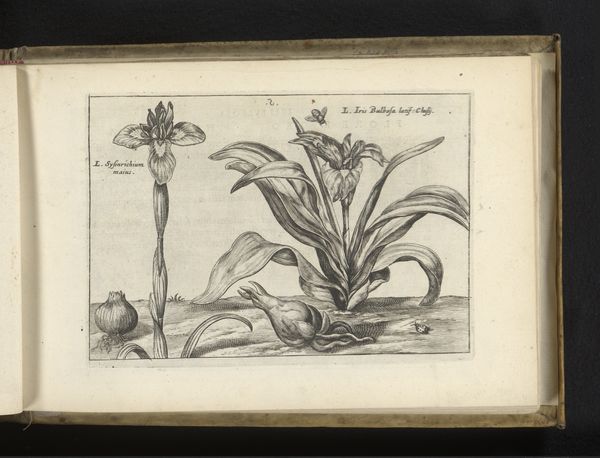
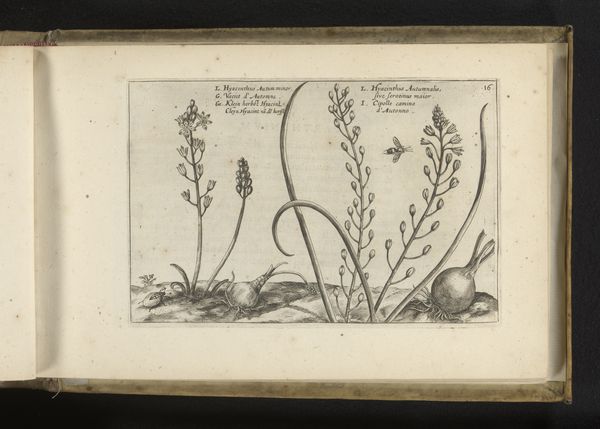
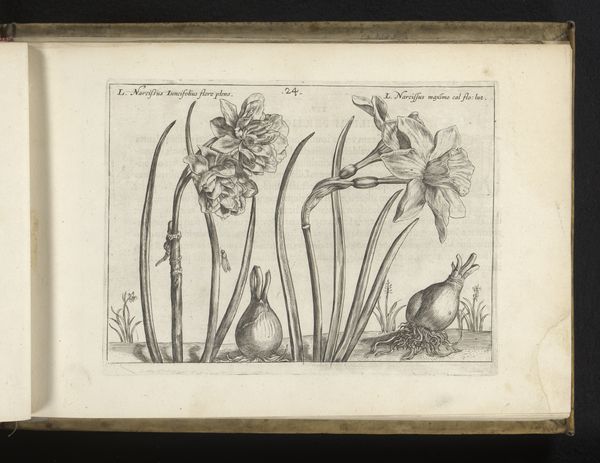
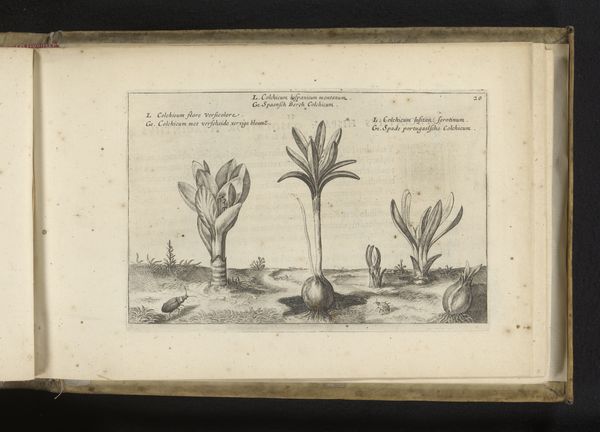
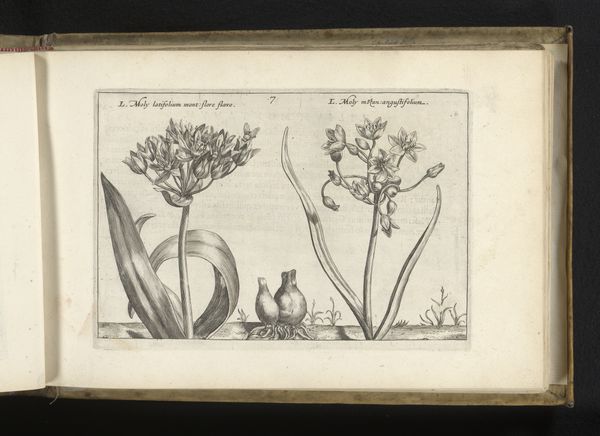
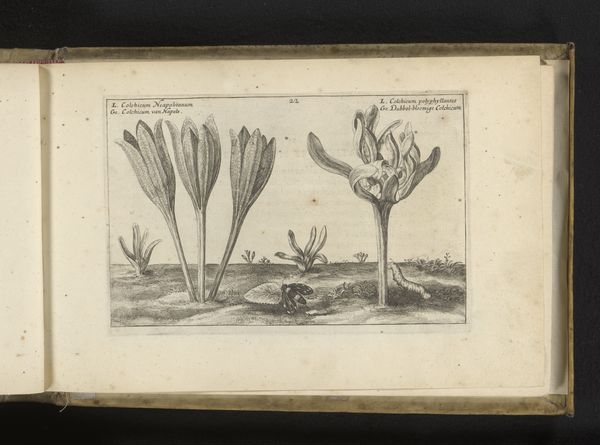
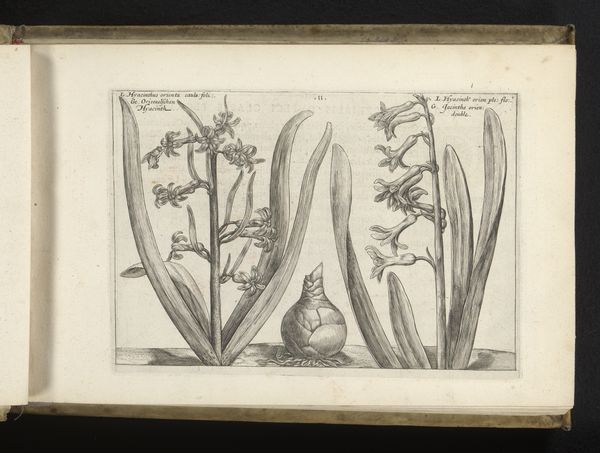
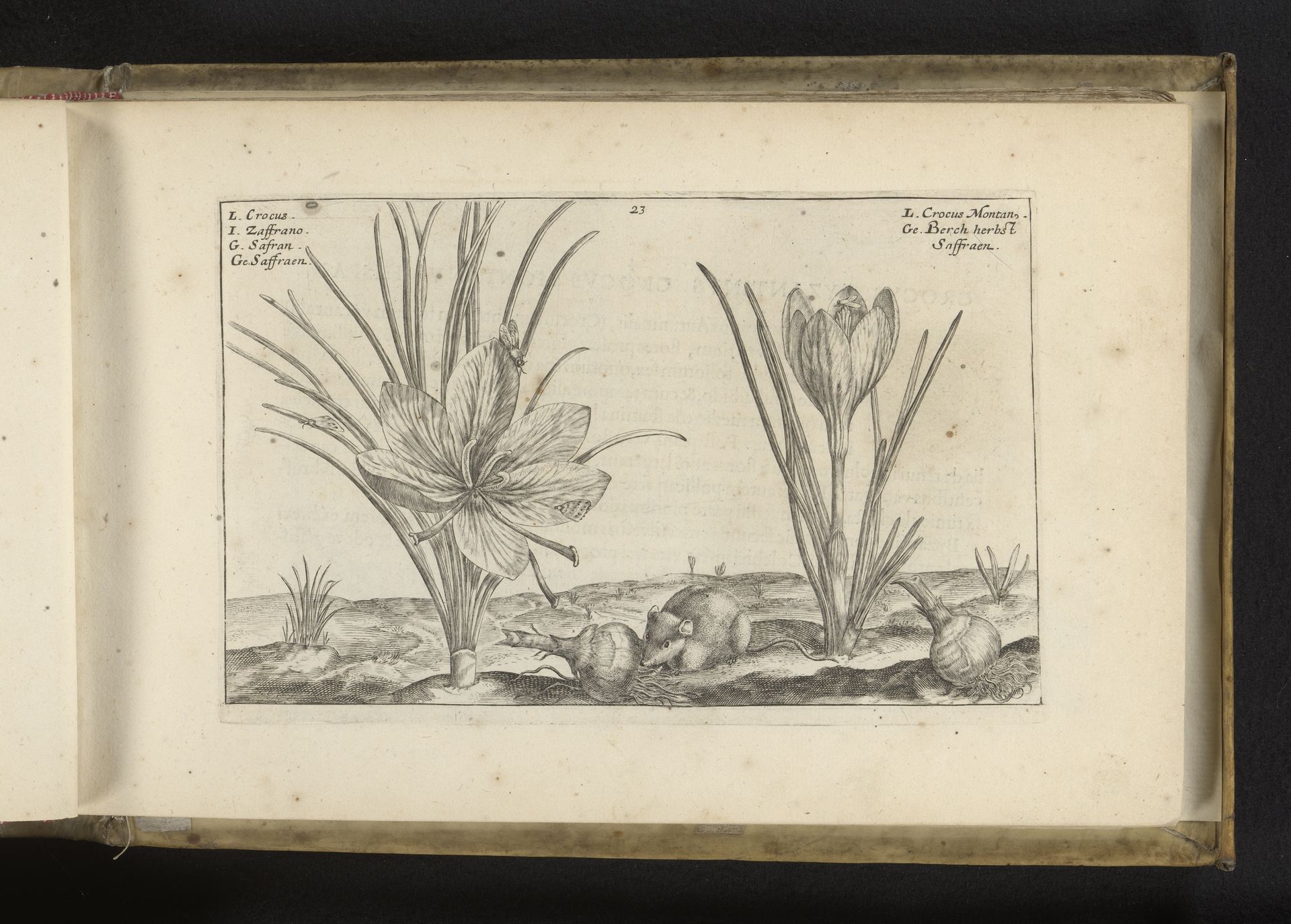
Crispijn van de Passe the younger created this print, "Saffraankrokus en bonte krokus" sometime between 1597 and 1670. As a member of a prolific family of Dutch printmakers and publishers, his work reflects the cultural and economic fascination with botany that swept through Europe during this period. Prints like this were not merely artistic representations; they played a crucial role in the scientific understanding and commercial exploitation of plants. Saffron, derived from the saffron crocus, was a highly prized spice, dye, and medicine, representing luxury and global trade. These botanical prints contributed to shaping European perceptions of the natural world and how it could be commodified. They tell a story of global exchange, power, and the intersection of art and science, capturing a moment when the natural world was both a source of aesthetic wonder and economic opportunity.

Artwork details
- Medium
- drawing, paper, ink, engraving
- Dimensions
- height 137 mm, width 212 mm
- Location
- Rijksmuseum
- Copyright
- Rijks Museum: Open Domain
Tags
drawing
flower
paper
ink
pen-ink sketch
northern-renaissance
engraving
Comments
No comments
About this artwork
Crispijn van de Passe the younger created this print, "Saffraankrokus en bonte krokus" sometime between 1597 and 1670. As a member of a prolific family of Dutch printmakers and publishers, his work reflects the cultural and economic fascination with botany that swept through Europe during this period. Prints like this were not merely artistic representations; they played a crucial role in the scientific understanding and commercial exploitation of plants. Saffron, derived from the saffron crocus, was a highly prized spice, dye, and medicine, representing luxury and global trade. These botanical prints contributed to shaping European perceptions of the natural world and how it could be commodified. They tell a story of global exchange, power, and the intersection of art and science, capturing a moment when the natural world was both a source of aesthetic wonder and economic opportunity.
Comments
No comments