About this artwork
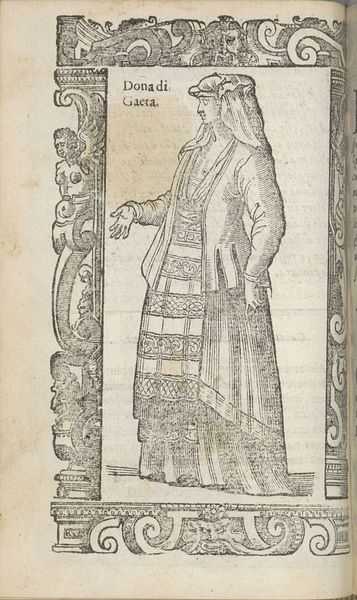
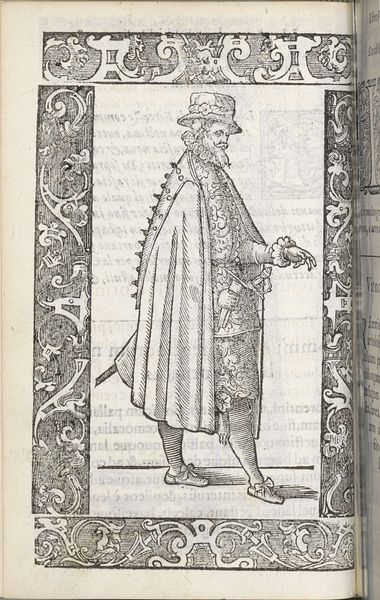
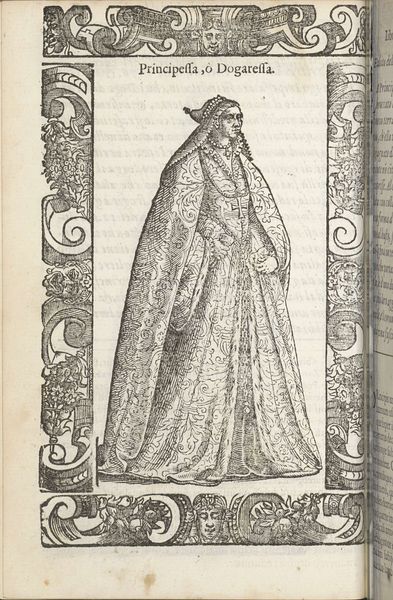
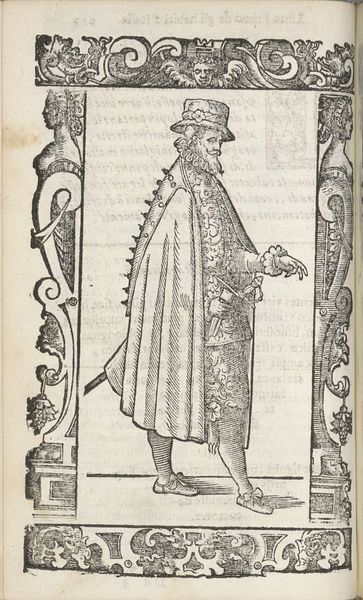
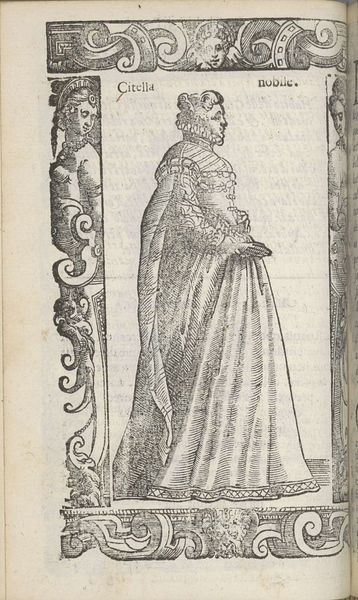
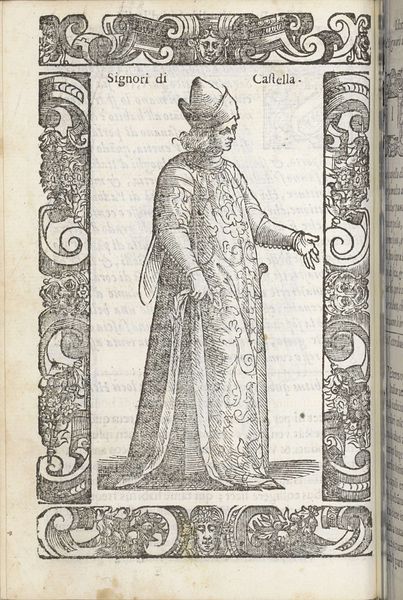
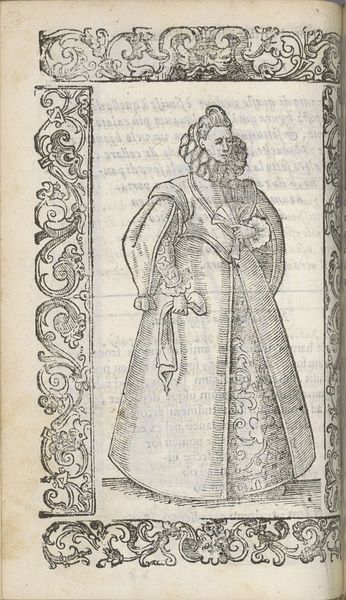
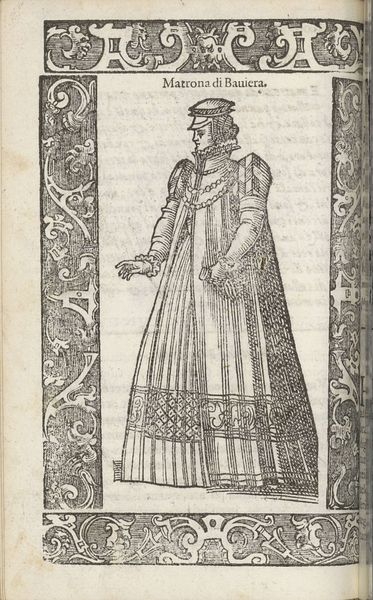
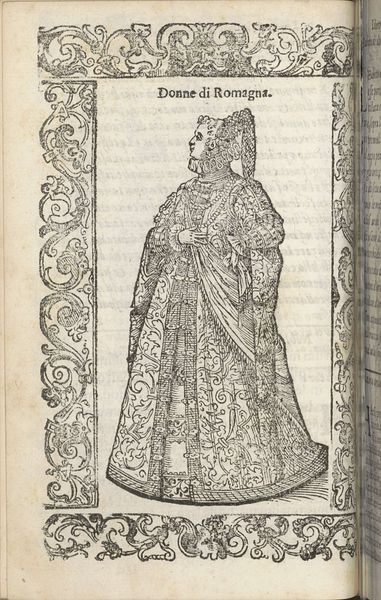
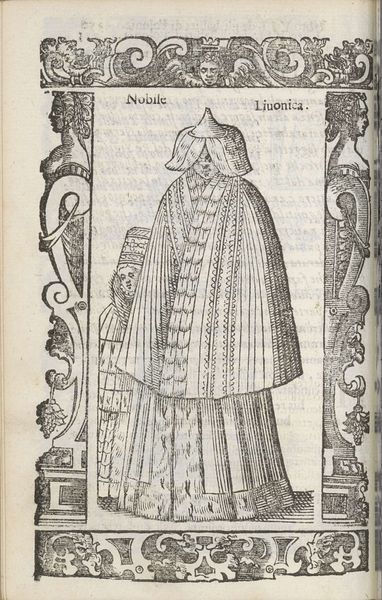
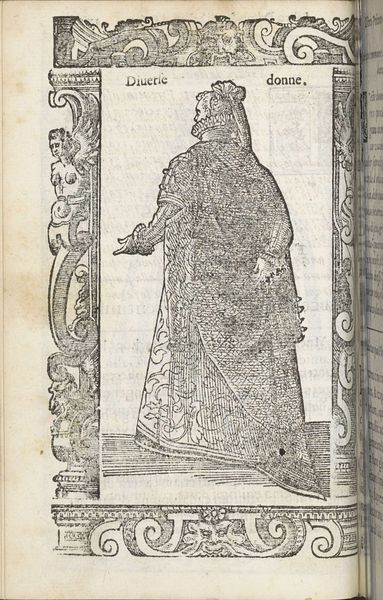
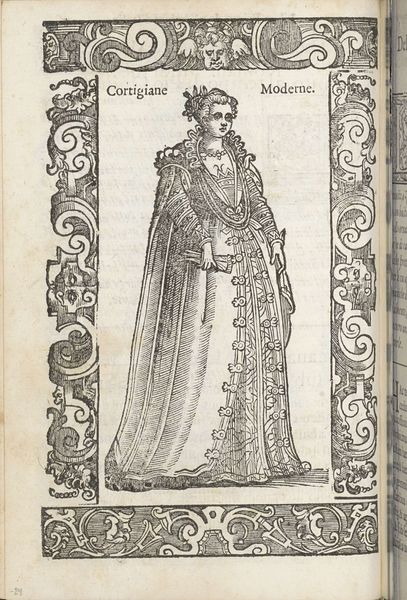
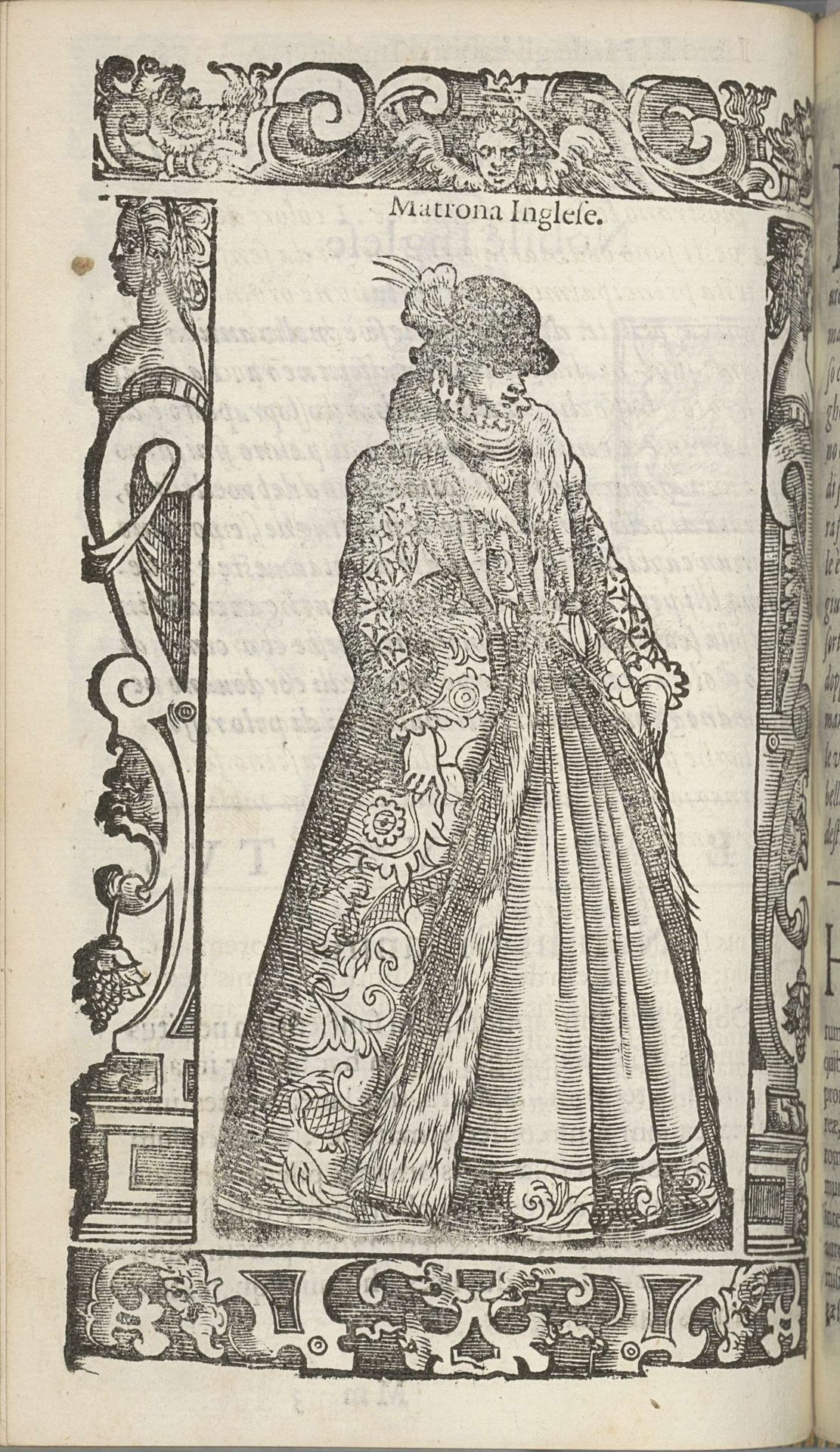
Editor: This is Christoph Krieger's "Matrona Inglese" from 1598, an engraving seemingly plucked from a book. The detail in the woman's ornate coat and the decorative border are quite striking. What strikes you most about it? Curator: Well, instantly I'm drawn to the political implications of the print being titled "Matrona Inglese"—English Matron. Prints like this circulated widely, serving as early forms of media. Krieger is not simply depicting a woman; he's constructing an idea of Englishness for a continental audience. Editor: An idea of Englishness, you say? How so? Curator: Consider the context. England, during Elizabeth’s reign, held increasing political power on the world stage, which certainly aroused both interest and anxiety in other nations. Krieger presents this figure adorned in the latest fashion, highlighting wealth and status. Do you think this image flattered or critiqued English society? Editor: I’m torn. The details could be admiration, but there's also a formality, almost a rigidity, that could suggest a certain distance, maybe even satire. Curator: Exactly. The print medium itself also speaks to a particular cultural moment, when printed images began to play a crucial role in shaping public perception of class and cultural identity across Europe. Editor: So, what began as a portrait becomes a political statement about cultural perception? Curator: Precisely! And remember the book it was plucked from. These were sources of information, fashion, and ideas. They tell us not just about the subject, but the people consuming these images and their understanding of the world. It also asks: who had access to this kind of imagery and what did they do with that access? Editor: This is so fascinating. It changes the way I see portraits – as not just representations, but active agents in broader social and political narratives. Thanks for enlightening me!

Artwork details
- Medium
- drawing, print, engraving
- Dimensions
- height 167 mm, width 125 mm
- Copyright
- Rijks Museum: Open Domain
Tags
Comments
Share your thoughts
About this artwork
Editor: This is Christoph Krieger's "Matrona Inglese" from 1598, an engraving seemingly plucked from a book. The detail in the woman's ornate coat and the decorative border are quite striking. What strikes you most about it? Curator: Well, instantly I'm drawn to the political implications of the print being titled "Matrona Inglese"—English Matron. Prints like this circulated widely, serving as early forms of media. Krieger is not simply depicting a woman; he's constructing an idea of Englishness for a continental audience. Editor: An idea of Englishness, you say? How so? Curator: Consider the context. England, during Elizabeth’s reign, held increasing political power on the world stage, which certainly aroused both interest and anxiety in other nations. Krieger presents this figure adorned in the latest fashion, highlighting wealth and status. Do you think this image flattered or critiqued English society? Editor: I’m torn. The details could be admiration, but there's also a formality, almost a rigidity, that could suggest a certain distance, maybe even satire. Curator: Exactly. The print medium itself also speaks to a particular cultural moment, when printed images began to play a crucial role in shaping public perception of class and cultural identity across Europe. Editor: So, what began as a portrait becomes a political statement about cultural perception? Curator: Precisely! And remember the book it was plucked from. These were sources of information, fashion, and ideas. They tell us not just about the subject, but the people consuming these images and their understanding of the world. It also asks: who had access to this kind of imagery and what did they do with that access? Editor: This is so fascinating. It changes the way I see portraits – as not just representations, but active agents in broader social and political narratives. Thanks for enlightening me!
Comments
Share your thoughts