About this artwork
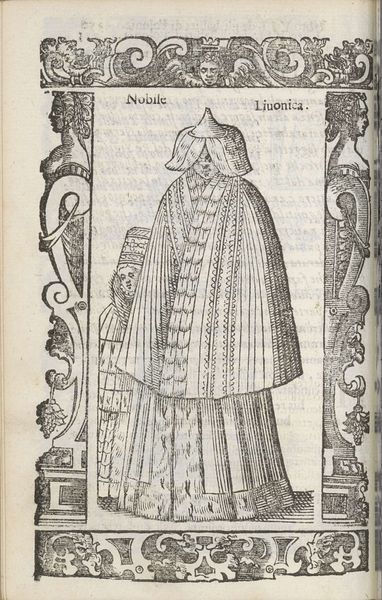
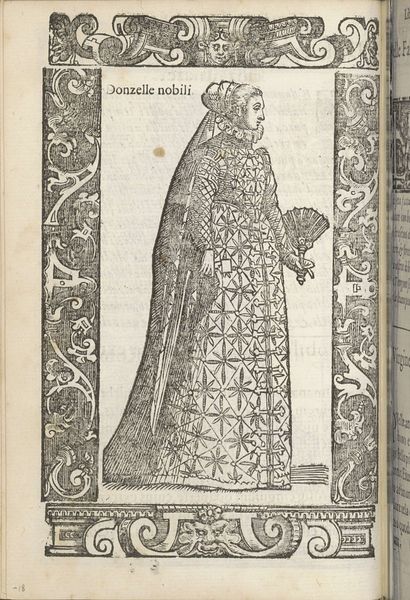
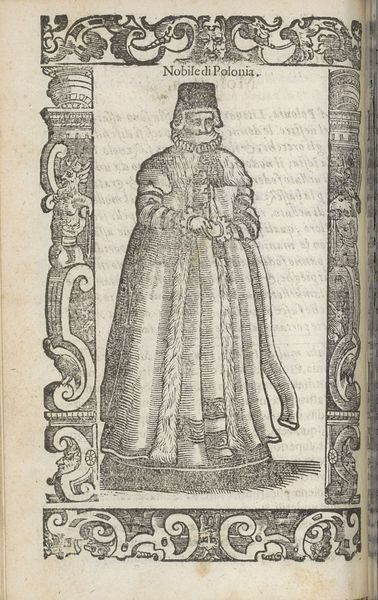
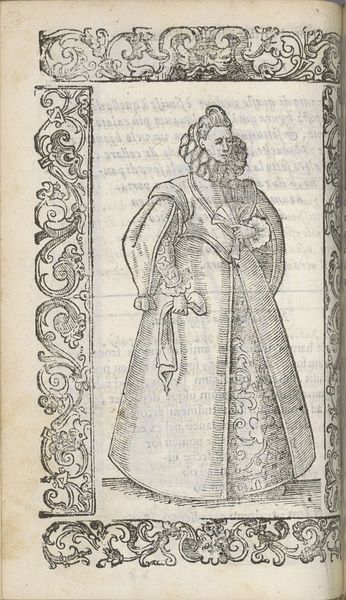
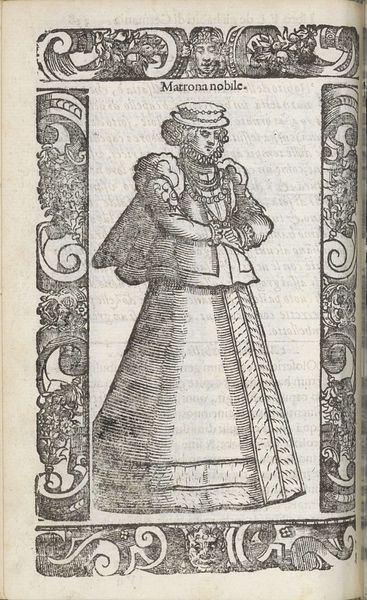
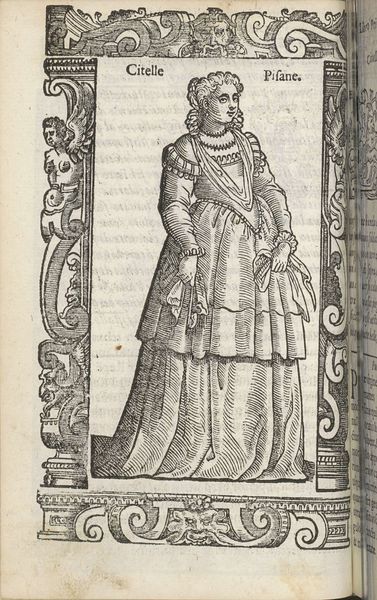
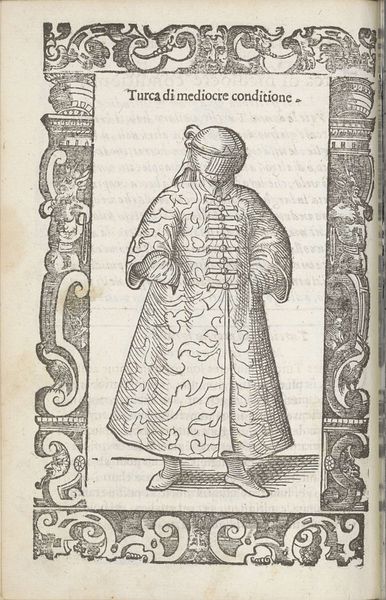
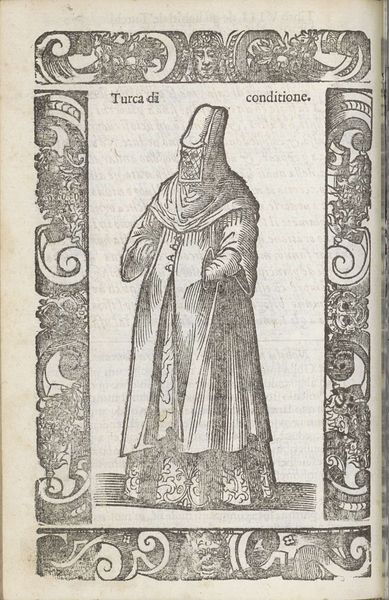
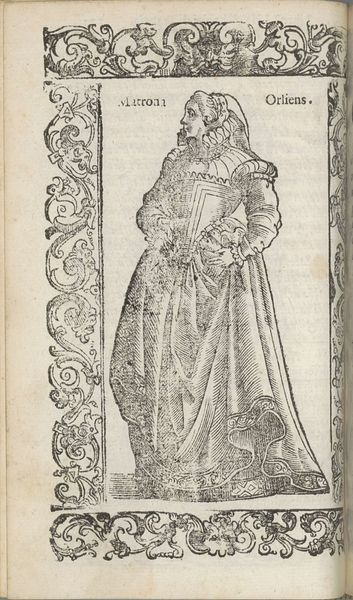
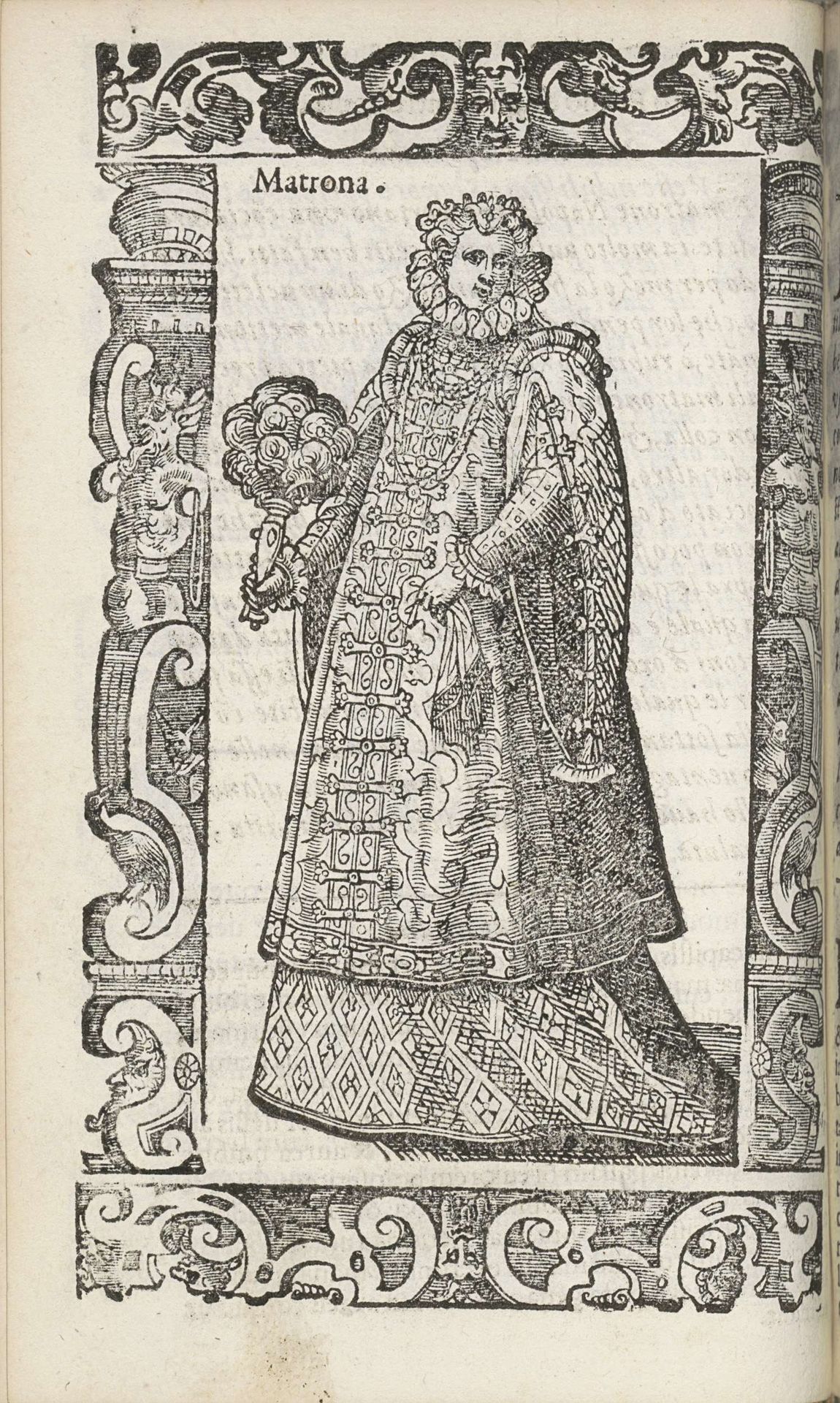
Editor: So, this is Christoph Krieger's "Matrona (Nap.)" from 1598, created using engraving techniques. It looks like a page from a book. What I find most compelling is how the artist utilizes pattern to articulate the figure’s elaborate garments and ornament. How do you interpret this visual language of forms and lines? Curator: Indeed. If we observe closely, the composition hinges upon the strategic use of contrasting textures. The dress is bisected horizontally into a heavily-ornamented torso and diamond-patterned skirt, each delineated with intricate detail. Note the relatively uniform hatch marks across the cape compared to the bold lines of the ornamental border—these contribute to a fascinating interplay between depth and flatness. Does this graphic reduction influence our perception of form and space? Editor: It certainly flattens the figure. The emphasis on line over shading gives it a rather decorative quality. Is the figure’s form secondary to the artistry displayed in her robes? Curator: Precisely! It directs our attention toward the intricate patterns. The lines aren't just descriptive; they dictate the structure. The meticulous details transform her robe into a field of visual intrigue. The linear density and the strategic placement of each stroke, create visual hierarchy within the picture plane. Consider, too, the mirroring of motifs across the borders; how do those choices speak to ideas of symmetry, order and representation? Editor: I see what you mean. The engraving pushes beyond simple depiction and engages us through complex relationships between figure, ground, and ornament. Curator: It is a testament to how the formal qualities of line, pattern, and texture can transcend mere representation. Editor: Looking at the visual composition alone has deepened my appreciation for the techniques and intention of early engraving.

Artwork details
- Medium
- drawing, print, ink, engraving
- Dimensions
- height 167 mm, width 125 mm
- Copyright
- Rijks Museum: Open Domain
Tags
portrait
drawing
pen drawing
figuration
11_renaissance
ink
history-painting
northern-renaissance
engraving
Comments
No comments
About this artwork
Editor: So, this is Christoph Krieger's "Matrona (Nap.)" from 1598, created using engraving techniques. It looks like a page from a book. What I find most compelling is how the artist utilizes pattern to articulate the figure’s elaborate garments and ornament. How do you interpret this visual language of forms and lines? Curator: Indeed. If we observe closely, the composition hinges upon the strategic use of contrasting textures. The dress is bisected horizontally into a heavily-ornamented torso and diamond-patterned skirt, each delineated with intricate detail. Note the relatively uniform hatch marks across the cape compared to the bold lines of the ornamental border—these contribute to a fascinating interplay between depth and flatness. Does this graphic reduction influence our perception of form and space? Editor: It certainly flattens the figure. The emphasis on line over shading gives it a rather decorative quality. Is the figure’s form secondary to the artistry displayed in her robes? Curator: Precisely! It directs our attention toward the intricate patterns. The lines aren't just descriptive; they dictate the structure. The meticulous details transform her robe into a field of visual intrigue. The linear density and the strategic placement of each stroke, create visual hierarchy within the picture plane. Consider, too, the mirroring of motifs across the borders; how do those choices speak to ideas of symmetry, order and representation? Editor: I see what you mean. The engraving pushes beyond simple depiction and engages us through complex relationships between figure, ground, and ornament. Curator: It is a testament to how the formal qualities of line, pattern, and texture can transcend mere representation. Editor: Looking at the visual composition alone has deepened my appreciation for the techniques and intention of early engraving.
Comments
No comments