About this artwork
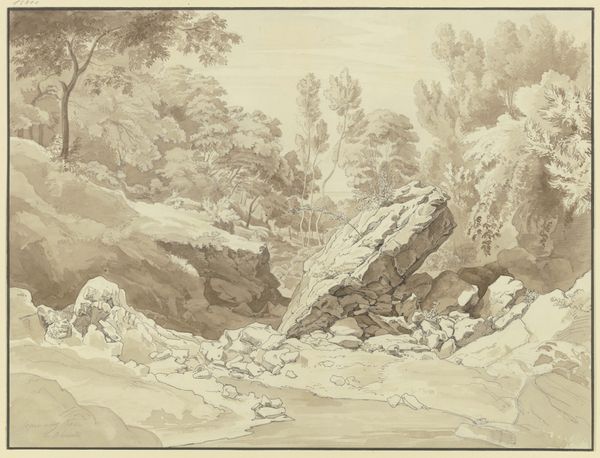
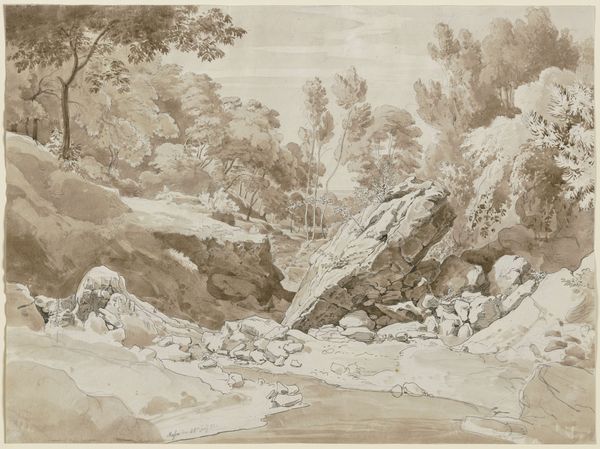
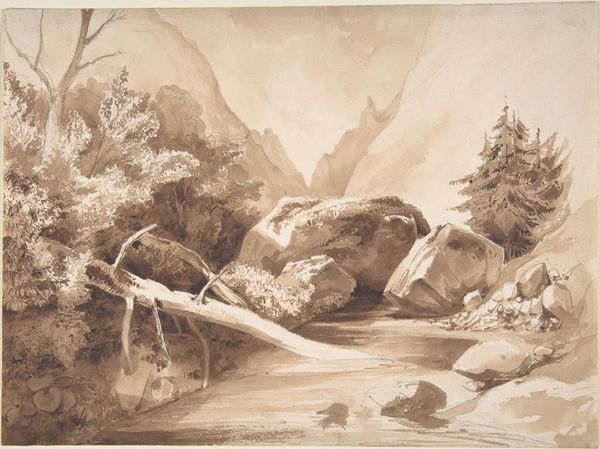
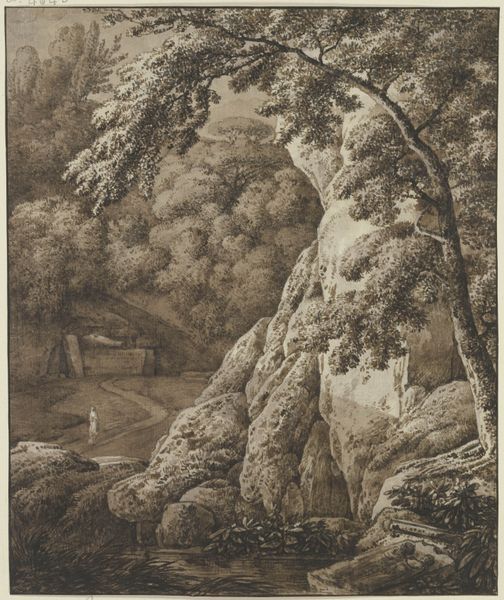
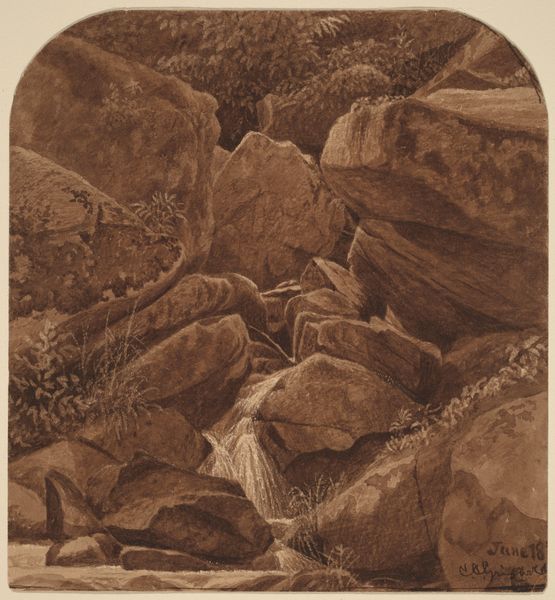
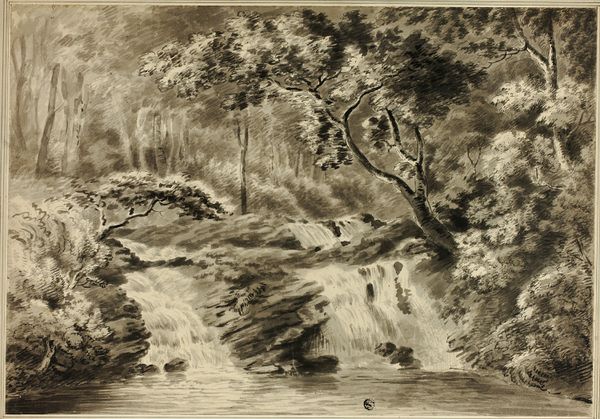
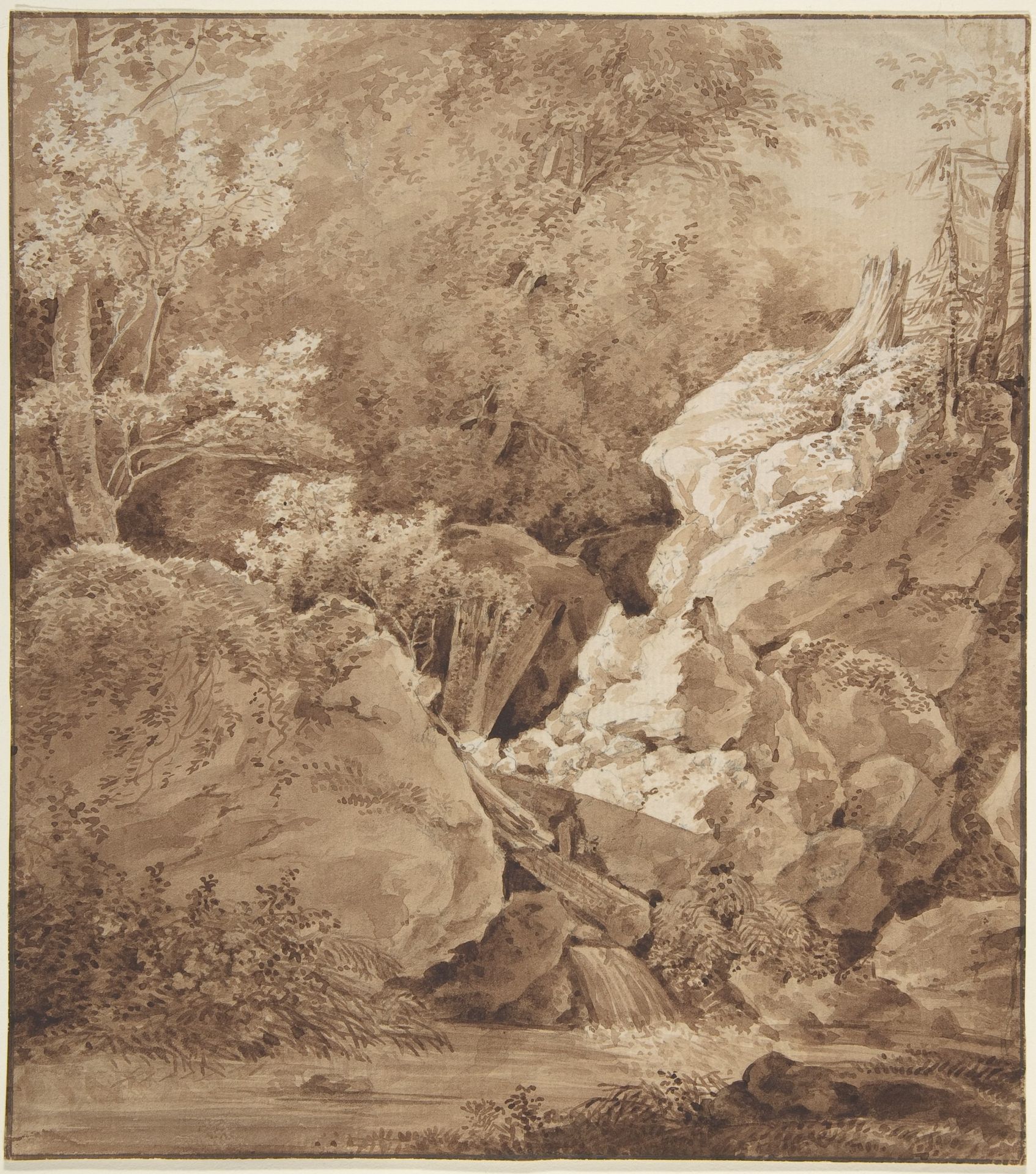
Johann Georg von Dillis created this woodland scene with mountain stream using pen and brown ink and brown wash. The composition is dominated by a mass of rock on the right, balanced by a tree on the left, creating a sense of enclosure and intimacy. Dillis employs a limited palette of brown tones, yet he achieves a remarkable sense of depth and texture. Notice how he uses light and shadow to model the forms of the rocks and foliage, and how he varies the density of the wash to suggest the play of light on the water. This emphasis on the intrinsic qualities of the medium and the artist's touch reflects a broader artistic concern with exploring the expressive potential of landscape. By reducing the scene to its essential forms and tones, Dillis invites us to contemplate the underlying structure of nature itself. The artwork prompts an ongoing process of interpretation and appreciation, inviting us to find new meaning in its formal elements and subtle details.
Woodland Scene with Mountain Stream
1790s

Johann Georg von Dillis
1759 - 1841
The Metropolitan Museum of Art
Metropolitan Museum of Art, New York, NYArtwork details
- Medium
- drawing, print, pencil, charcoal
- Dimensions
- sheet: 8 7/16 x 7 1/2 in. (21.4 x 19 cm)
- Location
- Metropolitan Museum of Art, New York, NY
- Copyright
- Public Domain
Tags
Comments
Share your thoughts
About this artwork
Johann Georg von Dillis created this woodland scene with mountain stream using pen and brown ink and brown wash. The composition is dominated by a mass of rock on the right, balanced by a tree on the left, creating a sense of enclosure and intimacy. Dillis employs a limited palette of brown tones, yet he achieves a remarkable sense of depth and texture. Notice how he uses light and shadow to model the forms of the rocks and foliage, and how he varies the density of the wash to suggest the play of light on the water. This emphasis on the intrinsic qualities of the medium and the artist's touch reflects a broader artistic concern with exploring the expressive potential of landscape. By reducing the scene to its essential forms and tones, Dillis invites us to contemplate the underlying structure of nature itself. The artwork prompts an ongoing process of interpretation and appreciation, inviting us to find new meaning in its formal elements and subtle details.
Comments
Share your thoughts