About this artwork
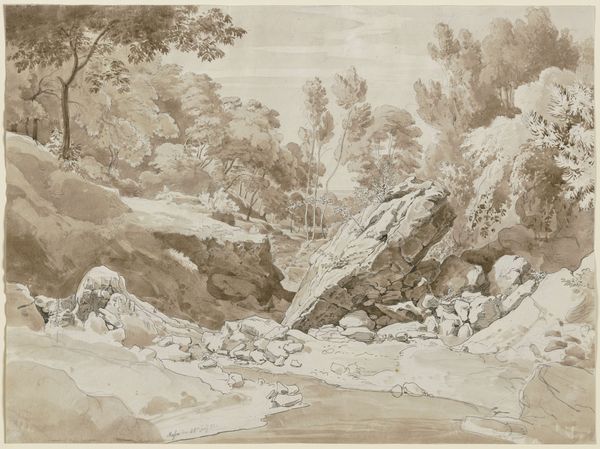
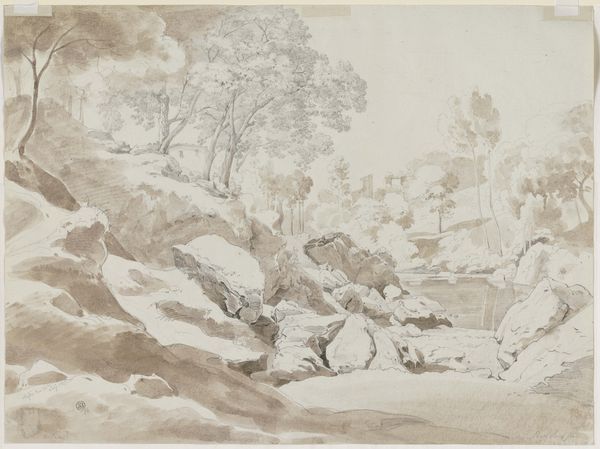
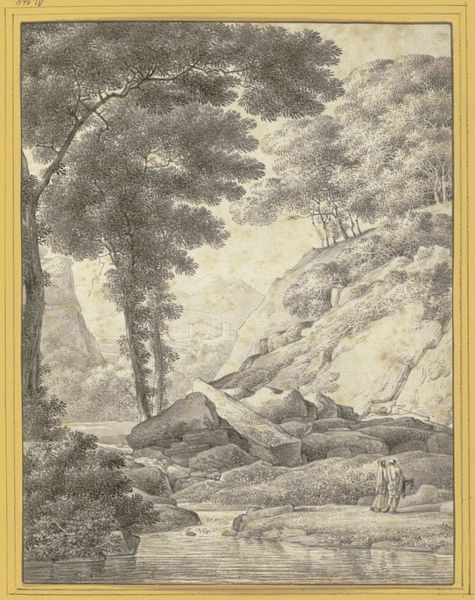
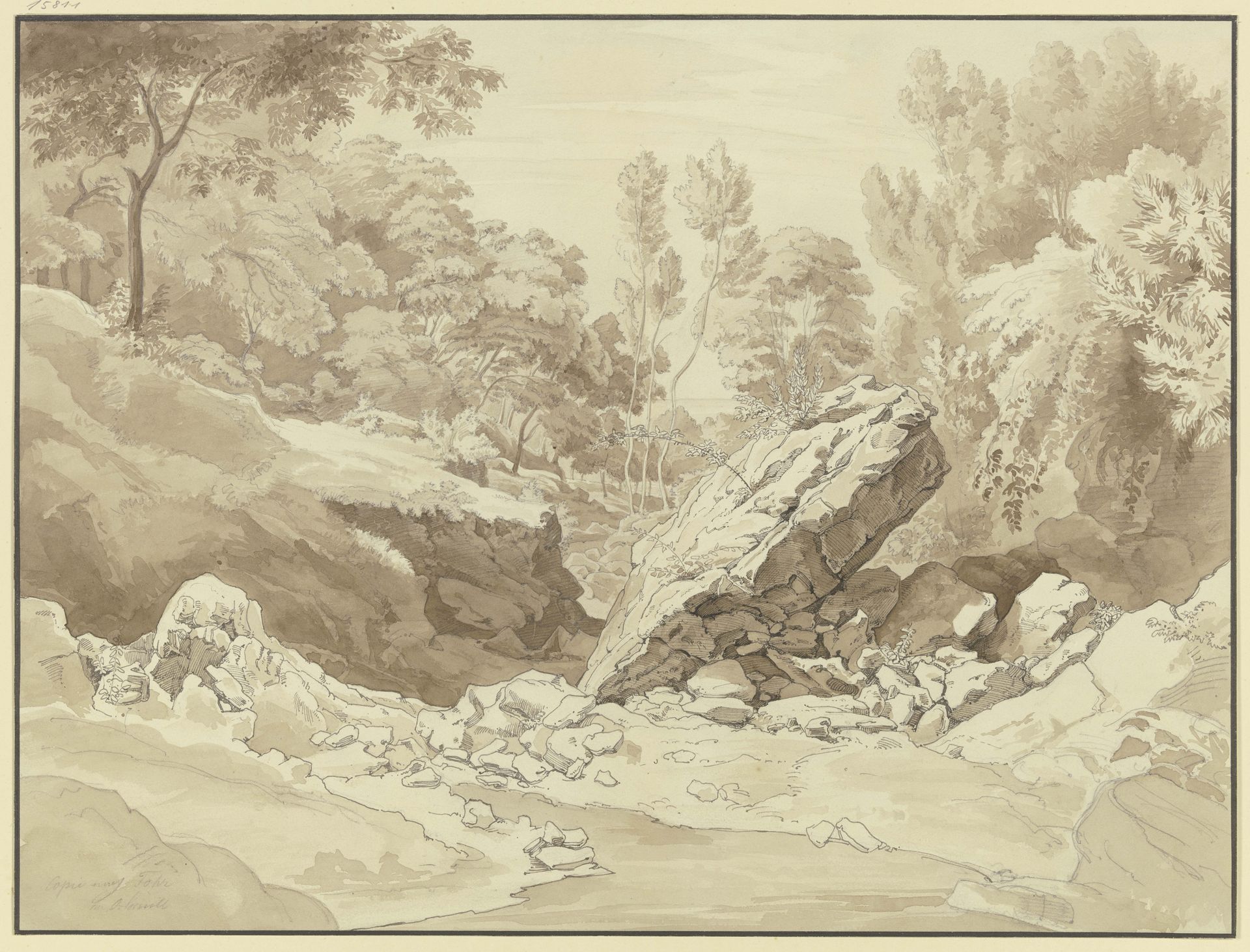
Otto Cornill created this landscape drawing with sepia ink, and the craggy rocks command our attention. Throughout history, rocks and stones have served as powerful symbols. Think of the ancient dolmens, or even the Roman cult of the god Terminus, where stones marked boundaries. In Cornill's image, the large boulder strikes a precarious pose, evoking feelings of instability, while the stones scattered around suggest fragmentation. These evoke a sense of the sublime. They connect to the myth of the Deluge: scattered remnants after the great flood, a shared memory of chaos and renewal. The stony forest landscape offers a space for reflection on human existence, its fragility, and our place in the grand theatre of nature.


Artwork details
- Medium
- drawing, plein-air, ink
- Location
- Städel Museum
- Copyright
- Public Domain
Tags
Comments
Share your thoughts
About this artwork
Otto Cornill created this landscape drawing with sepia ink, and the craggy rocks command our attention. Throughout history, rocks and stones have served as powerful symbols. Think of the ancient dolmens, or even the Roman cult of the god Terminus, where stones marked boundaries. In Cornill's image, the large boulder strikes a precarious pose, evoking feelings of instability, while the stones scattered around suggest fragmentation. These evoke a sense of the sublime. They connect to the myth of the Deluge: scattered remnants after the great flood, a shared memory of chaos and renewal. The stony forest landscape offers a space for reflection on human existence, its fragility, and our place in the grand theatre of nature.
Comments
Share your thoughts