About this artwork
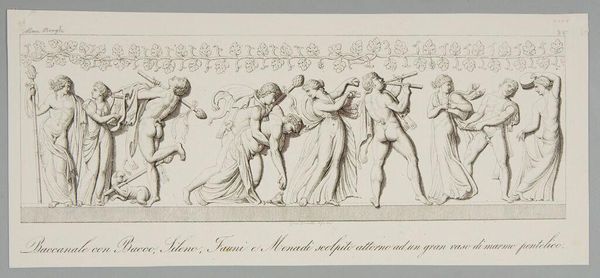
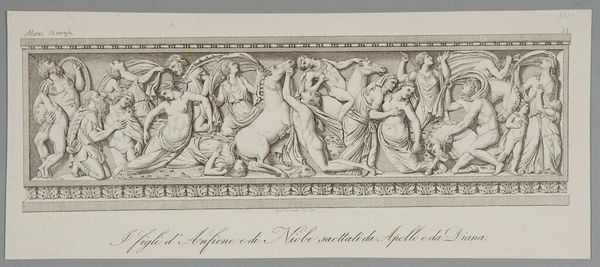
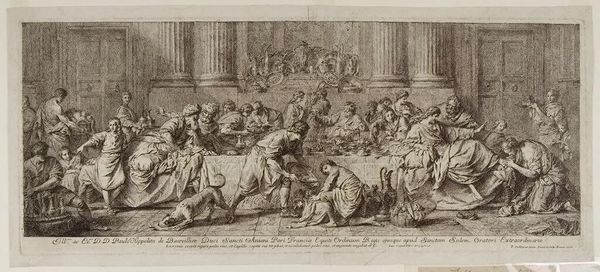
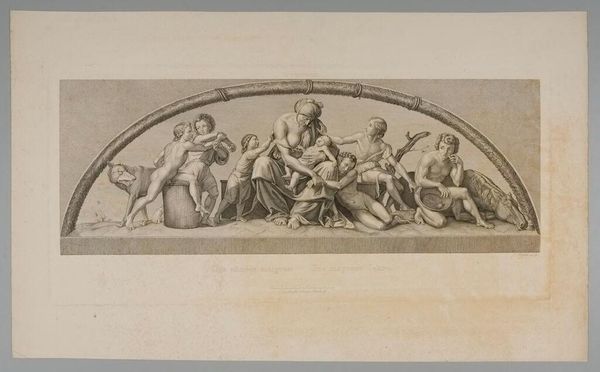
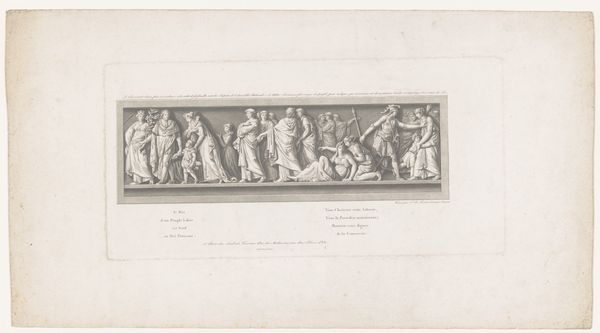
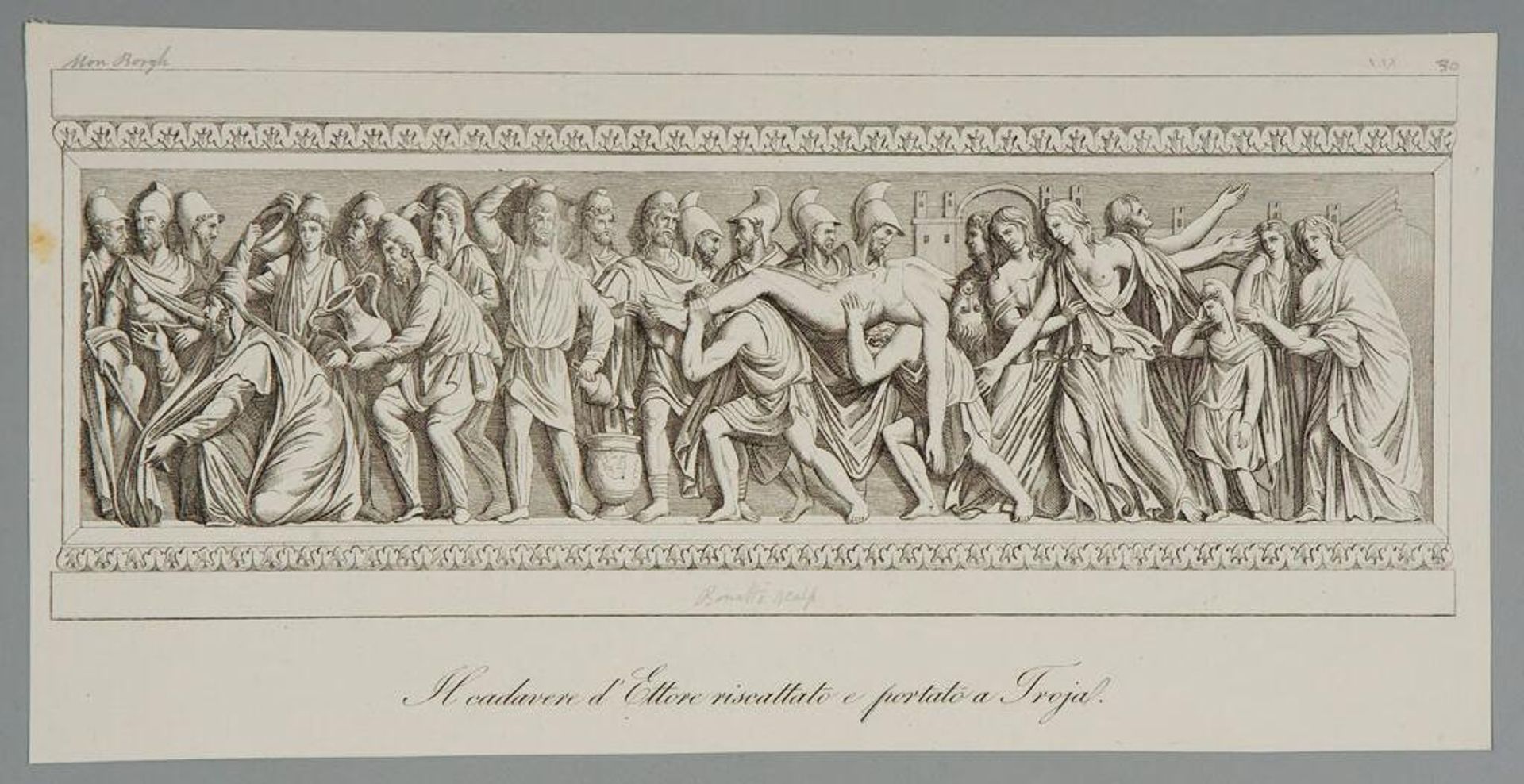
Editor: This is "The Body of Hector Rescued and Brought to Troy" by Gaetano Bonatti. It looks like an etching. There's a lot of emphasis on line and a frieze-like composition. What can you tell me about the production of this etching? Curator: The creation of this etching involved skilled labor, transforming metal into a reproducible narrative. Think about the acid, the tools, the press. How does Bonatti's choice of etching, a process allowing for wider distribution, influence the consumption and understanding of this scene? Editor: So, it's not just about the image, but about who had access to it and how they might have used it? Curator: Precisely. The work becomes a commodity, carrying its message beyond elite circles. Consider how materiality informs meaning. Editor: I hadn't thought about the social context of the printmaking process itself. Thanks!
The Body of Hector Rescued and Brought to Troy
c. 19th century


Artwork details
- Location
- Harvard Art Museums
- Copyright
- CC0 1.0
Comments
Share your thoughts
About this artwork
Editor: This is "The Body of Hector Rescued and Brought to Troy" by Gaetano Bonatti. It looks like an etching. There's a lot of emphasis on line and a frieze-like composition. What can you tell me about the production of this etching? Curator: The creation of this etching involved skilled labor, transforming metal into a reproducible narrative. Think about the acid, the tools, the press. How does Bonatti's choice of etching, a process allowing for wider distribution, influence the consumption and understanding of this scene? Editor: So, it's not just about the image, but about who had access to it and how they might have used it? Curator: Precisely. The work becomes a commodity, carrying its message beyond elite circles. Consider how materiality informs meaning. Editor: I hadn't thought about the social context of the printmaking process itself. Thanks!
Comments
Share your thoughts