About this artwork
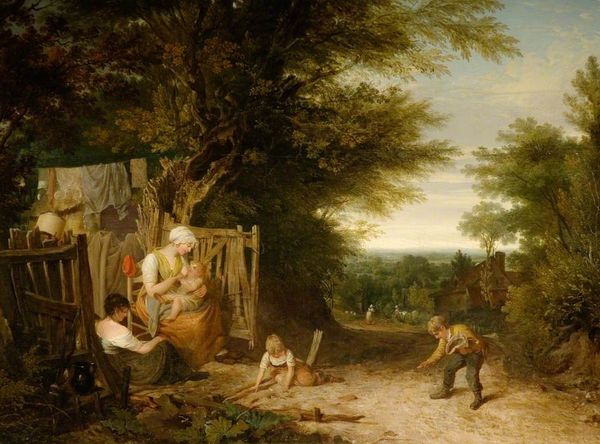
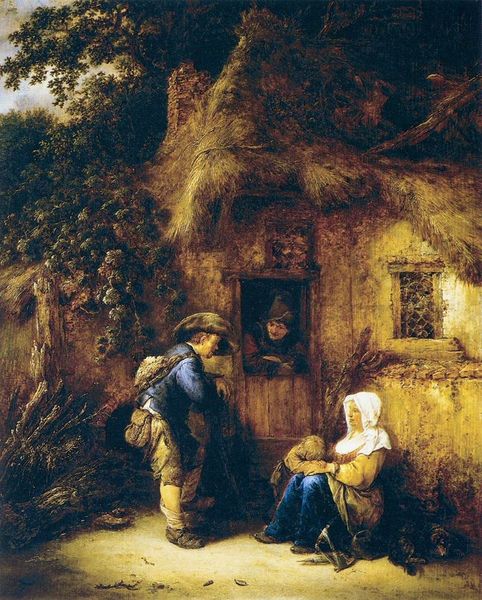
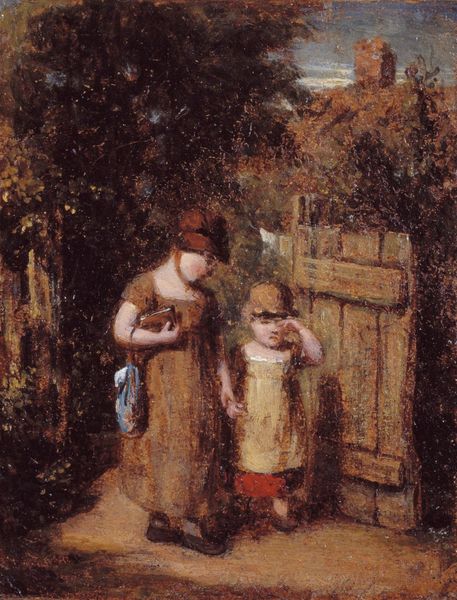
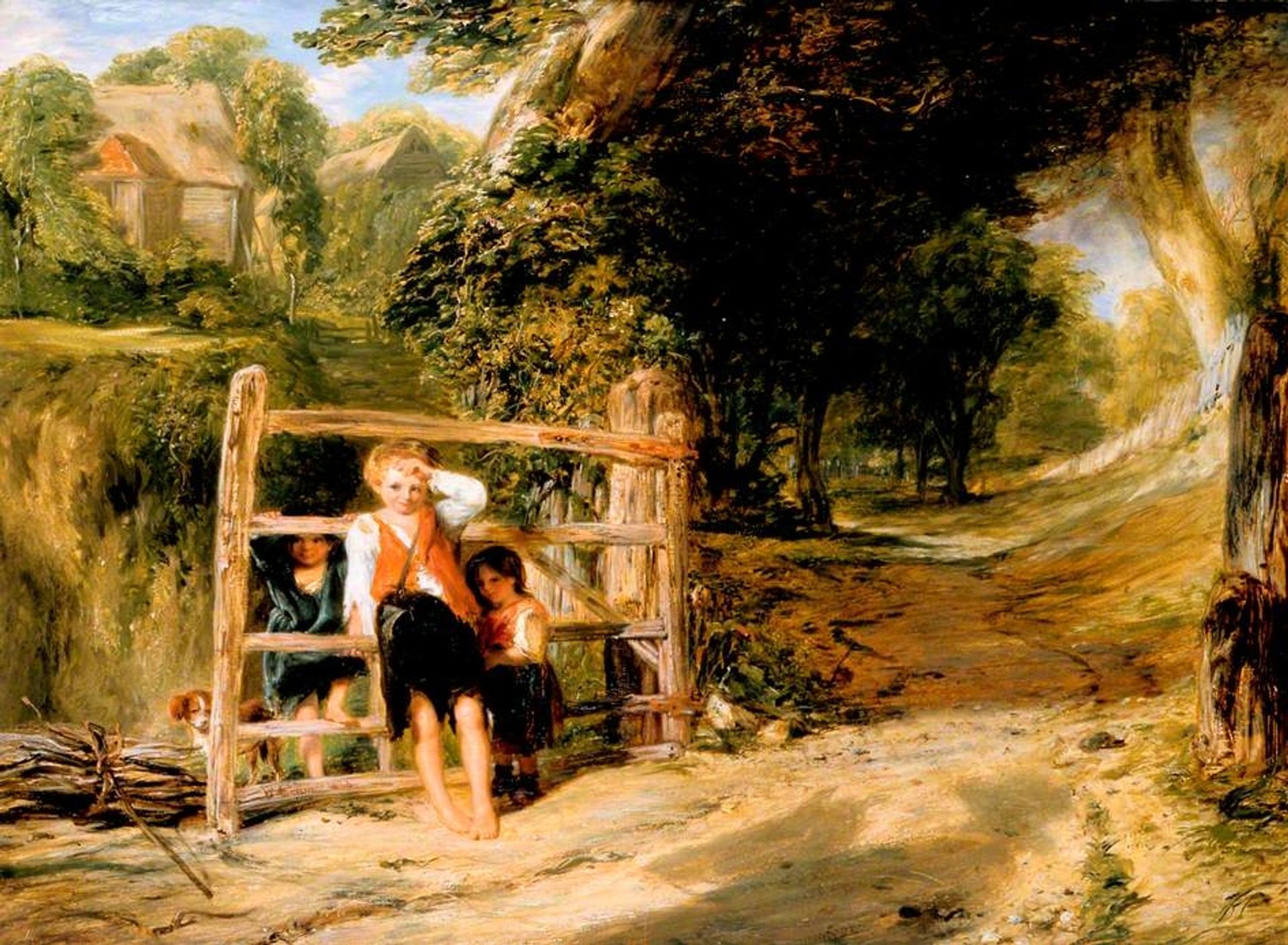
William Collins created "Rustic Civility," an oil on canvas painting. The painting reflects the romanticized view of rural life that was popular in early 19th-century Britain, a time when industrialization was rapidly changing the social and physical landscape. In this scene, we observe children at a gate, their gazes directed toward us. The artist seems to be implying an unspoiled innocence associated with the countryside, contrasting with the perceived moral decay of urban environments. Yet, consider the title; "Civility" refers to the social norms and behaviors valued by the upper classes, and we must ask, is there something inherently civilized about rural life, or is this merely a projection of bourgeois values onto the working class? As you stand with these figures at the gate, think about who is included and excluded from this idyllic vision. Where do we locate the presence of the working class, as well as the complex negotiations of what "civility" really means? These are questions that linger, challenging any simple reading of pastoral harmony.

Artwork details
- Medium
- painting, oil-paint
- Copyright
- Public domain
Tags
tree
narrative-art
painting
oil-paint
landscape
figuration
nature
oil painting
romanticism
genre-painting
nature
Comments
No comments
About this artwork
William Collins created "Rustic Civility," an oil on canvas painting. The painting reflects the romanticized view of rural life that was popular in early 19th-century Britain, a time when industrialization was rapidly changing the social and physical landscape. In this scene, we observe children at a gate, their gazes directed toward us. The artist seems to be implying an unspoiled innocence associated with the countryside, contrasting with the perceived moral decay of urban environments. Yet, consider the title; "Civility" refers to the social norms and behaviors valued by the upper classes, and we must ask, is there something inherently civilized about rural life, or is this merely a projection of bourgeois values onto the working class? As you stand with these figures at the gate, think about who is included and excluded from this idyllic vision. Where do we locate the presence of the working class, as well as the complex negotiations of what "civility" really means? These are questions that linger, challenging any simple reading of pastoral harmony.
Comments
No comments