About this artwork
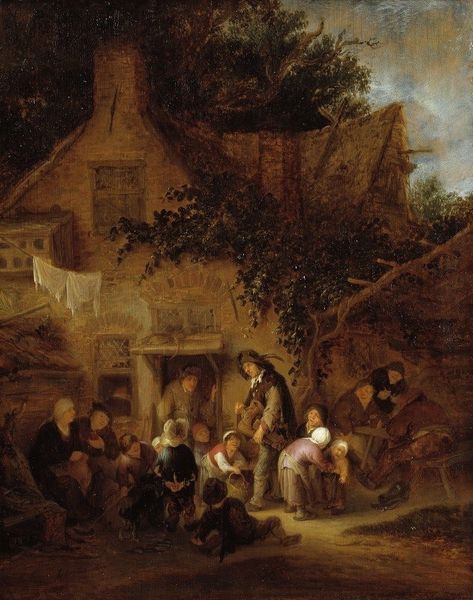
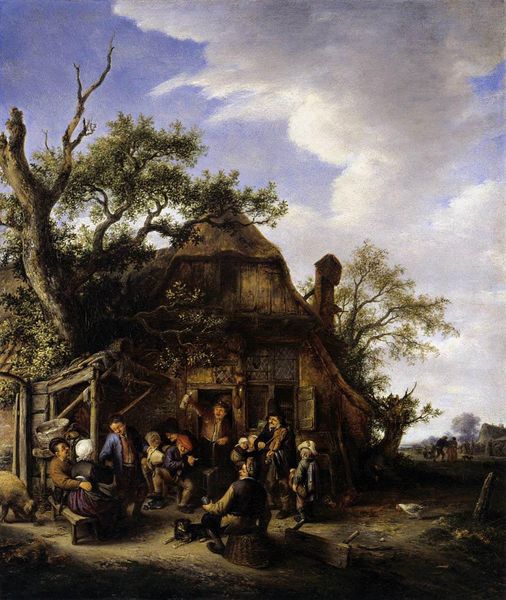
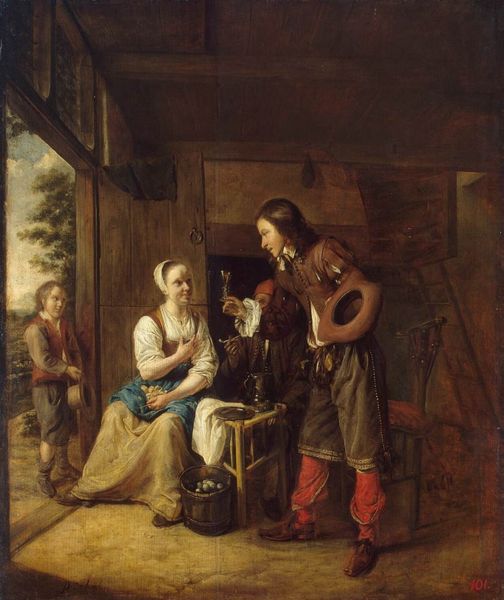
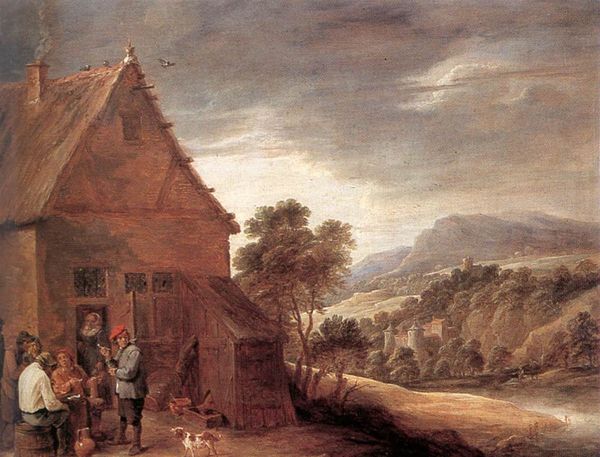
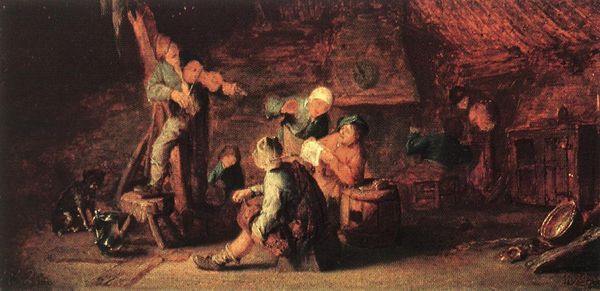
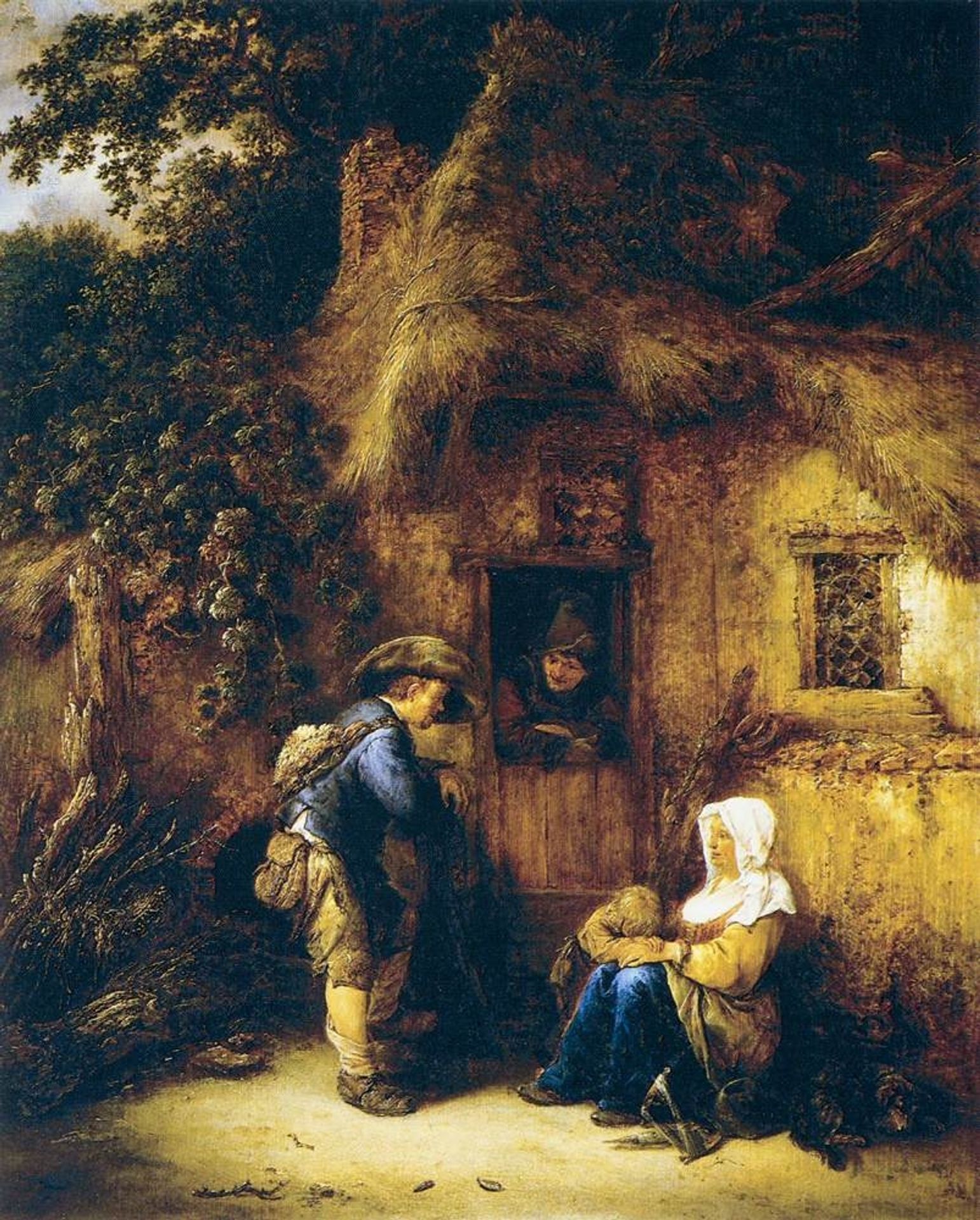
Isaac van Ostade painted “Traveller at a Cottage Door” on a wooden panel in the Netherlands during the Dutch Golden Age. Paintings like this offer us a glimpse into the social realities of 17th-century Dutch life, a period of significant economic growth but also stark inequalities. The scene depicts a traveller, perhaps a beggar, engaging with the inhabitants of a humble cottage. Notice how the artist emphasizes the rough textures of the cottage and the worn clothing of the figures, contrasting with the idealized images of wealthy merchants that also circulated at the time. This artwork reflects a broader cultural interest in depicting everyday life. But it also subtly comments on the social structures of the time, raising questions about poverty, charity, and the relationship between rural and urban communities. Art historians delve into archival records, literature, and other visual sources to understand the painting’s original context. Ultimately, art's meaning is always contingent on the social and institutional forces that shape its creation and reception.
Traveller at a Cottage Door
1649

Isaac van Ostade
1621 - 1649Location
Thyssen-Bornemisza Museum, Madrid, SpainArtwork details
- Medium
- painting, oil-paint
- Dimensions
- 48 x 40 cm
- Location
- Thyssen-Bornemisza Museum, Madrid, Spain
- Copyright
- Public domain
Tags
Comments
Share your thoughts
About this artwork
Isaac van Ostade painted “Traveller at a Cottage Door” on a wooden panel in the Netherlands during the Dutch Golden Age. Paintings like this offer us a glimpse into the social realities of 17th-century Dutch life, a period of significant economic growth but also stark inequalities. The scene depicts a traveller, perhaps a beggar, engaging with the inhabitants of a humble cottage. Notice how the artist emphasizes the rough textures of the cottage and the worn clothing of the figures, contrasting with the idealized images of wealthy merchants that also circulated at the time. This artwork reflects a broader cultural interest in depicting everyday life. But it also subtly comments on the social structures of the time, raising questions about poverty, charity, and the relationship between rural and urban communities. Art historians delve into archival records, literature, and other visual sources to understand the painting’s original context. Ultimately, art's meaning is always contingent on the social and institutional forces that shape its creation and reception.
Comments
Share your thoughts