About this artwork
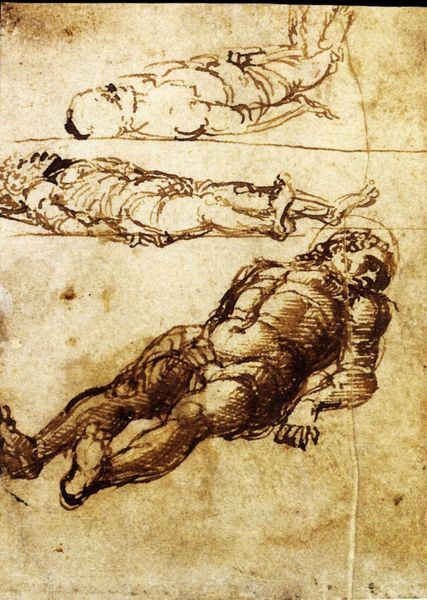
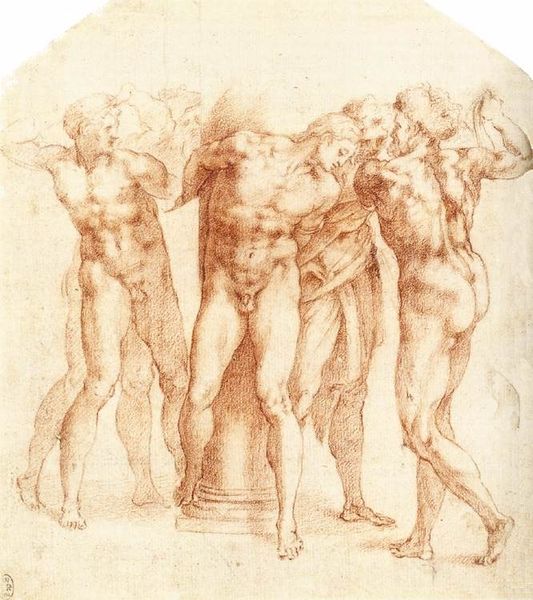
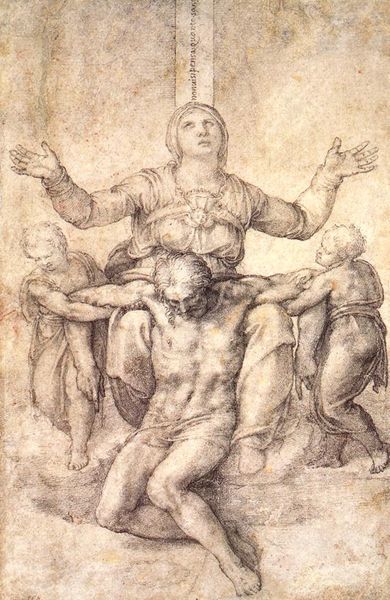
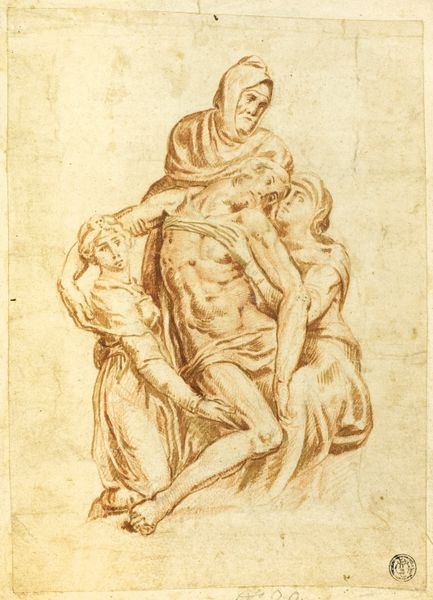
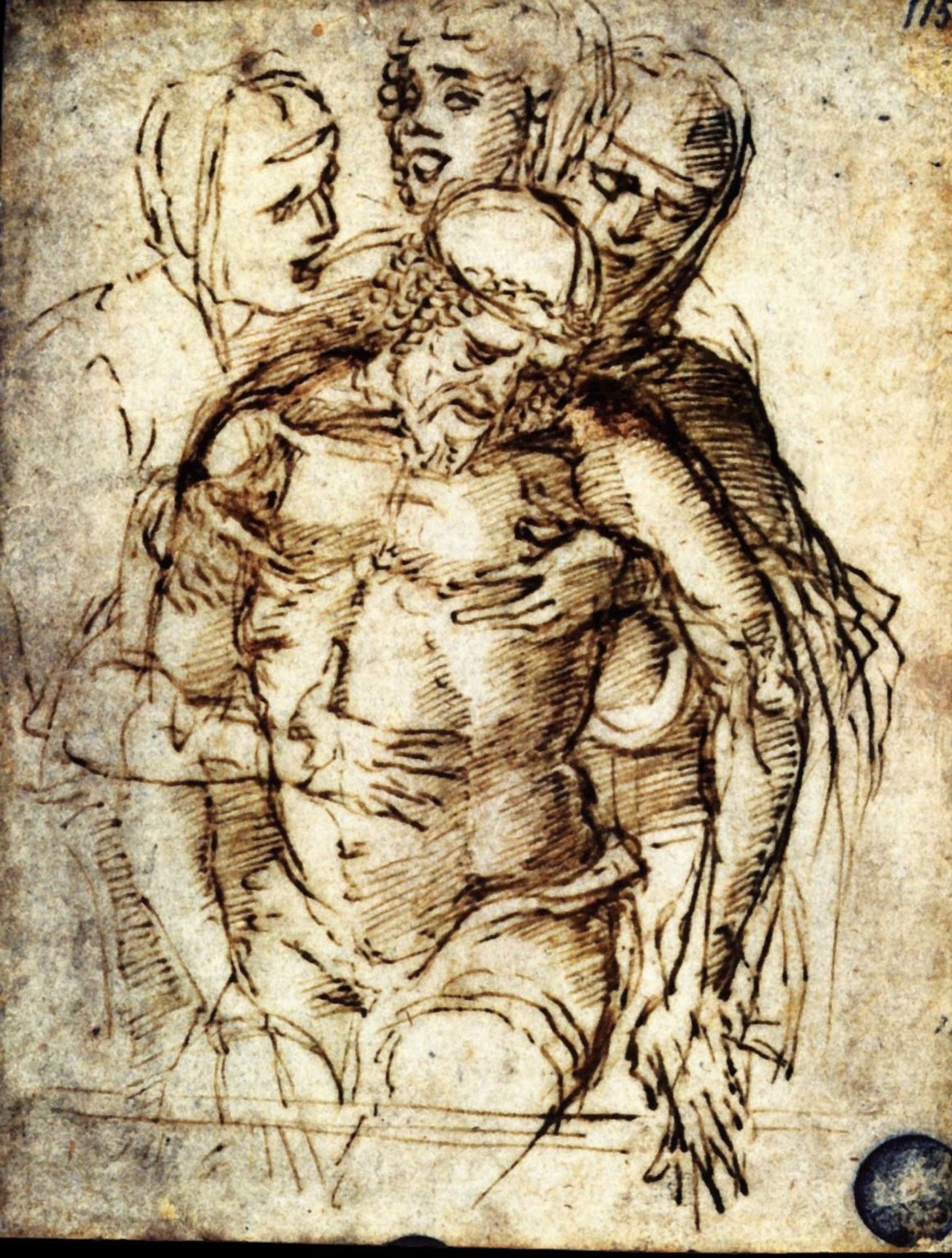
Editor: This is Andrea Mantegna’s "Pieta," a charcoal drawing from 1459. The starkness of the lines and the raw emotion depicted are really striking. How do you interpret this work? Curator: This piece, rendered with such directness, compels us to confront not just the death of Christ but also the social structures that enabled it. The figures surrounding Christ, seemingly overcome with grief, might also be understood as representative of a society complicit in his suffering. Editor: Complicit? That's interesting. Curator: Consider the political climate of the Renaissance. Power was centralized, and religious institutions held immense sway. Mantegna, consciously or unconsciously, invites us to question this power dynamic. Does the composition—the way Christ is visually presented as almost offering himself—somehow implicate these onlookers, these supposed mourners? Are they lamenting loss, or recognizing their own roles? Editor: So, it's more than just a religious scene; it's a social commentary? Curator: Precisely. The emphasis on Christ’s physicality, rendered in such unflinching detail, also challenges the more idealized, sanitized depictions that were common. This raw, almost brutal, portrayal disrupts conventional notions of piety, forcing the viewer to confront the real, human cost of this historical, cultural, and religious event. The absence of a conventional background intensifies this focus on human drama, highlighting the historical context in which political machinations and social indifference enabled injustice. It really becomes about those power structures, doesn't it? Editor: I never considered it from that angle, but it makes me think about art's ability to not only reflect history but also to challenge our understanding of it. Curator: Exactly. Art allows us to engage critically with the power dynamics that shape our world.

Artwork details
- Medium
- drawing, charcoal
- Copyright
- Public domain
Tags
Comments
Share your thoughts
About this artwork
Editor: This is Andrea Mantegna’s "Pieta," a charcoal drawing from 1459. The starkness of the lines and the raw emotion depicted are really striking. How do you interpret this work? Curator: This piece, rendered with such directness, compels us to confront not just the death of Christ but also the social structures that enabled it. The figures surrounding Christ, seemingly overcome with grief, might also be understood as representative of a society complicit in his suffering. Editor: Complicit? That's interesting. Curator: Consider the political climate of the Renaissance. Power was centralized, and religious institutions held immense sway. Mantegna, consciously or unconsciously, invites us to question this power dynamic. Does the composition—the way Christ is visually presented as almost offering himself—somehow implicate these onlookers, these supposed mourners? Are they lamenting loss, or recognizing their own roles? Editor: So, it's more than just a religious scene; it's a social commentary? Curator: Precisely. The emphasis on Christ’s physicality, rendered in such unflinching detail, also challenges the more idealized, sanitized depictions that were common. This raw, almost brutal, portrayal disrupts conventional notions of piety, forcing the viewer to confront the real, human cost of this historical, cultural, and religious event. The absence of a conventional background intensifies this focus on human drama, highlighting the historical context in which political machinations and social indifference enabled injustice. It really becomes about those power structures, doesn't it? Editor: I never considered it from that angle, but it makes me think about art's ability to not only reflect history but also to challenge our understanding of it. Curator: Exactly. Art allows us to engage critically with the power dynamics that shape our world.
Comments
Share your thoughts