About this artwork
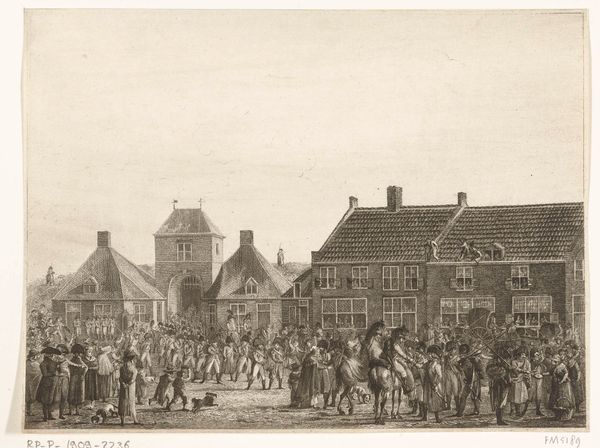
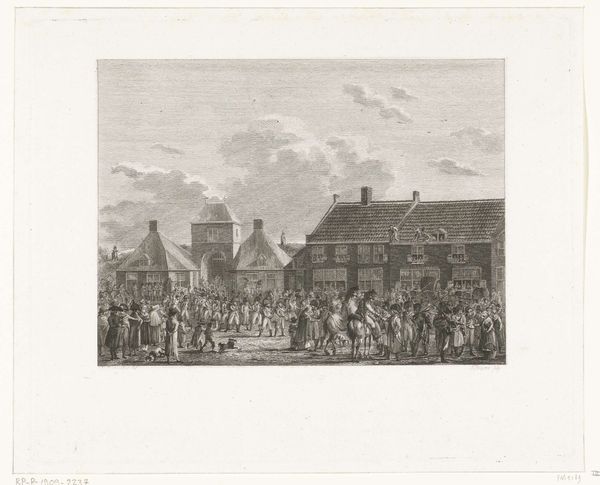
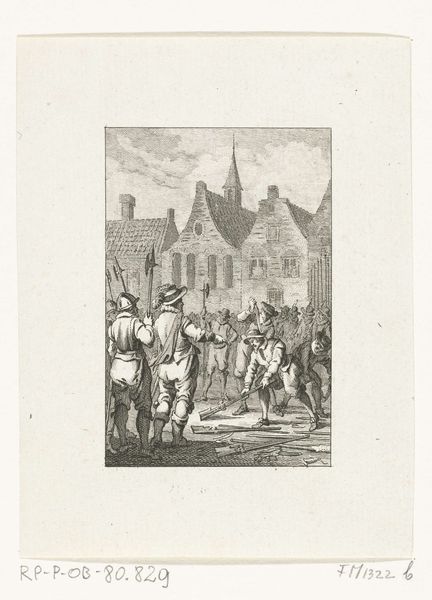
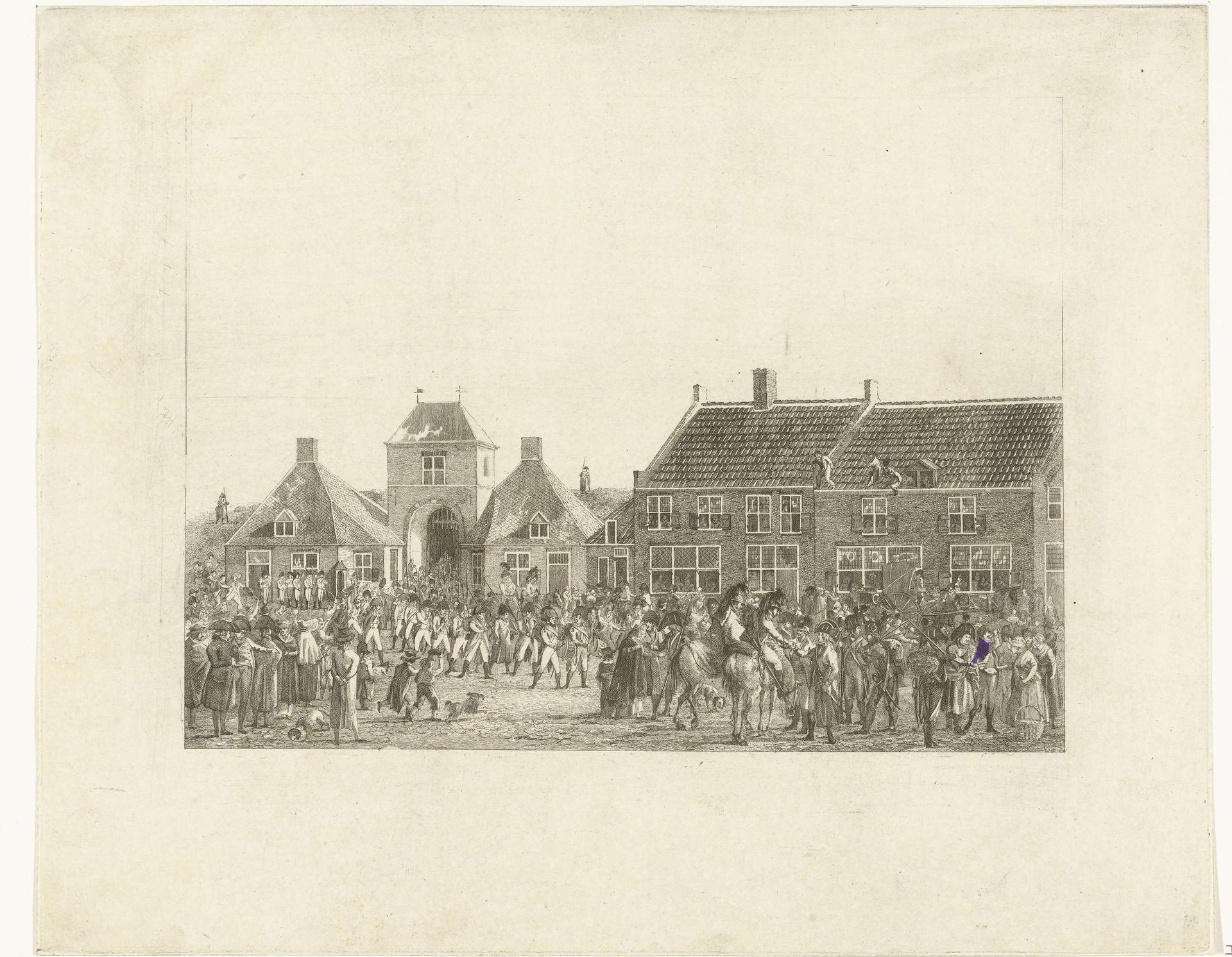
Joannes Bemme created this print depicting the entry of French troops into Breda in 1793. Observe the open gate, a potent symbol of transition and often, vulnerability. Gates have marked not just physical boundaries, but also psychological thresholds. This image resonates with triumphal entries throughout history, echoing scenes from ancient Roman conquests to medieval royal processions. These entries, replete with flags and gathered crowds, serve as powerful affirmations of authority. Yet, consider the duality: The waving flags, symbols of pride for the French, simultaneously represent submission for the Breda inhabitants. It’s a visual paradox embedded in our collective memory. These motifs remind us that images carry a complex emotional weight, constantly shifting and adapting, reflecting not only historical events but also our deepest psychological responses to power and change.
Franse troepen trekken Breda binnen, 1793
1800 - 1841

Joannes Bemme
1775 - 1841Location
RijksmuseumArtwork details
- Medium
- print, engraving
- Dimensions
- height 220 mm, width 273 mm
- Location
- Rijksmuseum
- Copyright
- Rijks Museum: Open Domain
Tags
neoclacissism
old engraving style
cityscape
history-painting
engraving
Comments
Be the first to share your thoughts about this work.
About this artwork
Joannes Bemme created this print depicting the entry of French troops into Breda in 1793. Observe the open gate, a potent symbol of transition and often, vulnerability. Gates have marked not just physical boundaries, but also psychological thresholds. This image resonates with triumphal entries throughout history, echoing scenes from ancient Roman conquests to medieval royal processions. These entries, replete with flags and gathered crowds, serve as powerful affirmations of authority. Yet, consider the duality: The waving flags, symbols of pride for the French, simultaneously represent submission for the Breda inhabitants. It’s a visual paradox embedded in our collective memory. These motifs remind us that images carry a complex emotional weight, constantly shifting and adapting, reflecting not only historical events but also our deepest psychological responses to power and change.
Comments
Be the first to share your thoughts about this work.