About this artwork
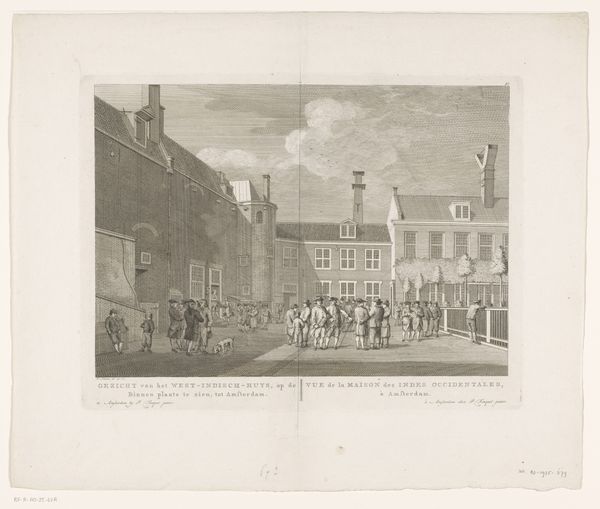
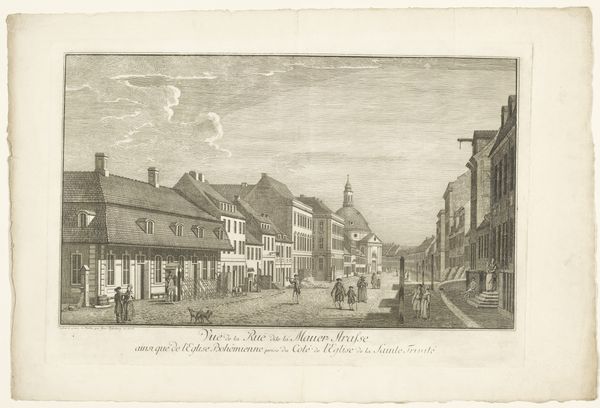
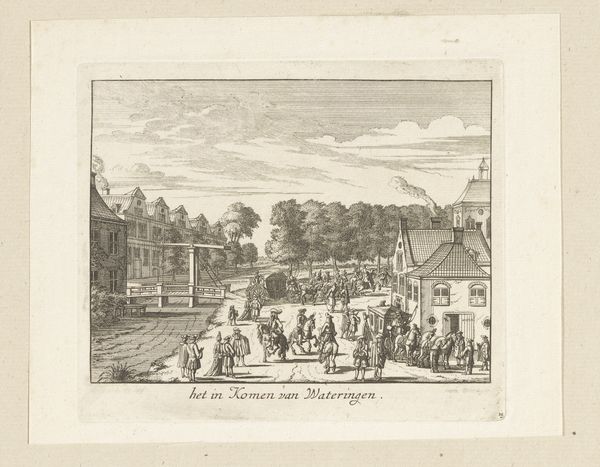
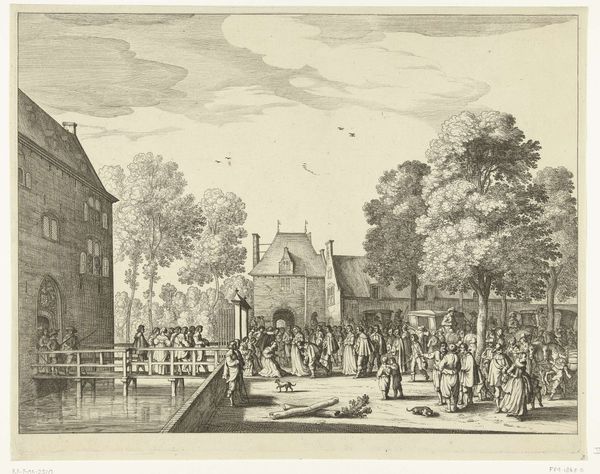
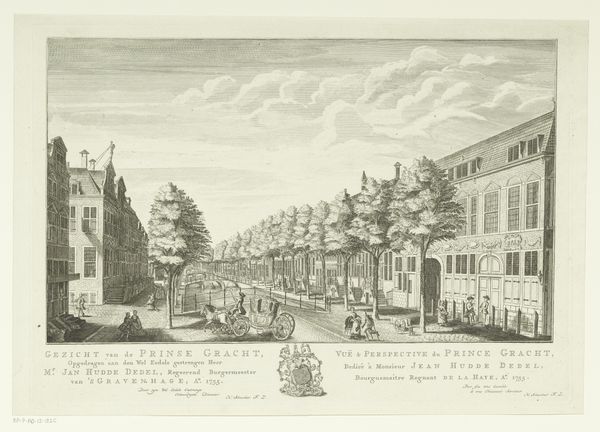
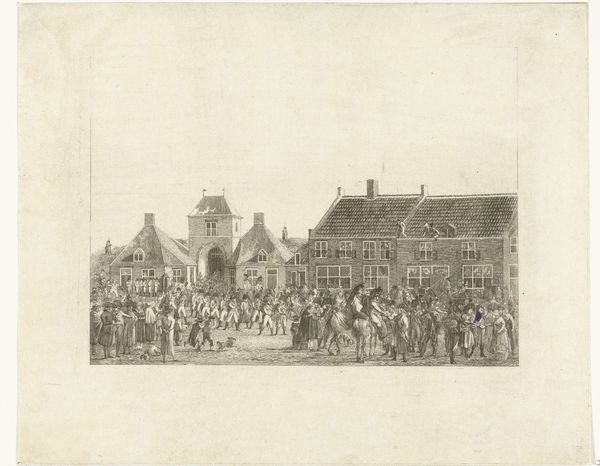
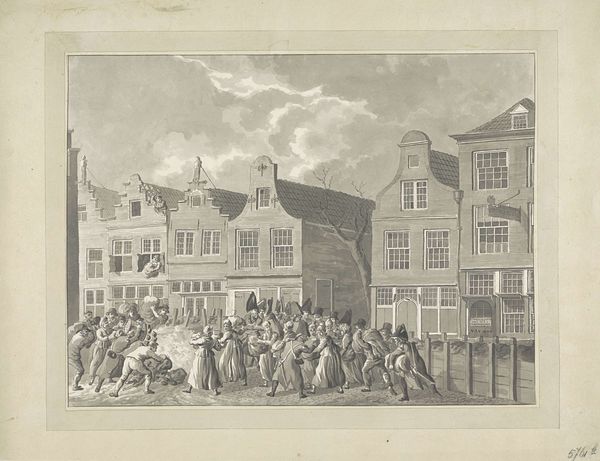
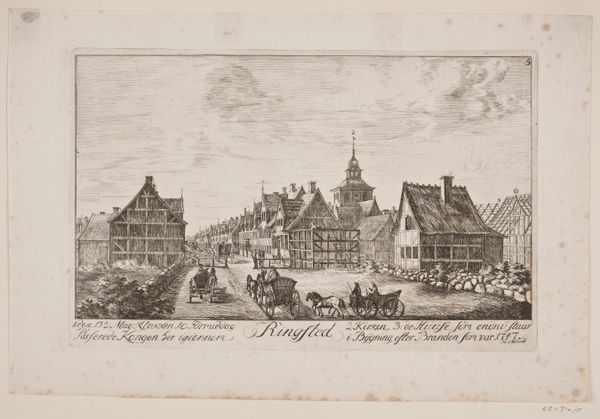
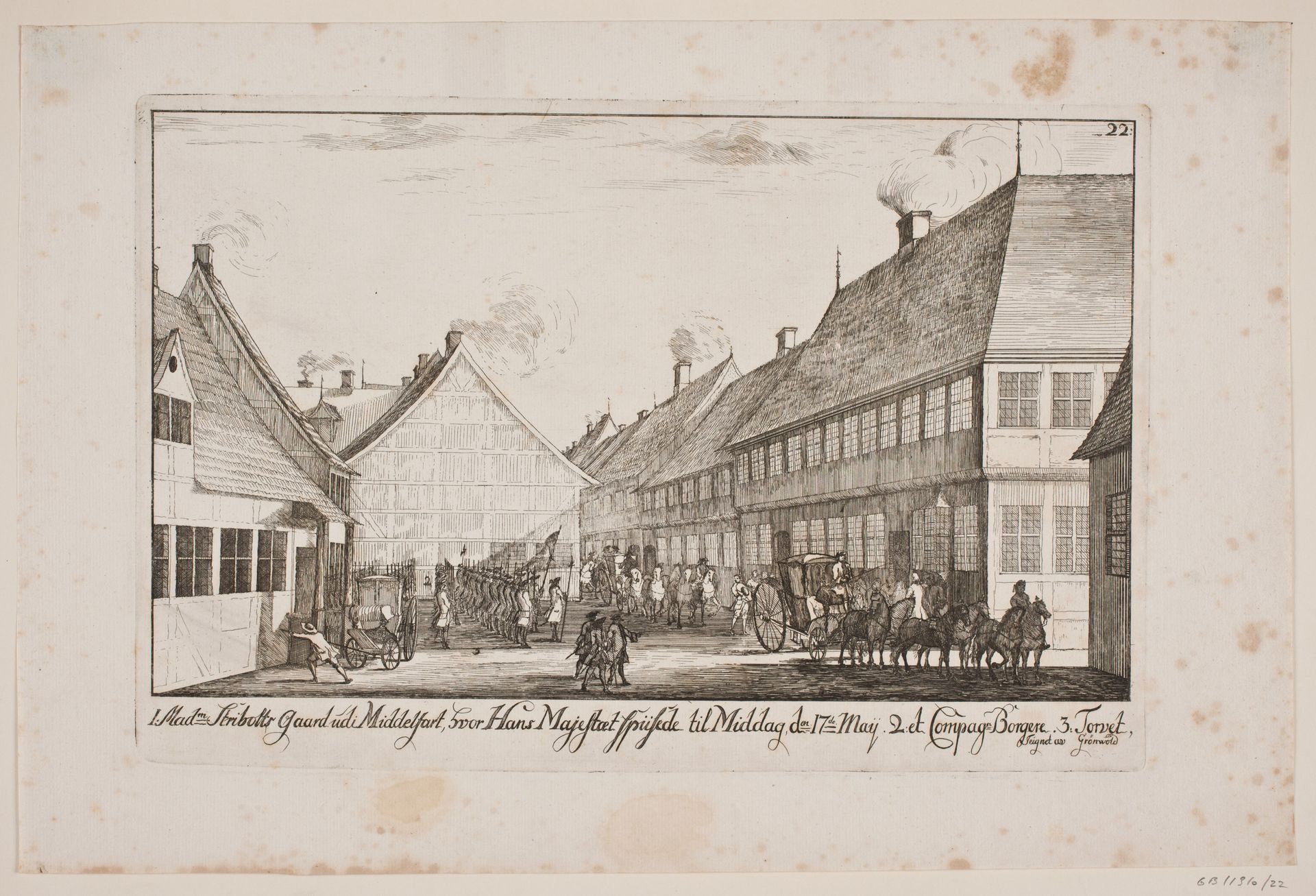
Poul Isac Grønvold made this print of Stribolts gård in Middelfart sometime in the 18th century. As an etching, its creation began with a metal plate, likely copper or zinc, covered in a waxy ground. The artist would have then used a sharp needle to draw through this ground, exposing the metal beneath. The plate was then submerged in acid, which bit into the exposed lines, creating grooves. After removing the ground, ink was applied, filling these grooves, and the surface wiped clean. Finally, under great pressure, the image was transferred to paper, resulting in the print you see. Etching, unlike the immediacy of drawing, demands a careful, staged process. Each line is a deliberate act, a testament to the artist’s vision and skill. The social context here is clear: a record of a specific place and time, made possible by a complex interplay of materials, techniques, and labor. It serves as a reminder that every artwork, no matter how seemingly simple, is the product of countless hands and processes.
Stribolts gård i Middelfart
1749
Artwork details
- Medium
- print, etching, engraving
- Dimensions
- 229 mm (height) x 348 mm (width) (plademaal)
- Location
- SMK - Statens Museum for Kunst
Tags
baroque
etching
etching
cityscape
engraving
Comments
Be the first to share your thoughts about this work.
About this artwork
Poul Isac Grønvold made this print of Stribolts gård in Middelfart sometime in the 18th century. As an etching, its creation began with a metal plate, likely copper or zinc, covered in a waxy ground. The artist would have then used a sharp needle to draw through this ground, exposing the metal beneath. The plate was then submerged in acid, which bit into the exposed lines, creating grooves. After removing the ground, ink was applied, filling these grooves, and the surface wiped clean. Finally, under great pressure, the image was transferred to paper, resulting in the print you see. Etching, unlike the immediacy of drawing, demands a careful, staged process. Each line is a deliberate act, a testament to the artist’s vision and skill. The social context here is clear: a record of a specific place and time, made possible by a complex interplay of materials, techniques, and labor. It serves as a reminder that every artwork, no matter how seemingly simple, is the product of countless hands and processes.
Comments
Be the first to share your thoughts about this work.